

Your Vining Plants Will Thrive With The Help Of A Hair Care Staple
We may receive a commission on purchases made from links.
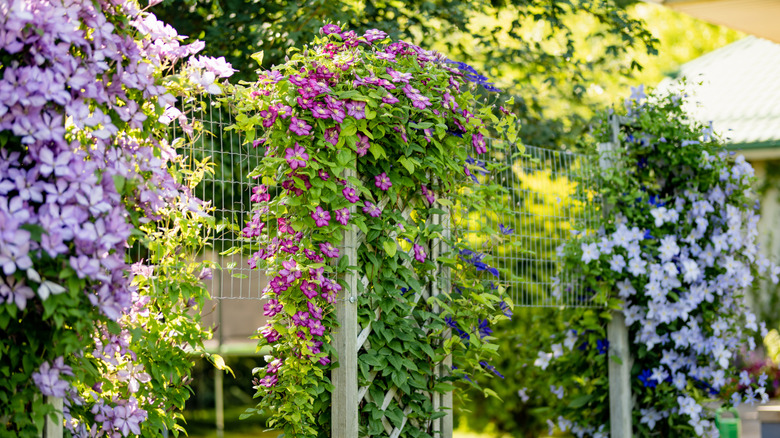
Vining plants are great at adding character to walls and an appealing vertical dimension to gardens. Flowering vines such as Carolina jessamine can attract pollinators, filling your garden with butterflies and other beneficial visitors. While aggressive spreading is an issue with some vines — for example, the invasive English ivy plant — lackluster growth is a more common problem for those that aren't attempting world domination. If you have a vine that's looking sad and spindly, try cheering it up with a hairpin trick that encourages lusher growth. Though this hack is often used on houseplants such as pothos and philodendron, it's suitable for any vine that responds to a propagation technique called simple layering. You can even use this method on flexible-stemmed plants that don't naturally climb or twine.
Simple layering prompts a plant to sprout roots from nodes found on its stems. Instead of taking a cutting, you place the nodes of an intact stem in the soil to coax new growth. That's where hairpins come in: They promote sustained node-to-soil contact by anchoring stems to the growing medium. Though tightly closed bobby pins are able to perform this task, u-shaped hairpins such as Cehony U-Shaped Styling Pins are preferable because you don't have to force them open or make them bend against their will. Once the nodes are producing new growth, remove the pins and enjoy the fuller look of your vine. You can also detach the baby plants and give them a new home elsewhere in your garden.
Using hairpins to encourage new growth on vines

Simple layering with hairpins is easy if you keep a few tips in mind. First, look for bare patches of soil in the garden or planter where your vine has rooted. This should give you plenty of room to position a stem and secure it with a hairpin. Plus, filling these spots with new growth will make your plant look fuller. Next, bring a stem toward the soil and find the nodes, which are little bumps filled with growth hormones. Bury several nodes to promote a lush look. Aim for a depth of 2 to 4 inches and make sure the stem tip and leaves don't get buried. If this isn't possible, make sure a few nodes are pressing against some soil.
Attach the stem to the soil with pins — or, if you run out, leftover paper clips. The goal is to keep the stem in place so the nodes continue to touch the soil. Push each pin down far enough that it provides a firm hold but not so far that it injures the stem. Some plants will form new roots at their nodes in as soon as six weeks.
Many popular landscaping vines, including clematis and bougainvillea, respond well to simple layering, so they're good candidates for the hairpin treatment. Even if your yard's vines are looking beautiful, this hack can help them hide not-as-pretty surfaces in your yard. It's also a clever way to cover a fence with a gorgeous climbing plant such as coral honeysuckle.