

A Purple And White Blooming Sage Variety That'll Fill Your Garden With Hummingbirds
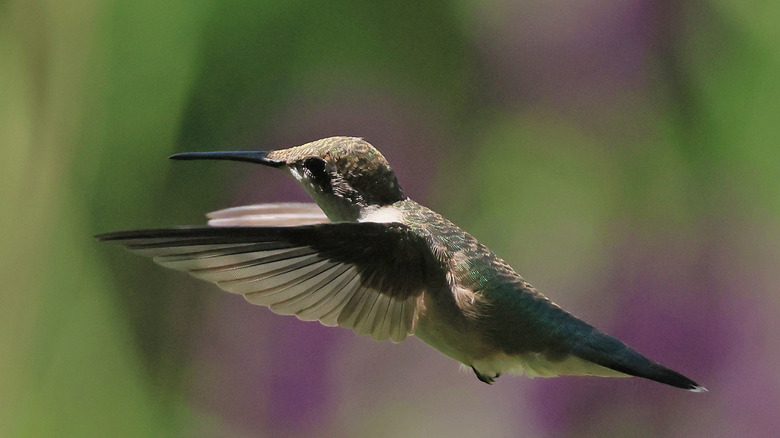
There's something gratifying about filling parts of your garden with hummingbird-favorite plants, then seeing the birds show up regularly for nectar once those plants bloom. Choosing a few of their faves that bloom late in the season will also get your garden ready for migrating hummingbirds. One beautiful option is Mexican sage (Salvia leucantha), also known as Mexican bush sage. This plant has cheery purple sepals around the base of each flower and white blooms within, plus an abundance of flowers growing on each spike. Mexican sage thrives in USDA Hardiness zones 8 through 10, though it can be grown as an annual or in a container in cooler climates. It grows about 5 feet high and wide, thanks to the bushy way in which the leafy parts of the plant spread.
This sage has also won the Royal Horticultural Society's Award of Garden Merit, so it's sure to bring beauty to just about anywhere you plant it. As an added bonus, pollinators love it while deer and rabbits do not, so it's a great choice if you're looking for deer-resistant plants to add to your garden.
How to grow Mexican sage for hummingbirds
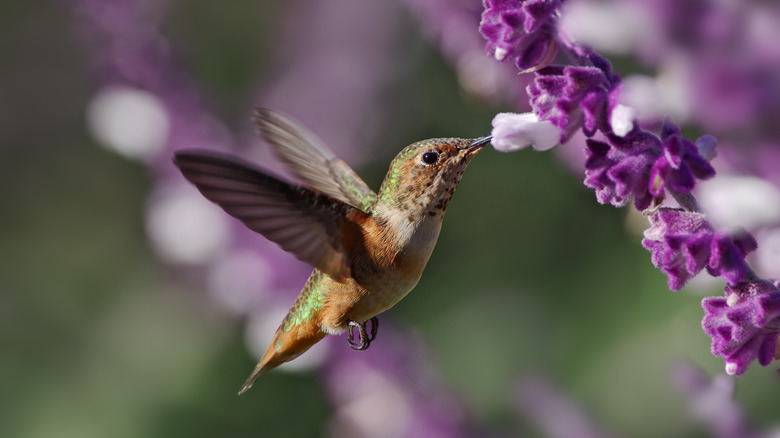
Plant Mexican sage in an area that has full sun and well-drained, nutrient-rich soil, after any danger of frost has passed and the soil stays warm for the season. Even waiting until after Memorial Day works if you live in an area with cold winters. In places where it grows as a perennial, plant it any season other than the hottest parts of summer. Mexican sage is tolerant of everything from clay-heavy to sandy soil, and it doesn't mind whether the soil is acidic, alkaline, or somewhere in between. It's one of those fuss-free plants that are great for beginning gardeners, too. Water it thoroughly every few days for the first month or so to help the plant establish itself.
With its grayish green foliage that contrasts with the purple and white floral parts, Mexican sage looks stunning alone or as a backdrop to other plants in your garden beds, or even in containers set out on the patio. Mexican sage is right at home in both coastal or prairie-style gardens, and can serve as one of the star attractions in a pollinator garden. It's also drought-tolerant, so it does well in patio pots or in areas of your yard that are overly dry and hot. If you grow it in a pot in a cool climate, bring it indoors to an area that stays slightly warm and above freezing, such as a garage, and it could survive the winter. It goes dormant during this time and rarely needs water during dormancy.
Mexican sage is has fragrant leaves, so it will smell nice near an outdoor seating area. Cut some flowers to fit into a vase for some color for an outdoor table setting or to bring a touch of the outdoors in.