

The Berried Bush That'll Make Your Yard A Hummingbird Magnet
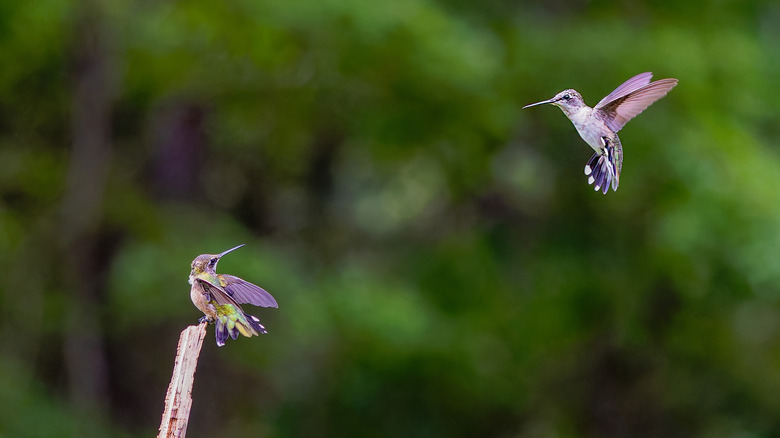
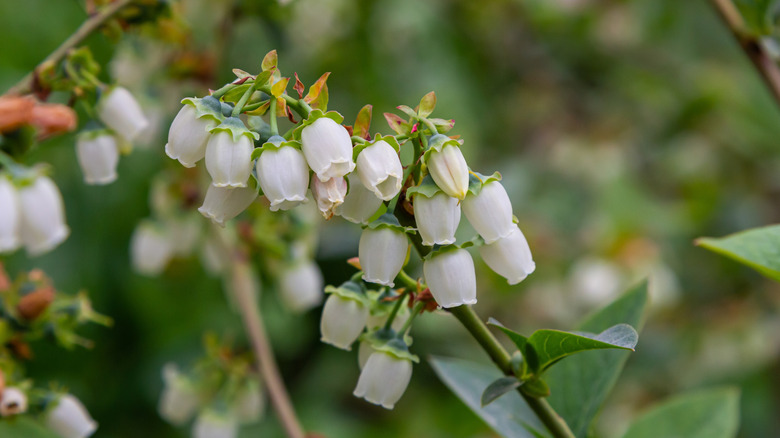
North American hummingbirds, including the Ruby-throated and Anna's hummingbirds, will be drawn to your garden earlier than ever with the help of blueberry bushes. When most of your perennials are just starting to sprout, blueberry bushes are way ahead of the game. They produce buds over the fall, so when daylight and warming temperatures permit, blueberry bushes bust a move. Hummingbirds enjoy their subtle white to faint pink, bell-shaped blossoms that are strung in clusters. Not only do they flock to its flowers, but they feast on other insects that are drawn to the blueberry plants. After a long winter or an arduous migration, these birds deserve the early carbohydrate drink, insect protein, and respite a la blueberry bush.
In early spring, the blossoms of blueberry bushes produce small amounts of nectar that hummingbirds sip when your other flowers haven't even begun to pop. Ruby-throated hummingbirds migrate north after wintering in Central America and cover thousands of miles, going 500 miles in one 26-hour push. Anna's hummingbirds don't migrate. They travel altitudinally, shifting to higher elevations in summer for breeding and descending to lower elevations in winter for better food access. Both species burn up major energy, and a good meal from blueberry bushes is an excellent source of sustenance. Depending on your local climate, some varieties of blueberry bushes can bloom as early as February, while northern highbush types tend to bloom later in spring. Mature bushes produce hundreds of flowers and bloom for several weeks. By planting different varieties, along with other native plants birds love, you can make a blueberry buffet for these birds all spring.
Why hummingbirds love blueberry bushes and how to grow them
It's not just the nectar and insect habitat that hummingbirds love about blueberry bushes — the shape and structure are prime real estate. Multi-stemmed shrubs make perfect perching spots for resting and territorial observation, which are common hummingbird behaviors. A well-established blueberry patch creates shaded habitat, giving the birds cover from predators and a cool refuge in hot weather. This natural source of food and protection, combined with other DIY hummingbird havens, can be life-saving.
By planting blueberry bushes, you provide a steady nectar source while other native flowers take their sweet time. But these bushes aren't suitable for every climate, and they don't like growing next to certain garden neighbors. Most blueberry bushes grow best in USDA hardiness zones 4 through 7 (sometimes down to 3 and up to 10). The native wild blueberry species that the domesticated varieties were bred from are local to northeastern North America (think children's book "Blueberries for Sal" in Maine). Most types need a chilling period to thrive and will struggle in areas with too much heat. They also like water and acidic soil.
Look for species well-adapted to your region's climate. Southern highbush hybrids and rabbit eye varieties will work in warmer climates. Optimal planting time is in the fall/early winter when the ground isn't frozen, but regular rainfall and cool temperatures encourage healthy rooting. Once established, blueberries will live up to 20 years, providing precious food and habitat for our favorite bejeweled busy bodies.