

How To DIY Functional Deck Stairs For Your Backyard
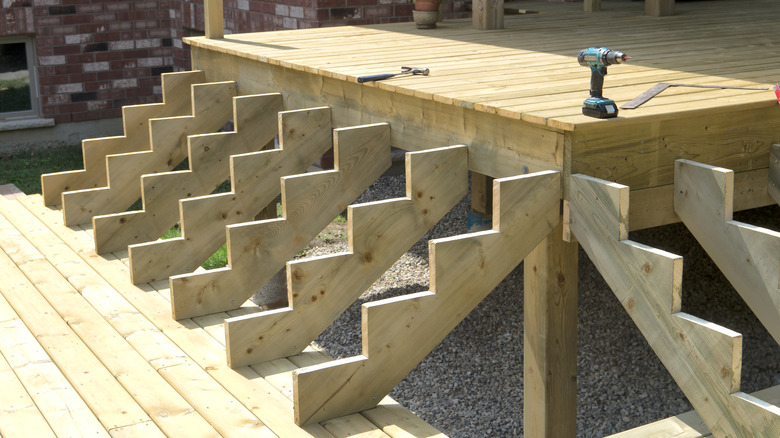
For ambitious DIYers, deck stairs are a natural next project after building a stylish floating wood deck. Or perhaps your old stairs have worn out from years of exposure to the sun, moisture, and use. As with any project, breaking it down into steps (pun intended) makes the process more manageable and helps prevent mistakes. For practice, start with a smaller, low-stakes project like a DIY staircase planter to get the hang of it. Once you're ready for the real deal, check with your local building codes and ordinances on deck stairs. This ensures your project meets local safety standards and helps you avoid potential fines.
Start by sketching a diagram that includes measurements and material dimensions. If you're replacing an existing staircase without changes, use its current measurements as a guide. A staircase includes stringers (supports), treads (the horizontal surfaces you step on), risers (the vertical faces between treads), and railings. Match the material and stains of your treads and risers to the existing deck. Stringers should be pressure-treated lumber, generally 2x12. Don't forget to install a landing at the base of the staircase. Landscaping pavers are a great option to integrate your steps into your yard or garden. This creates a sturdy pad that also helps protect your stringers from rot.
Measure twice, cut once
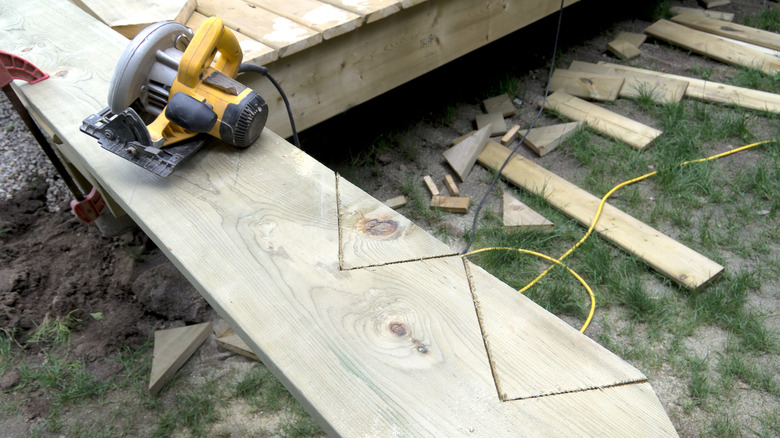
To calculate your stringer dimensions, measure the total rise (height) and run (horizontal distance) to the landing pad. Next, determine your desired height of each riser, typically about 7 inches. Then determine the tread depth, usually about 10 to 11 inches with a ¾-inch overhang. Be sure to verify required dimensions in your local building code.
Divide your total height by your riser height to calculate the number of steps, then subtract one to account for the deck as the top step. You can use an online stairs calculator to double-check your math. Using a speed or framing square, mark and trace these dimensions onto a scrap piece of wood. Be sure to account for the thickness of lumber you are using for the risers and treads. Test it out with your treads to make sure it fits. Once it fits properly, use that as a template to trace your stringers. In general, spacing between stringers shouldn't exceed 18 inches.
After cutting the stringers, secure them to the deck's rim joist using deck screws or approved fasteners such as joist hangers. Before securing the treads, add joist tape on top of the stringer to help protect the wood from rot. Use corrosion-resistant screws to attach the treads and risers — then enjoy your new DIY staircase.