

The Bright Pink Invasive Clusters That Are Taking Over Gardens
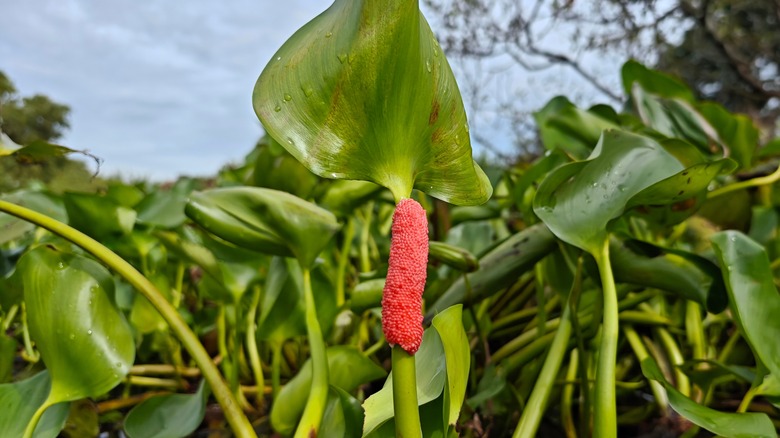
Having a colorful garden is ideal for most gardeners, but there are some sources of color you should try to avoid. The bright pink clusters of small, gooey spheres look cute and inviting, but they're actually the eggs of a highly invasive species. Apple snails are native to South America and were brought to the U.S. as a popular aquarium pet. They've since escaped and spread across much of the South. In some areas, they were imported to be farmed as a food source. However, some apple snails — much like another surprisingly dangerous snail you don't want to see – have been found carrying a parasite known as rat lungworm. It can be harmful to consume, so don't start snacking on any apple snails you find in your garden, and wash your hands after handling any!
Apple snails can devastate an ecosystem, eating massive amounts of aquatic plants and outcompeting native snails. Aquatic crops like rice are particularly vulnerable to these pests. The snails themselves can be tricky to identify if you aren't well-versed in snail species, but their bright pink egg masses are much easier to spot. Each cluster can contain hundreds of eggs, which is part of the reason they spread so quickly. The snails can breathe both on land and in water, but the eggs are always laid above water. Look for them on plants, pathways, posts, and any other structures near water. This is why you may want to reconsider having a large water feature in your yard, and, if you live in the southern U.S., you'll want to deal with these sooner rather than later.
Getting rid of apple snail eggs
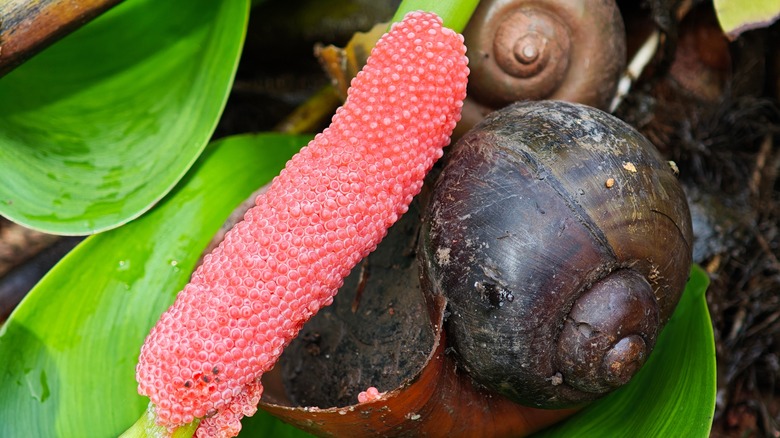
If you spot a cluster of bright pink apple snail eggs, don't touch them! The eggs are coated in a neurotoxin that irritates skin and eyes. Instead, wear gloves and use something to crush the eggs. They aren't particularly sturdy, so try crushing them or scraping them off with a garden or garage tool you have on hand. Be sure your skin is covered and your face isn't near them. If the eggs are out of reach, knock them into the water or spray them forcefully with a water hose. While apple snails can breathe underwater, the eggs can't. If you do come into contact with the eggs, wash your skin thoroughly.
Since they lay so many eggs at once, a population of apple snails can quickly grow out of control. If you're seeing multiple egg clusters, you may need to take more aggressive action. Copper sulfate can kill apple snails, but it will also have an effect on native snails and crawfish. In some cases, you may need to drain the water feature and leave it dry for up to a year. This is why snail removal is one gardening task you really can't skip after a heavy rain.
Apple snails need extra vigilance to prevent them from taking over your pond or lake. The eggs and hatchlings can spread from one body of water to another by clinging to equipment or plants. If you're getting anything secondhand, be sure to inspect it carefully and wash it before placing it in your water feature. If the problem grows out of control, contact professional pest removal services.