

Apple Vs Crabapple Trees: How To Tell Which Type Calls Your Yard Home
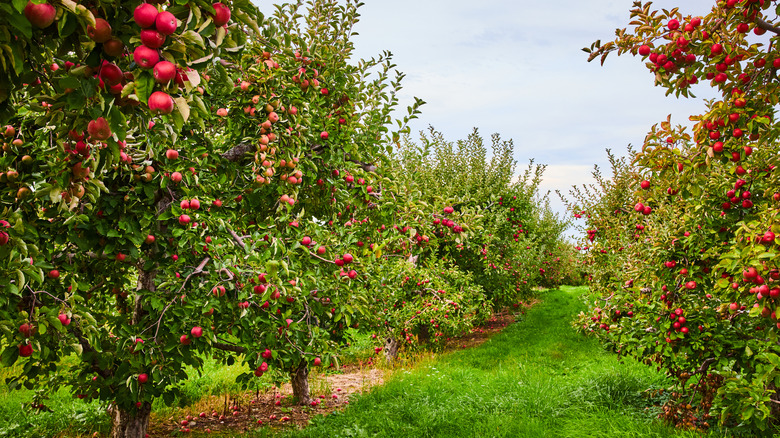
Few things are as exciting as stepping into the backyard of your new home and discovering you have your very own fruit tree. From springs filled with beautiful blooms to summers rich with fruit and ample shade, fruit trees can make a great addition to your garden. However, if you move into a home with a pre-established tree, you may not always know what fruit awaits you. This is especially true when it comes to fruit trees with similar appearances, such as apples and crabapples.
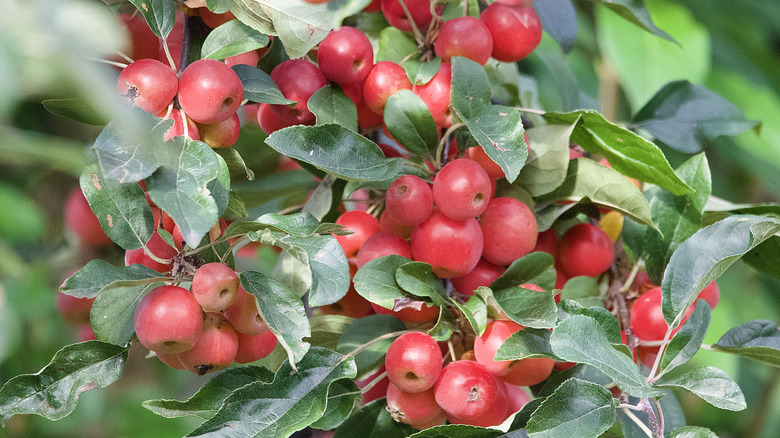
If you find a fruit tree in season, one of the easiest ways to tell an apple from a crabapple is by looking at the fruit. Crabapples are small — typically no more than 2 inches in diameter — and often have a bright red appearance. These little fruits are also quite sour. Apples, on the other hand, are typically larger and may mature into a range of colors and flavors depending on the variety.
There are other ways to differentiate between these two fruit trees, which can be helpful if your tree isn't growing fruit or you spot it outside the growing season. At first glance, the trees look similar, so you'll need to pay attention to small details to distinguish them.
The difference between apple and crabapple trees
If your tree is in bloom but not yet bearing ripe fruit, you can use bloom timing to help distinguish an apple from a crabapple. Crabapples often blossom during spring and go to fruit by June. However, apples have a wider range of bloom dates depending on their variety, with some showcasing their beautiful flowers in early spring while others don't bloom until later in the summer. This clue helps only if the tree blooms outside the crabapple's season; when bloom times overlap, it can still be difficult to tell them apart.
Fortunately, you can tell crabapples from apples year-round — much like the fruit itself, the difference often comes down to size. Apple trees also tend to be larger than crabapples, which provides an easy way to tell the two trees apart at any time of year. The only thing to keep in mind is that there are several varieties of both apple and crabapple, including dwarf and semi-dwarf varieties. Because of this, it's best to use height alongside other identifying clues. Generally, crabapple trees tend to grow anywhere between 5 and 20 feet tall, while apple trees grow from 6 to 30 feet tall.
Once you've identified your tree, you can begin to properly care for it. This means naturally fertilizing your tree as needed for its species, implementing the right water routine, or even pruning if necessary. You can also take steps to reduce common pests around your fruit trees that may harm the fruit or lead to lackluster growth.