

A Fragrant, Low-Growing Herb That's A Great Addition To Your Container Garden
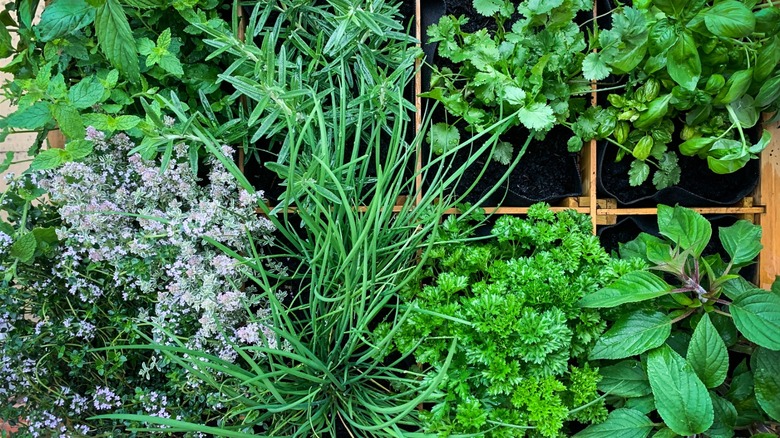
Mint is one of the most beloved herbs in kitchens and gardens alike. Its fresh aroma, versatile flavor, and ease of care make it a favorite plant for gardeners of all skill sets. Many of its varieties also happen to be quite invasive, so you should think twice before planting it in the ground. Luckily, Corsican mint (Mentha requienii) is small enough to easily grow in any container garden, while still providing plenty of flavor to your meals. This variety stays short, typically only growing to a few inches tall. While Corsican mint is a good candidate for small pots, it can also spread to fill larger containers.
In addition to its flavor, Corsican mint is often grown for its lovely flowers. During the summer, the stems are topped with tiny, light purple flowers. Bees and other pollinators enjoy these flowers, making it a great option for container pollinator gardens. Keep pots of this delightful herb on your patio or balcony and enjoy watching your little visitors drink nectar and gather pollen. Try out this cute DIY garden planter made from shower tiles for the perfect small pot to grow your Corsican mint in.
Caring for Corsican mint

Prepare your container with potting soil that is rich and well-draining. Corsican mint is adaptable, but make sure your pot has drainage holes to avoid drowning it. With its tiny leaves, this plant looks particularly cute in mugs or bowls, but you'll want to use this hack to create drainage holes without cracking them. Once your pot of choice is prepared, plant your mint. You can start it from seeds or seedlings, but take care if they are pelleted. Pelleted seeds contain multiple individual seeds, so it's easy to overplant them and crowd your container.
For outdoor Corsican mint plants, wait until the temperatures have risen to at least 65 degrees Fahrenheit before planting. If it's in a smaller container that's easily moved, you can start it indoors while the weather is still cold and move it outdoors when spring arrives. If you live north of zone 6, you should also bring it inside during winter to prevent frost damage. Whether indoors or out, keep your Corsican mint in partial shade and water it regularly to keep the soil moist. You won't need to fertilize it often, but if it begins to look a bit thin, you can give it a slow-release fertilizer at the beginning of the growing season. Be sure to follow the instructions on the fertilizer package to avoid overloading your plant. You can start harvesting leaves roughly one month after planting, or sooner if you're starting from a seedling!