

Why You May Want To Reconsider Using Raw Eggs As Garden Fertilizer
Raw eggs are high in protein and nitrogen, which means they can help your plants thrive and enrich the soil for a healthy harvest. In fact, raw eggs have been touted as an inexpensive, easy, and natural slow-release fertilizer that will deliver nutritional benefits to your plants over time. But while the perks may sound egg-cellent, you may want to reconsider this fertilizing method, as it could lead to some rotten luck in your yard.
One of the biggest downsides to using raw eggs as a fertilizer is that, while plants may love the nutrients, pests will likely love them even more. Egg in the soil can attract animals such as raccoons and rodents, who may destroy your plants in pursuit of food. Outdoor Guide writer Baylee Bunce quickly discovered this side effect first-hand when she tried an egg yolk hack to help give her tomato plants a growth boost. The morning after she added the egg yolk, Bunce came outside to find soil everywhere and the tomato plant yanked from the grow bag, presumably by an opportunistic raccoon.
The smell is another major turnoff. If you don't bury the egg deep enough — at least a foot deep, in most cases — you'll have the stench of rotten egg to contend with in your garden. And since the yolk is more resistant to decomposition, you could have many weeks of stink on your hands. Any egg too close to the soil's surface can also pose a hazard to small children or curious pets. Raw eggs can contain harmful bacteria and pathogens such as Salmonella, which, if accidentally ingested, can cause diarrhea and stomach problems, or even death in rare cases.
What fertilizer to use instead of raw eggs
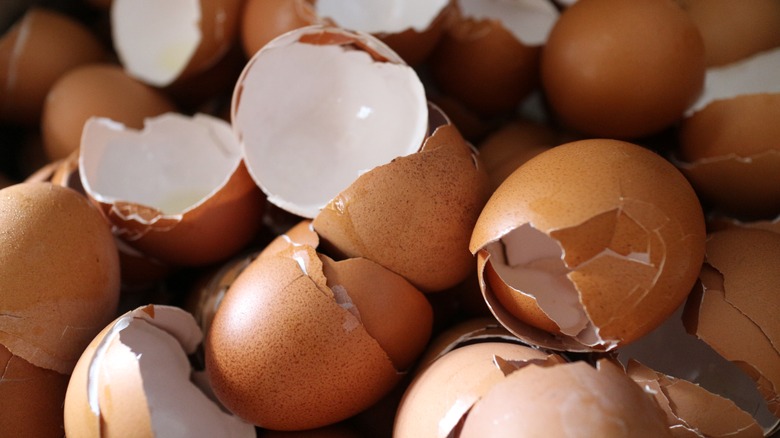
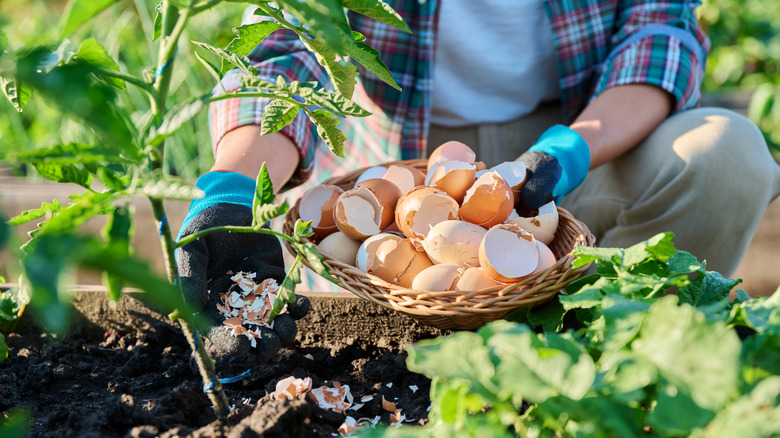
While raw eggs may be an iffy choice of fertilizer, there are a bunch of unexpected uses for eggshells in your garden — for one thing, the shells will help you get the nutritional benefits of eggs without the smelly side effects. Egg shells don't contain all the nutrients you'd find in a whole egg, but they are incredibly rich in calcium, meaning, for plants and wildlife, this is actually the most nourishing part. You'll just want to be prudent about how you prepare the eggs so that your plants actually reap the benefits, and so that you don't inadvertently attract any animal visitors to your garden.
At the very least, egg shells should be cleaned off so that they don't attract hungry animals. But the best option is to grind them up well before adding them to your compost pile. Egg shells that are fully decomposed are not only less likely to attract animals, but they're also more easily and quickly absorbed by your plants' roots. On top of the shells themselves, you'll want to keep hold of that egg carton, too, as this empty kitchen staple will actually make the perfect flower pot.