

Winter Is Coming: Here's How To Keep Your Fruit Trees Safe From Frost Damage
We may receive a commission on purchases made from links.
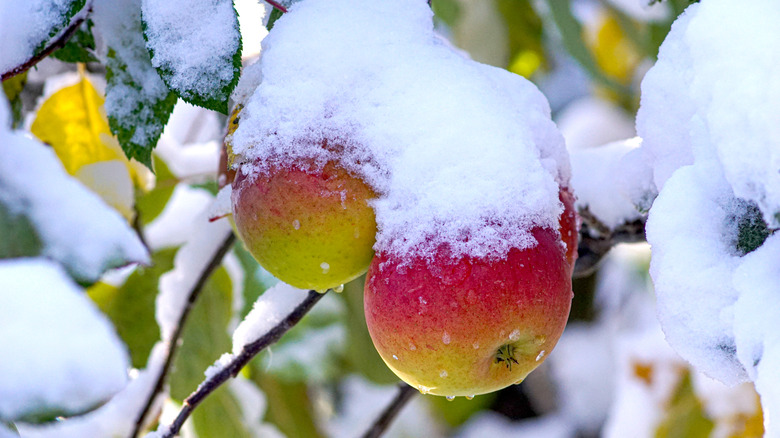
Regardless of the Old Farmer's Almanac winter weather forecast, the fact remains that each year, almost every portion of the U.S. experiences at least one frost event at some point over the season, even during relatively mild winters. In fact, frost conditions can occur at any point between late fall and early spring. Even if frost conditions are short-lived, it can severely damage fruit trees, killing new blossoms and next year's harvest before they have a chance to establish. With that in mind, it is essential to be prepared to quickly take action to keep your fruit trees safe from frost damage.
Not surprisingly, keeping fruit trees warm is the best way to ensure they are safe from frost damage. There are a few ways to keep trees cozy. The key is having a plan and the necessary materials readily available so you can act fast when frost conditions are predicted. This is particularly true if you have tropical fruit trees, which are very susceptible to frost and freezing conditions. Additionally, fruit trees may be even more susceptible to frost damage during warm or mild winters, as the unseasonably warm temperatures may cause them to continue to bloom and/or emerge from dormancy early.
Cover your trees to keep them warm
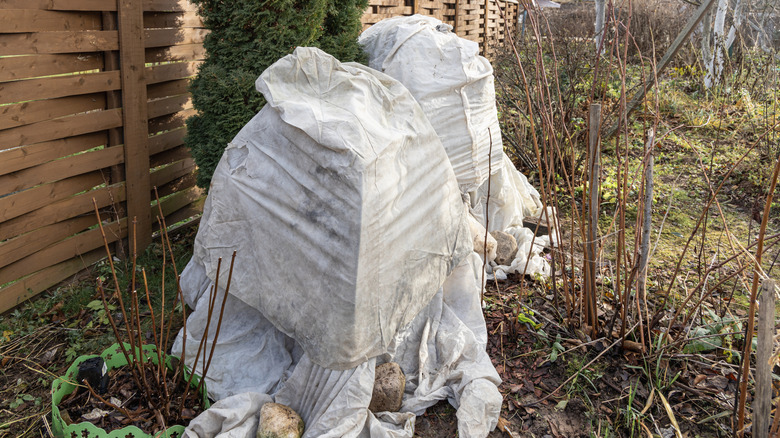
Just as you need to dress properly for a winter hike, the best way to keep fruit trees warm when temperatures drop is to cover them up. The best method is to form a sort of tent over the tree with old sheets and blankets or frost cloth, like the Alpine Reach blanket plant cover. To keep from damaging the branches of the tree, use stakes, poles, or posts to support the cover. It is also critical that the cover reach all the way to the ground in order to trap the heat released overnight from the soil.
To properly cover your fruit trees, begin by placing supporting stakes or poles around the tree. Next, drape the cover over the tree and supports. Secure it in place with additional stakes and twine and/or heavy objects placed on the loose ends. Depending on the severity of the weather predicted, you may opt to add a second layer of covers. In severely cold conditions, some people choose to place a heater or heat lamp under the cover as well (though be careful fabric or plastic doesn't touch the heating elements), or a bucket of hot water.
Before a frost, water the ground around the base of the tree, as moist soil tends to retain heat better than dry dirt. This can actually help protect all the trees in your yard from frost, not just the fruit trees. Whether your trees are covered or not, you can also wrap the trunks in an insulating material, such as heavy cloth or foam. Lacing string lights through the branches can help as well, even on large trees, though be sure and remove the wraps when temperatures get back above freezing to avoid overheating trunks.