

The Easy-To-Grow Perennial To Plant This Fall For A Beautiful Spring Garden
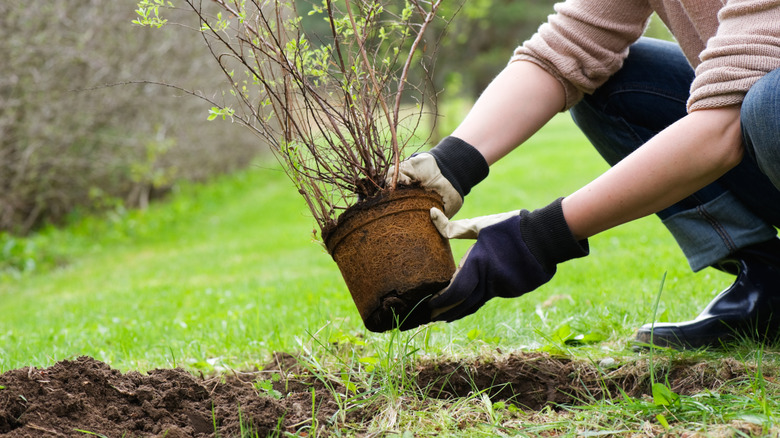
To get a jump on your springtime garden, you might be planning on starting seeds indoors before spring begins. However, many flowers can be planted directly in your garden in fall for earlier spring blooms. Forsythia is a popular option, a perennial shrub known for being easy to grow that's full of bright yellow flowers in early spring. Although the flowers fade relatively quickly, the burst of color they bring to the garden is a great way to start the season. These can typically grow in USDA Hardiness Zones 5 through 8.
Forsythia plants are native to China, Japan, and parts of Europe. Due to how easy it is to grow and how quickly they can spread in some places, some counties throughout the U.S. do consider forsythia to be invasive. In most of the country, this isn't a concern, but double check with your local agricultural departments first. If it is invasive where you live, consider planting forsythia in a container to limit its spread. They can grow up to 4 feet wide, so be sure to choose a large enough pot to hold all their roots! Alternatively, choose a native alternative like winter hazel, spicebush, or a Carolina jessamine vine with buttery yellow flowers that pollinators are absolutely obsessed with.
How to grow forsythia in your garden

Forsythia shrubs are incredibly adaptable and aren't prone to major problems. It's still a good idea to choose your planting site carefully to ensure that it's blooming its best, especially if you crave a gorgeous garden full of lemon-yellow blooms in the early spring. Plant forsythia in the fall before the first frost, but after the high heat of summer has passed.
These bushes thrive in moist, well-draining soil, although they can tolerate other soil types. They need regular water, but do not enjoy standing water or soggy soil. Plant your forsythia shrub in full sun for the best flowers. It will still grow in partial shade, but typically, shaded forsythia plants don't produce as many flowers.
After planting, forsythia doesn't require much care. Regular pruning can help control the shrub's size and keep it looking neat. Prune your forsythia after it finishes blooming in late spring to early summer. Although many shrubs prefer being pruned later in the year, forsythia is actually one of the plants you shouldn't prune in fall. Flower buds for next spring begin forming during fall and winter, so removing canes and pruning late in the year can lead to reduced blooming. Only remove forsythia branches that are dead, diseased, or heavily damaged during fall or winter.