

Fill Your Fall Garden With Hummingbirds With A Beautiful Salvia Variety
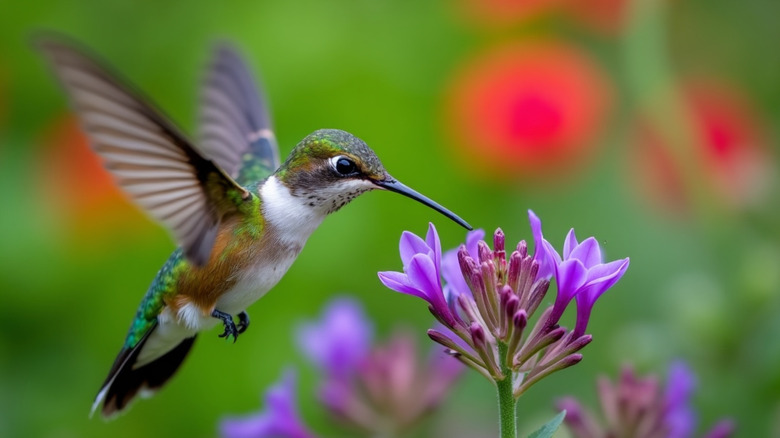
There's something exciting about seeing a hummingbird near the plants or a feeder you've set out specifically for them. As autumn leaves fall and some flower varieties fade, countless birds — including hummingbirds — begin their journey southward to warmer weather. Some stick around a little longer than you might think, even as the weather gets a bit chilly. Even though the older males of some hummingbird species begin migrating in July, their young offspring wait quite a bit longer, usually staying in one location well into fall.
Nearly anywhere you live in North America, offering up some nectar-producing flowers for the hummingbirds will help them on their arduous journey. Salvia varieties such as Salvia 'Lake Como' (also known as 'Lake Como' sage) from the Salgoon series can nourish these fast-flapping flyers well into the fall. The word "salvia" is from the Latin "salvare" which means "to save. That's fitting, as this plant could theoretically be a life saver for hummingbirds.
The Lake Como salvia in particular is an eye-catching plant that'll have hummingbirds flocking to your yard thanks to its rich lavender to electric-blue tubular flowers. The plant thrives in USDA Hardiness Zones 8 through 11 and offers blooms from late summer through fall. Bees and butterflies also love it, so having some of this salvia in your yard will help them as well.
How to grow 'Lake Como' salvia to help hummingbirds in fall
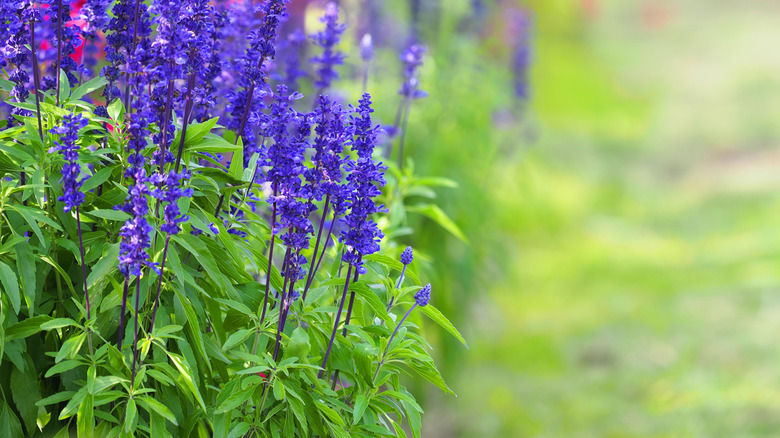
Salvia 'Lake Como' is a bushy but upright plant that also does well in container gardens, so it's possible to grow it even on your patio or in a yard with limited gardening space. It prefers moist but well-drained soil and will grow in almost any soil type, provided it has plenty of sun and some protection from wind. Add a little aged compost to the planting hole before adding the salvia. Once established, it's also drought-tolerant and is a relatively fuss-free plant that's great for beginning gardeners.
Water it regularly the first few weeks after planting it, and after that, the plant doesn't mind drier conditions. It grows about 15 to 22 inches tall, showing off its lovely blue flowers against a background of aromatic green leaves. Removing the spent blooms as soon as possible will encourage more flowers, which means more gorgeous color, plus more nectar for the hummingbirds.
When temperatures drop, a little mulch around the base will help protect it from frost. This plant dies back each winter in areas where it's a hardy perennial and starts fresh again in spring. And besides adding this salvia cultivar to your yard, here are even more tips to get your garden ready for migrating hummingbirds.