

Snow Blower Vs Shovel: How To Choose The Best Tool For Your Winter Needs
We may receive a commission on purchases made from links.
Snow building up on your driveway and paths can be both inconvenient and dangerous. You can try clever hacks for removing snow like using your riding lawn mower for snow removal to clear it all away, but if you're a little more traditional you'll probably reach for either a snow blower or a shovel. Both have their pros and cons, so which one is right for you? Of course, if the snow has already arrived, use whichever tool you have available.
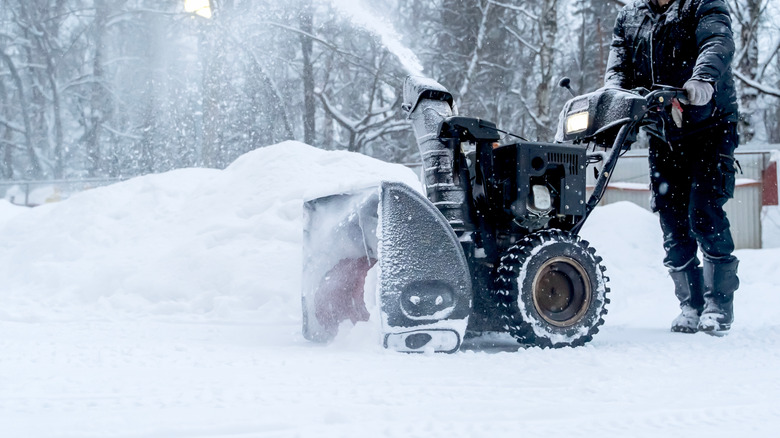
If the snow is still in the future, there are a few things to consider when choosing your tool. Snow blowers are more powerful and generally take less effort and physical energy to use. The trade-off is that they're significantly more expensive than shovels. The initial cost is higher, but they also need electricity or gas to power them, along with periodic maintenance, which means there are recurring costs as well. Using a shovel to clear snow by hand takes longer, you're likely going to be more tired afterwards, and there is some risk of injury. But they're less expensive, as little as $35 for a quality shovel like the 20-inch combination snow shovel / pusher from Suncast, or far less if you find one at the dollar store. You can also hang a snow shovel or lean it against a wall, while snow blowers will require a dedicated space when not in use.
You can also split the difference with a powered or motorized snow shovel. These are generally lighter and easier to use than a snow blower, but still more expensive than a traditional snow shovel. Motorized snow shovels are a nice compromise between snow blowers and traditional shovels, particularly in small spaces, so it's worth looking into if you're still unsure which to pick.
Different tools for different environments
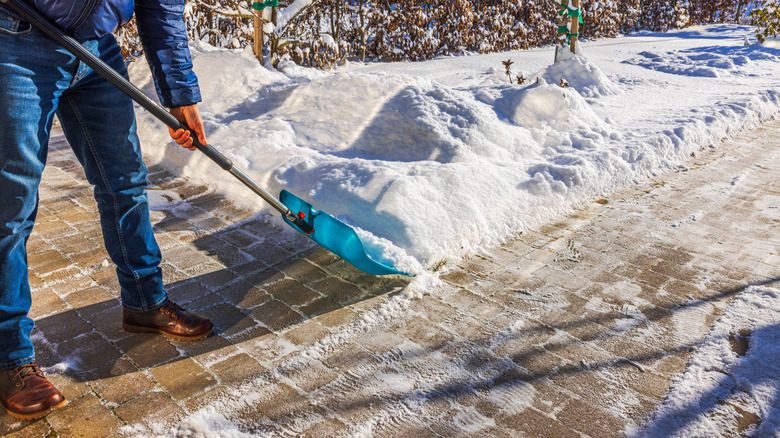
Both snow blowers and shovels are effective at moving snow, but shine in different situations. If there isn't a lot of snow — less than 2 inches — a snow blower may not be able to scoop up the snow. Ice can also make a difference as well. Most snow blowers can handle a small amount of ice, but large chunks may be a problem. Your best bet is to plan on removing snow as it falls and when it's fresh. When it comes to shovels, the ability to break up and move ice is limited by your own strength and the shovel's.
You should also consider where the show is piling up. If you have a gravel driveway, you may want to get a shovel. A blower can pick up and toss small rocks (though you can adjust the height on a two-stage or three-stage blower to avoid gravel). This might ruin your beautiful, recently refreshed gravel landscaping, or hit something. It's more difficult to control where the snow is blown when using a blower, while you're in total control of it when shoveling. If you have to work in tight spaces, or around areas where you don't want snow thrown accidentally, then a shovel is likely the better choice.
Despite their convenience, snow shovels carry an added risk of injury, particularly since it's a specific, strenuous form of activity most people only perform once or twice each year. Back and muscle strains are common. And for folks over 45 or 50, there is a higher risk of heart attacks, as the vigorous shoveling and lifting puts special strains on the heart and potentially clogged blood vessels. Finally, for a quick solution, you might consider the perfect ice melt for your patio or deck.