

Why You Should Reconsider Which Marigolds To Add To Your Fall Garden
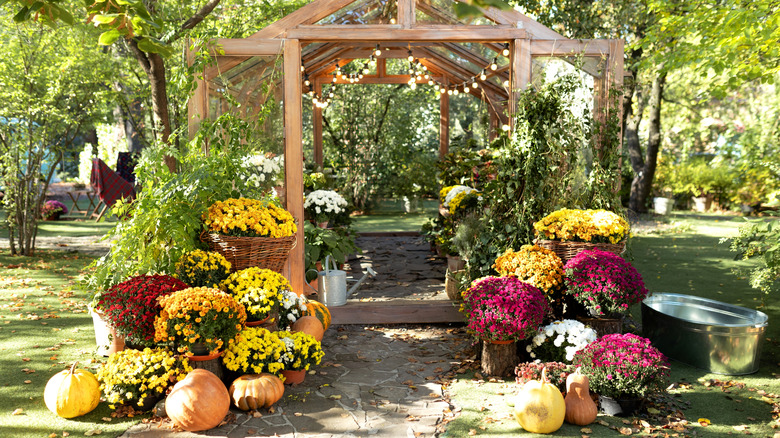
Fall is a fabulous time to add colorful blooms to your garden, whether it's a porch display or something to add a pop of autumn hues to your flower beds. Many people reach for mums, but marigolds are also at the top of the list because of the beautiful oranges, yellows, and reds of the blooms. While the fall-friendly colors of marigolds work wonderfully for the cooler months, there is a reason you may want to reconsider using these as potted plants for your garden decor — some species could grow too tall for your pots.
Of the three main types of marigolds — French, African, and Signet — the tallest are African marigolds (Tagetes erecta). Also called Aztec or Mexican marigolds (they originated in Mexico, not Africa), these are the ones you probably don't want to plant in pots, because they may become unsustainable. African marigolds (USDA Hardiness Zones 2 through 11) can grow up to 4 feet tall, making them the largest of all the marigolds on the market. And, while their double-flower blooms are visually appealing and enormous — up to 5-inches in diameter — you won't want to pot them because they tend to tip over due to their legginess. While most marigold varieties do make great potted plants, not all of them are pot-friendly; some are best planted in the ground, where you can plant them deeper if they begin flopping over. In pots, over-tall marigolds will need to be staked, adding extra steps and detracting from the display's beauty.
How to enjoy marigolds in the fall
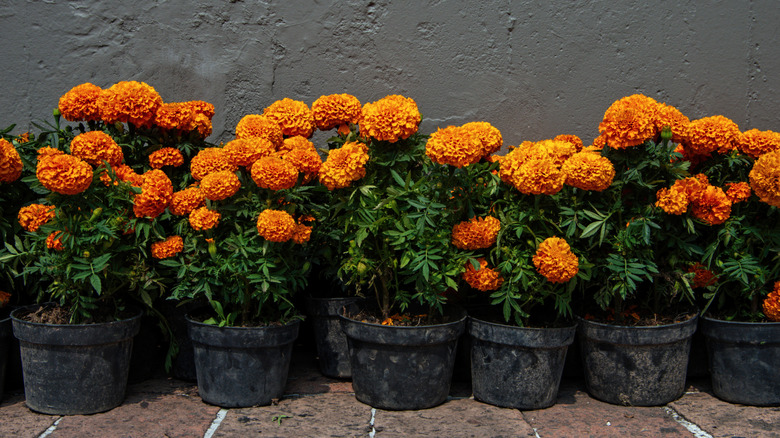
If you plant African marigolds in deep pots, you might be able to get away with using them. Otherwise, planting them in the ground is your best bet. If you really want marigolds in pots, consider French and Signet varieties. Signets (Tagetes tenuifolia) typically grow to a maximum height of 6 inches and are best suited for containers. The common English or pot marigold (Calendula officinalis) is another beautiful fall flower option to brighten up your garden in pots. It should be pointed out they are technically not a marigold, but they offer a big advantage for fall plantings, in that they thrive in cooler weather.
Want to put marigolds in the ground in autumn? You're not out of luck: There are varieties of marigolds that thrive in cooler climates, so transplanting certain potted blooms purchased now will work out if you select the right ones. Once again, pass on the African varieties, as they do better in warm climates (though you should start seeds indoors a month or two before the final frost, to be ready for early spring). French marigolds (Tagetas patula) are well-suited to cool weather (thriving in zones 2 through 11).
If you wanted to plant seeds for fall blooms, late summer is the time for that. As the weather becomes cloudier and less sunny during the fall, be sure to place marigolds in spots where they receive the most sunlight, and continue deadheading them to keep them healthy for the rest of the fall season. Marigolds are also a pollinator-friendly plant that helps repel a variety of garden pests, and a low-maintenance flower that is actually edible, making them a worthwhile addition to your yard.