

Two Underrated Varieties Of Thyme That'll Make Your Yard A Hummingbird Haven
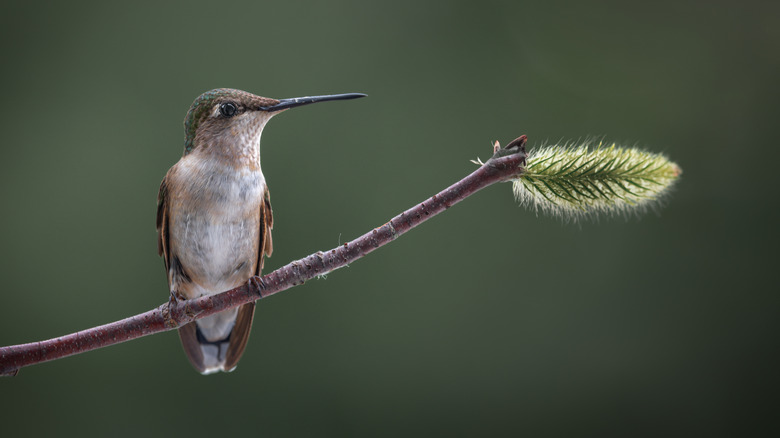
Many plants in the mint family repel ticks and other pests while attracting pollinators that boost local ecosystems. Common thyme (Thymus vulgaris), a mint relative that's great at flavoring foods, is sometimes grown in yards to banish mosquitoes and beckon bees. Because all members of the mint family interest hummingbirds, you can lure these pixie-like creatures with many types of thyme. Planting lesser-known thymes also varies the look of your landscape and introduces additional flavor profiles to your cooking. Mother of thyme (Thymus serpyllum) excels as a ground cover as well as a hummingbird lure, and caraway thyme (Thymus herba-barona) is adored by chefs and pollinators alike.
Mother of thyme and caraway thyme are good choices if you're seeking low-growing plants that produce flowers and grow fast, covering bare patches of soil. Caraway thyme performs best in USDA hardiness zones 4 through 8, and mother of thyme is happy in zone 9. Both of these plants can handle a bit of trampling, so they work well beside walkways and in other areas that experience light foot traffic. Like common thyme, they are rarely bothered by infrequent watering or low-quality soil, and they're generally considered fuss-free plants suitable for gardening beginners.
Mother of thyme
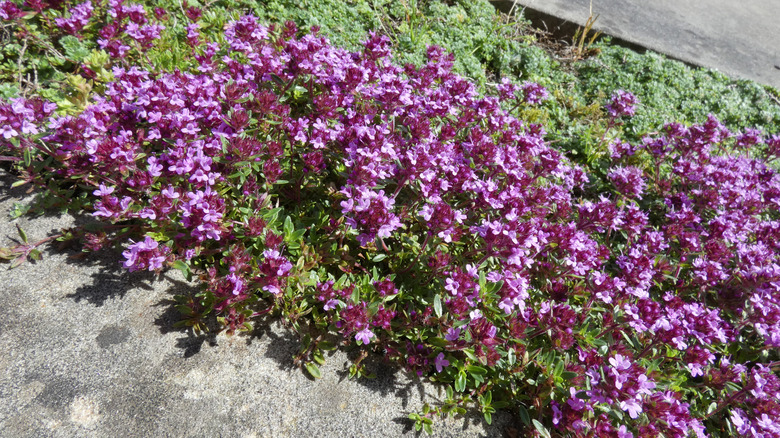
Otherwise known as creeping thyme, mother of thyme makes flowers whose tube-like shape fills hummingbirds with glee. These creatures love tubular blossoms because they're an ideal fit for their beaks. This helps them access as much nectar as possible. These flowers bloom in shades of pinks and purples that catch hummingbirds' attention, and they last from June through September, providing a reliable source of nourishment. The 'Coccineus' cultivar makes blossoms in a reddish hue that's especially attractive to hummingbirds.
This perennial is easy to grow from seed if you plant it in a spot that receives at least 6 hours of direct sunlight each day. Avoid planting sites prone to pooling water, which may lead to root rot. If your garden has heavy clay soil, consider amending it with compost to improve its drainage. Loamy, sandy, and stony soils are generally tolerated by mother of thyme. Mother of thyme will even grow on steep slopes that other plants won't accept, but avoid acidic conditions — that is, soil with a pH level below 6.0 — to keep it content. Finally, make sure to prune your creeping thyme every now and then to promote healthy growth and keep too many woody stems from accumulating.
Caraway thyme
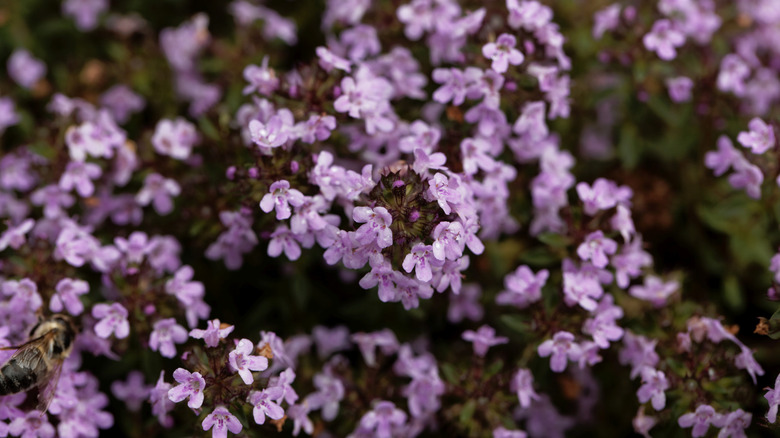
Like mother of thyme, caraway thyme makes an excellent ground cover. This perennial forms mats of foliage that are both attractive and aromatic. Caraway thyme is used as a culinary seasoning more often than mother of thyme. In fact, it's traditionally used to season Baron of Beef roasts in the United Kingdom. Honeybees, butterflies, hummingbirds, and other pollinators also find its nectar quite delicious, but deer aren't very interested in munching its leaves or petals.
Caraway thyme's flowers bloom for only a couple of months, but their pink hue can be especially vibrant. Hummingbirds often associate bright colors like this with high nectar content, so you're likely to have lots of them visit. This type of thyme makes tubular flowers, too. Caraway thyme thrives when provided with full sun and soil that drains excess water effectively. It prefers a soil pH that's either neutral or alkaline, but it can handle stony ground and xeriscaped environments such as rock gardens.
Since caraway thyme is somewhat spreads aggressively, avoid placing it near plants that despise competition. Growing caraway thyme in pots keeps it from getting out of hand and lets you move it around with ease. Plus, changing its location is an easy way to invite hummingbirds to different parts of your yard. You could even make this plant the centerpiece of a hummingbird-friendly container garden. If you find that you need more caraway thyme plants for this project, try propagating them from stem cuttings.