

Why Winter Might Be The Best Time For Pruning Your Fruit Trees
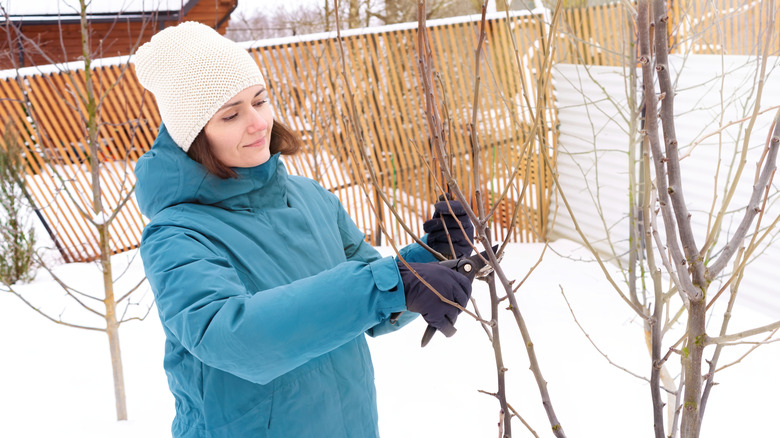
By removing dead, diseased, or damaged branches, the orchardist can both control the size of their fruit trees, and make them all-around healthier. Pruning allows more airflow and sunlight in between the branches, which in turn encourages vigorous growth and fruit production. However, you need to make sure you are pruning your fruit trees in the right season for the best possible results. While it may seem counterintuitive, late winter might actually be the best time of year for pruning your fruit trees.
Winter pruning is essential because this is the time of year when the trees are dormant. Between fall and winter, trees slow down their growth to prepare for winter rest. If you prune in the fall, which you should never do with flowering fruit trees, there is the risk that the slowing growth means you've created open wounds that can't heal in time for the coldest parts of winter..
Conversely, when you save your pruning for the late winter, you improve the health of your tree. The lack of foliage makes it easier to see which branches actually need to be pruned, and the colder temperatures mean that disease is not going to spread as easily. Plus, as the weather begins to warm, the pruning wound will heal up and the tree's energy will be focused on the healthier branches, leading to a much better harvest come late summer and fall.
What types of fruit trees should be pruned in winter?
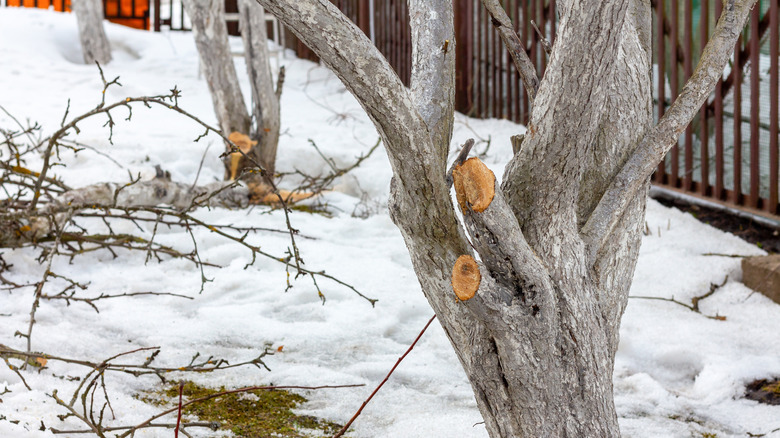
There are many types of common fruit trees that respond incredibly well to winter pruning. Perennial orchard favorites, like apples and pears, and even some less common choices, such as quince, thrive with winter pruning. Additionally, certain berry bushes will respond equally well to winter trimming. The old wood does not produce as well as fresher, newer growth. Therefore, trimming that out is going to be beneficial for your eventual yield. In fact, over- or under-pruning can be one reason why your fruit trees aren't producing fruit.
However, just as there are certain plants that shouldn't be pruned in winter time, there are also certain trees you shouldn't prune in winter. Some stone fruits, such as plums and cherries, shouldn't be pruned in the winter. The open wounds leave them very susceptible to fungal infections like silver leaf disease, especially if the winter weather is cold and wet. You need drier summer temperatures avoid the fungal rot that causes the disease.
Overall, you should prune most flowering fruit trees (as well as many deciduous hardwoods) in the late winter if you can. Try and do it when you know the temperatures are not going to be so cold that they will damage the tree. Depending on your climate or hardiness zone, late January to early March is the perfect window to get your fruit tree pruning done. Once spring rolls around, you can watch as your trees grow and blossom with renewed strength and vitality. Such is the power of good pruning.