

The Popular Shrub And Tree Variety You Should Avoid Planting During Fall
While many trees and shrubs can be planted in either spring or fall, fall is often considered the better season for planting trees. Many fruit and evergreen trees thrive with a fall planting. However, that isn't true for all trees. One factor to consider when planting or transplanting a tree is the taproot. Taproots are longer roots that grow straight down, as opposed to smaller, more fibrous roots that grow horizontally or at an angle away from the trunk. Most plants have a taproot when they're first germinating, but typically the taproot stops growing at a certain point and the fibrous roots support the plant. But there are some trees that continue to rely on taproots even as adults. Hickory, walnut, and many pine trees are a few of the most common examples. Oak trees, including the fast-growing live oak that hummingbirds love, also frequently keep their taproots.
The taproot benefits these trees, but it also makes them difficult to move and plant. Root damage during transplanting can increase the risk of transplant shock, and a longer taproot is more challenging to move without damage. With frosts and freezes closing in, a tree with a damaged taproot may not have a chance to recover before winter arrives. If you can keep the roots intact, then you can still safely transplant trees with taproots in fall. Otherwise, it may be better to wait for early spring, so they can recover from any shock or damage, and establish their roots through summer.
Safely planting trees and shrubs with taproots
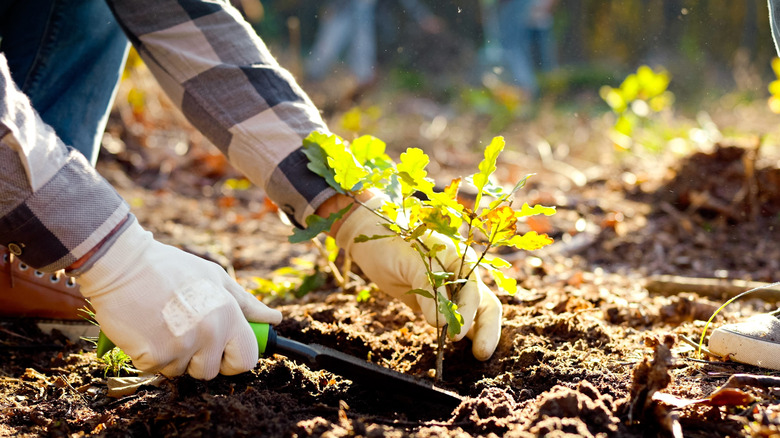
Many trees with taproots can still be planted from seed in fall. For example, you can collect acorns as they fall (since they germinate almost immediately) to plant in your garden, or you can start the seeds indoors to plant later (though it's generally not recommended). If you're low on space, consider using this space-saving hack to start your seeds.
Root pruning is also an option. Root pruning is the process of cutting back roots and encouraging new roots to grow, with a focus on keeping the new roots short enough that they can be easily transplanted. This allows the tree to be transplanted with as many roots as possible, giving it the best odds of survival. If you're transplanting a tree from your own yard, you'll need to start root pruning at least a few months before moving the tree so it has time to adjust and recover. Since trees with taproots generally do not thrive when moved in fall, consider pruning the roots in spring and transplanting them the spring after. However, there is another option. Since taproots cannot develop in shallow spaces, container-grown nursery plants may not have them, making them easier to transplant (trees like oaks and hickories simply won't grow a taproot later in life).