

How To Turn Takeout Sauce Cups With Lids Into Cute Hummingbird Feeders
We may receive a commission on purchases made from links.
Attracting more hummingbirds to your yard starts with nectar. In addition to providing plenty of this sweet liquid nutrition, make sure these pixie-like creatures can find it easily and feel safe from predators while consuming it. You can make hummingbirds flock to your yard with agapanthus and other nectar-rich flowers, or you can whip up some DIY hummingbird nectar and place it in homemade dispensers. Many types of hummingbird feeders are easy to build and cost very little. Creating a feeder from repurposed materials is ideal because it minimizes expenses while extending the life of objects that might otherwise end up in landfills. Next time you order a takeout meal, repurpose the plastic condiment containers into small feeders for your tiniest feathered friends.
For this project, you'll need at least one of these condiment containers as well as its lid. You'll also need a nail or knitting needle, a small paintbrush, and non-toxic paint in two colors famous for luring hummingbirds: red and yellow. A bottle of black paint will come in handy, too. The paint should be non-toxic so it won't harm the hummingbirds, and it must be able to withstand rainstorms and the sun's ultraviolet rays. Keff's 30-pack of non-toxic acrylic paints is one option suitable for outdoor use. It contains several shades of red and yellow, plus a bold black.
Making and displaying your tiny hummingbird feeders
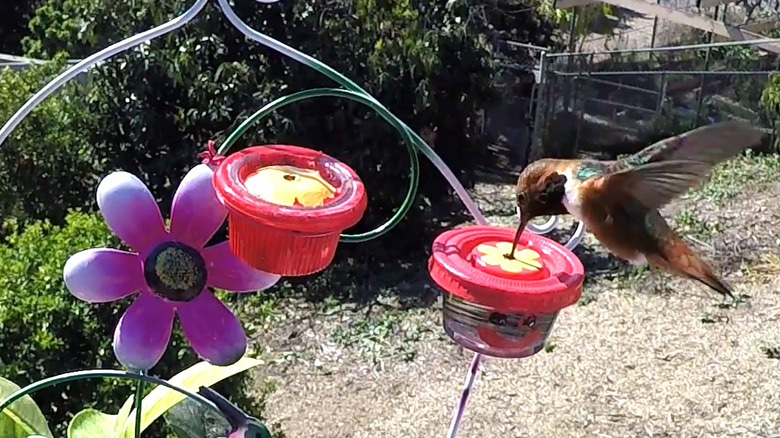
Once you've gathered your materials, apply red paint on the exterior of a condiment cup lid. Red is the most alluring color for hummingbirds, so avoid swapping it for another hue. Hummers seek it out because they associate it with high nectar content. Let the red paint dry, and then top it with a flower that's yellow, another color that signals food to these birds. Together, the red and yellow act like a beacon for hummingbirds, much like a McDonald's sign on the side of a highway. After the yellow paint has dried, place a black dot in the middle of the flower. Next, heat the nail or knitting needle and push it through the black dot. This will create a hole with smooth edges.
Even though the paint is non-toxic, it's best to keep it from touching the nectar. In other words, make sure not to drip any on the lid's underside or the cup's interior. Also, don't forget to wash the cups before putting nectar in them. In general, you should clean hummingbird feeders at least as often as you replace their nectar. This prevents mold growth that can harm hummingbirds and eliminates fermenting nectar that can lead to intoxication. Condiment-cup hummingbird feeders are generally the right size for candleholders, but try other creative ways of displaying them, too. For example, put them among the flowers in planters or suspend them from tree branches with pieces of wire. Unless you live in a warm climate, put these hummingbird feeders outside in the spring and bring them inside when winter is approaching.