

Successfully Care For Peonies During Fall With These Must-Know Tips
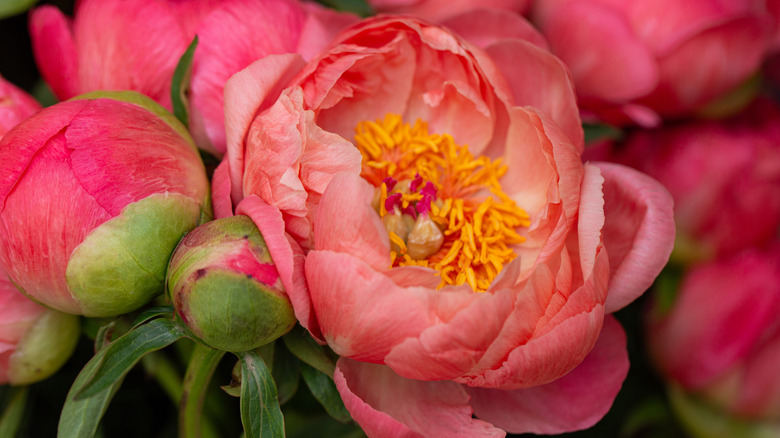
With their billowing, romantic blooms and a fragrance that practically begs you to stop and smell them, peonies (Paeonia spp.) have earned their garden royalty status. Even better, these plants are also naturally deer resistant, and, with the right care, they're the kind of perennials you can plant once and enjoy for a lifetime. But behind the glamour, peonies are surprisingly particular about what they want: lots of sun, rich soil that drains well, and winters cold enough to reset their bloom cycle. Move them too often or plant them too deeply and they'll stubbornly refuse to perform. That's why autumn is such a critical season for peony enthusiasts. If you want a full encore performance in spring, this is the time to get hands on.
So, why is fall the perfect moment to pamper these garden celebrities? As the weather cools and soil retains just the right amount of moisture, peonies are shifting focus underground, building up root systems that will fuel their dramatic spring showcase. This seasonal rhythm is your opportunity to give them a boost. By planting new peonies and dividing overcrowded plants in October through mid-November, you can give them space to thrive, and the roots will settle in comfortably before the winter chill. These are the main reasons you might want to reconsider planting this stunning flower in the spring. Additionally, cutting back peonies' spent leaves tidies up the flowerbed, while also fending off diseases that can linger on decaying foliage. Think of it as setting the stage before the curtain rises again.
How to care for peonies in fall
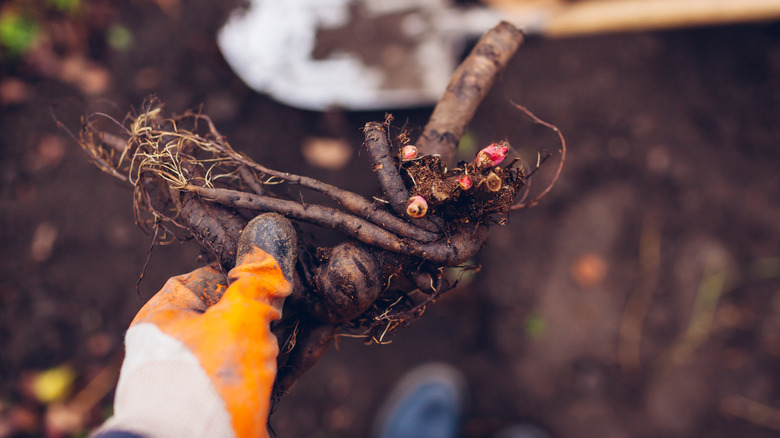
To properly plant new peonies, give those tuberous roots the red carpet treatment. Dig a generous hole so the root system can spread out comfortably. Position the peony so the "eyes" (those tiny buds that will eventually become stems) sit no more than 2 inches below the soil surface. Space plants about 3 to 5 feet apart to give them room to breathe. After planting, water consistently to help roots establish. You can ease off as the plant ages since peonies become more tolerant of drought over time. A light mulch of wood chips helps lock in moisture and keeps weeds at bay. And because those dramatic blossoms can get heavy enough to topple stems, consider staking them for extra support. Once flowering is done, deadhead spent blooms to keep the plant focused on root strength. Then, in fall, cut back all foliage to ground level and dispose of it to stop diseases from spreading.
Autumn is also prime time for moving or dividing peonies. To transplant, trim the stems nearly to the ground, then carefully dig up the root ball, keeping as much of the system intact as possible. Replant immediately, minding that 2-inch bud depth rule. Be patient, as transplanted peonies often take a year off from blooming before bouncing back stronger. And if you want even more peonies, fall division will give you that chance. After lifting the plant, gently brush off any soil, then use a sharp, clean knife to divide the root clump, ensuring each piece has three to five eyes. Replant these sections like new tubers. While smaller divisions might take longer to bulk up, the payoff will be more lush peony clumps in future springs.