

Genius Ways To Keep Skunks Off Your Campground
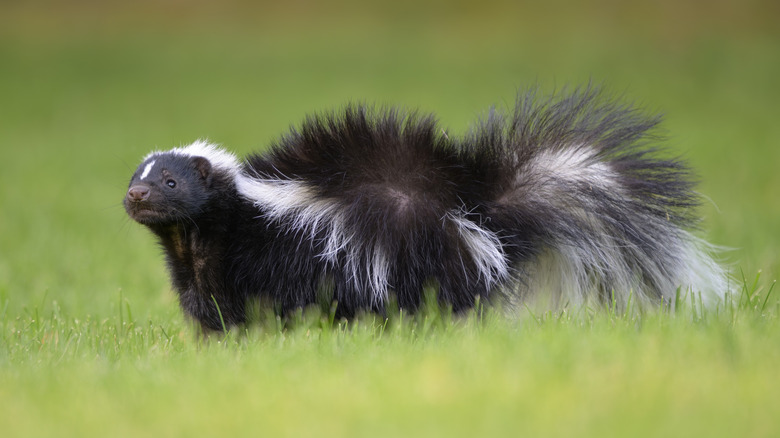
Whether you call them skunks or polecats, these fluffy little critters certainly are adorable. Some people even keep them as pets. While they look cuddly, you don't want them rummaging around your tent all night disrupting your beauty sleep. Beyond their noxious odor, skunks have also been known to carry zoonotic diseases like rabies and tularemia that can affect both people and pets.
Is there anything you can do to keep these stinky omnivores out of your campsite? After all, a group of skunks are sometimes called a stench for a reason (a surfeit of skunks has a nicer ring). Unless your campground is critter-proof, it's pretty likely you'll have an encounter with one of these bushy tailed opportunists out in the wild. Don't worry. We've got your back. We left no stone unturned in order to find you the best options to help keep your camp (nearly) odor free. So, take advantage of these eight genius ways to keep skunks off your campground and enjoy a breath of fresh air while you're roughing it.
Properly stow food and trash
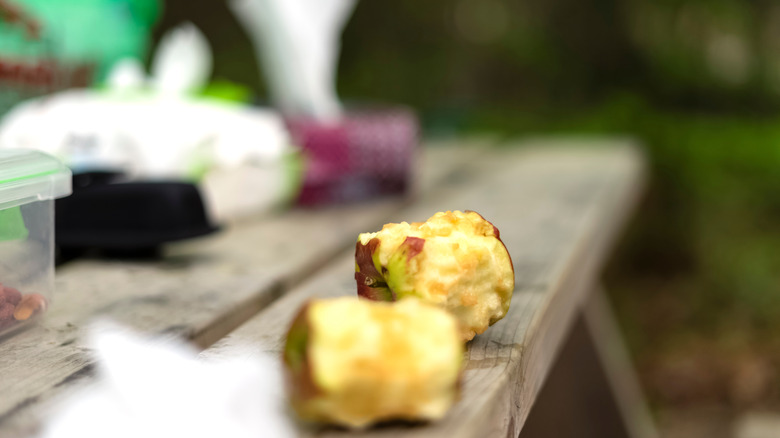
If you've had a few run-ins with skunks, you probably learned pretty quickly that you don't want to mess with these fluff balls. But once they realize your campsite is a choice spot for a late-night snack, you're going to have a hard time convincing them that the buffet is closed. The best way to keep skunks off your campground is to never, ever feed them. Food is a major draw for all kinds of wildlife and skunks have a particularly keen sense of smell, so even that seemingly innocent dirty plate under your camp chair is an inviting meal. How you stow your grub at camp makes all the difference. Most heavy duty, rotomolded coolers are pretty critter-proof, but dry food sources should be put away somewhere sneaky skunks can't raid it, like the trunk of your car. Just don't leave it in your tent. Don't forget to stash pet food bowls as well when they're not in use.
Trash is also a major concern if you don't want skunks rooting around. Just stowing your rubbish in a black bag isn't going to work, because hungry skunks can chew through that thin plastic in a matter of minutes. If the campsite has a bear-proof container, place any food waste in there (and keep the lid locked). You can bring along a metal or heavy plastic can with a tight-fitting lid. It won't stop animals from smelling the food, but it can deter critters smaller than bears from getting into it.
Employ a few stinky deterrents
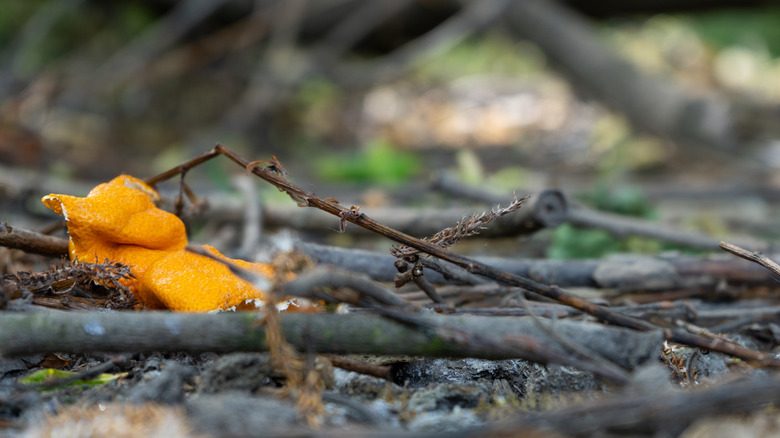
Skunks are clever and persistent, and once they've identified your campground as a wonderland of enchanting smells, you're going to need to employ a few stinky deterrents to encourage them to forage elsewhere. Skunk control could be as simple as enlisting the help of aromatic citrus. While we don't enjoy a skunk's musky scent, there are some odors these little stinkers don't appreciate either. The strong, acidic smell of orange and lemon are top contenders. You can try scattering a generous amount of peels around your tent, and keep in mind that more is probably better. You could also whip up a diluted orange-and-water spray to bring with you. As a bonus, bears, deers, and other camp-food scroungers also don't like the smell of citrus.
If you're not much of a citrus lover, and this genius hack does require quite a few peels to get the most bang for your buck, there are other cost-effective choices. Vinegar or ammonia soaked rags deliver a powerful scent barrier that they will likely keep their nose out of. Even something as simple as your leftover coffee grounds are another secret weapon against skunks. Just remember that these methods will need frequent reapplication, as rain and time can quickly dissipate these repelling aromas. It's probably also best to use this method in concert with others on the list.
Spray predator urine along your camp site's perimeter
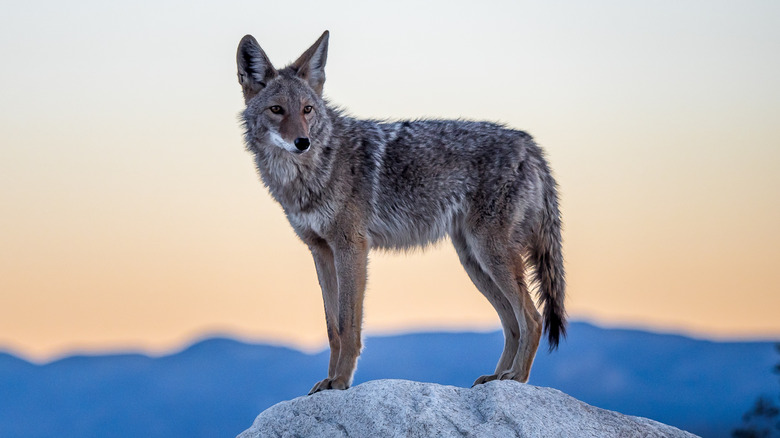
There are few smells that send skunks packing as quickly as predator urine. Their well-developed noses are good for more than just snuffing up a few tasty morsels: These super-powered sniffers also help them avoid becoming the main course at a midnight coyote banquet. The predator urine we recommend typically comes from some kind of canine, like a dog, fox, or coyote. Um. How, you're probably wondering?
Well, places like game farms and zoos humanely collect the pungent pee from drains in the animal's pen. Not only does it work well to keep skunks off your campground, but the revenue from predator urine sales helps fund the organizations. These products are available at many hardware stores or online. Lakota Naturals' pure coyote urine all-natural animal & rodent repellent is a good option because it's ready-to-use and comes in a no-mess squeeze bottle. Phew! Just note that you'll need to reapply it once a week or right after a rain or strong winds, like any other aromatic repellent you choose.
Buy a bottle or two of skunk repellant
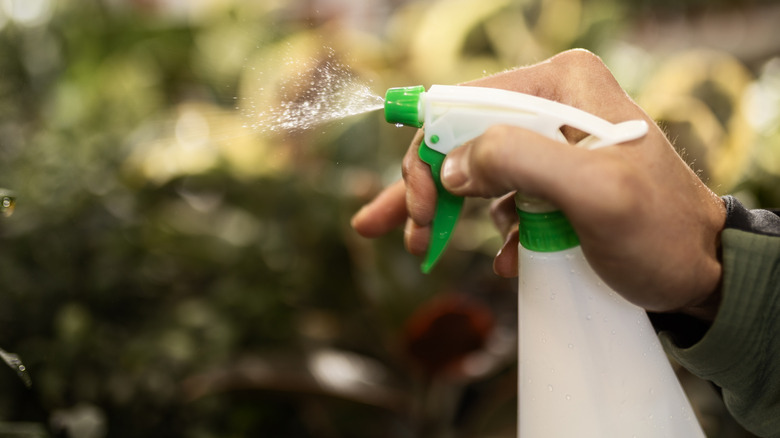
If you would rather not use predator urine, (that's some funk right there), there are other broad-spectrum animal repellents that may help keep skunks at bay. Just make a note of the label, because some that are designated as rodent repellent will not work for skunks. Surprisingly, skunks aren't actually rodents. They belong in the Mustelidae family and are akin to carnivores like badgers and wolverines.
Skunk repellents aren't too hard to track down and many products are safe to use around kids and pets. Get a product like Natural Armor animal and rodent repellent spray by the gallon, then transfer it to a camp-sized spray bottle. It has a strong peppermint odor that will turn up their little black noses, while offering us a pleasantly invigorating aroma that sure beats a sulfur or ammonia surprise. If you want to save a few bucks, you can always whip up your own jalapeño-infused skunk repellant at home before you go off grid.
Put out some motion-sensitive lights
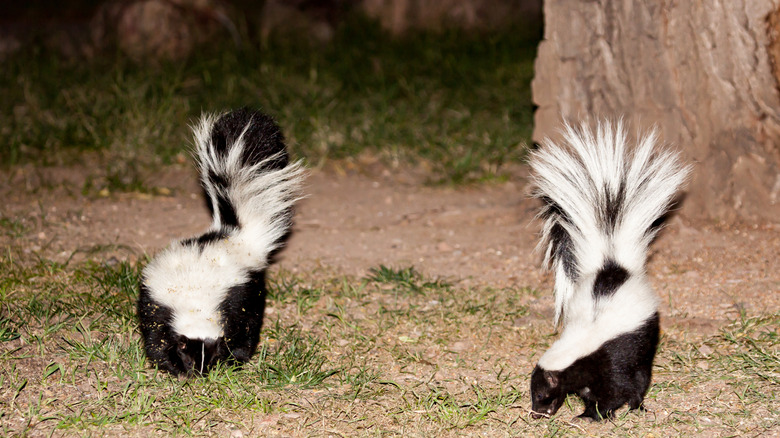
Skunks have notoriously bad eye sight, but they're nocturnal and don't really need hawk-like vision to snuff up a tasty meal. Thankfully for us, that could be their kryptonite, as a sudden flash of bright light is a genius way to keep them out of your campground while you're catching up on some Z's. Their eyes are light sensitive, so setting up motion-sensitive flood lights will likely send them foraging elsewhere.
A solar option, like DrawGreen's solar motion sensor flood lights, is best for the campground, as it's portable and charges during the day while you're out adventuring. The DrawGreen model features a flexible tripod mounting system you can wrap around a tree limb or any sturdy structure at your site. Or stand it on a flat surface with its three legs. Another terrific perk is that it's motion activated, so you don't have to light up the forest all night just to keep a few skunks out of your space. Look for a product that's well made and waterproof to withstand the elements, and one that retains a charge over a couple of cloudy days.
Stake out a handy ultrasonic device
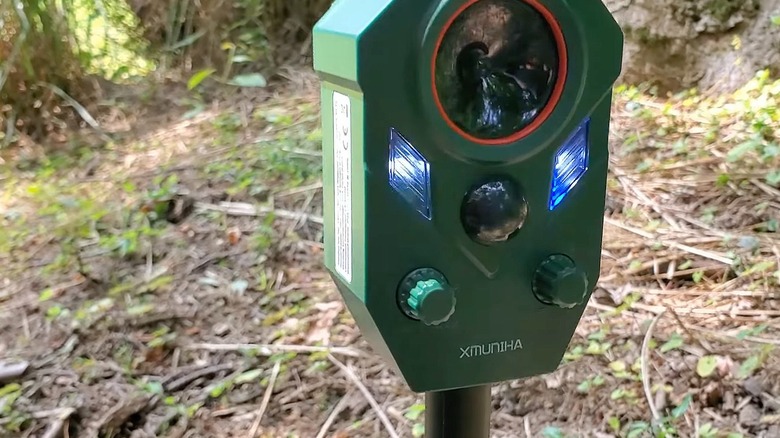
The last thing you want to deal with when you're sleeping in the great wide open is a malodorous scavenger. So, here's another humane way to fend off skunks at your campground: Stake out an ultrasonic device. This handy gadget emits high frequency sound waves inaudible to humans, yet annoying to varmints. Some models claim to feature settings attuned specifically for skunks. Although it should keep pesky skunks out of your campground, it's probably best for a limited stay. We don't recommend this hack for long term use, even if yours comes with a skunk-specific setting, as these tenacious pests can become accustomed to its shrill signal after just a few days.
While it's true that ultrasonic devices may be a bit ineffective on their own, no sweat. Using them alongside a few other deterrents will boost your success. A motion-sensitive light is a supplemental tool that works well in conjunction with this nifty gimmick, like this combo: XMUNIHA solar ultrasonic animal repellent. This bonus two-in-one product offers campers the best of both deterrent methods. Along with a flashing strobe, it emits the grating sound that the manufacturer claims will keep skunks over 30 feet away from your campground. Perfect.
Bring along a great-horned owl statue
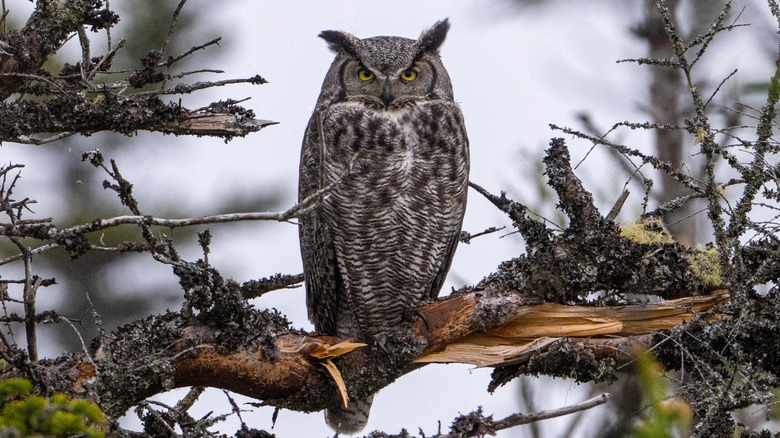
No, you don't have to visit your local wildlife refuge and sign out an owl for the weekend to take advantage of trick to keep skunks off your campground. But don't be discouraged: Leveraging this clever tip is as easy as putting out a great-horned owl replica on an elevated perch where it's clearly visible to wary critters below.
Amazon offers a large fake owl decoy from the Dalen Store that weighs under a pound and costs less than 20 bucks at press time. The more realistic looking the paint job for this hack, the better. If you want to shell out a few more bucks, you can even get one with a rotating head. If price is an issue, you can even DIY an owl decoy using a milk jug.
While great horned owls are a skunk's biggest fear, displaying a fake decoy in your campground won't keep them out forever. Although it may confuse these prey animals for a little while, once they realize it's not going to eat them, truce over. But hopefully if you're just camping over the weekend, this plastic nocturnal hunter will have those waddlers scuttling right back to the bushes.
Camp in the open away from sheltered areas

Camping doesn't get much better than totally unplugging in the middle of the backcountry. But spending quality time deep in Mother Nature means you're going to be exposed to a slew of wild creatures, like our friend-not-friend the skunk. If you want to keep your campground as aroma-free as possible, make note of where you set up.
Skunks prefer to nest in sheltered areas like decks, log piles, and bushes where they are safe from predators, and these striped fiends may have already established a homebase near your secluded camping spot. A genius way to keep them at arm's length is to ensure you're not invading their territory. Choose an area wisely and beware, even if you're adventuring in Joshua Tree's sparse vegetation. You want to choose a site that's as far away from cozy nesting places as possible. Give skunks the cold shoulder and settle in out in the open. It's way less appealing to these timid creatures, because they're more likely to end up on an owl's menu du jour when fully exposed.
Don't camp in one area too long
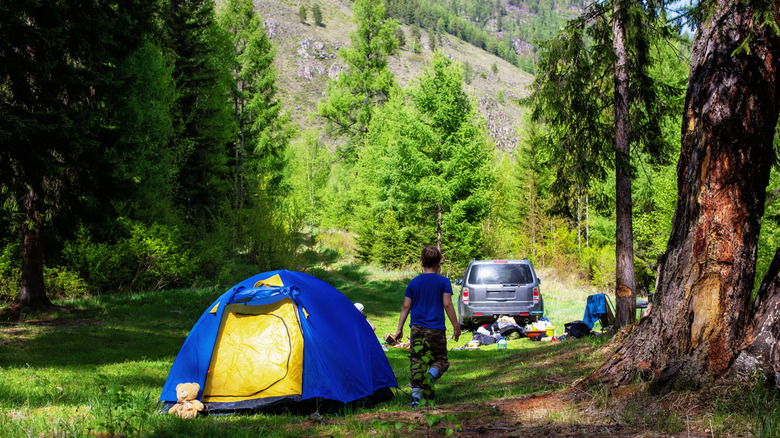
If you're on the prowl for a virtually odorless camping experience, don't stay in one area too long. Skunks aren't really the problem, are they? After all, you're the one camping in their foraging grounds. With the passage of time, some deterrents, like smelly repellents and scary noises, lose their effectiveness. Skunks will learn to adjust, despite their sensitivity to environmental changes, especially if there are a few tasty morsels lingering around your campsite.
After some time, a few of these genius methods won't be enough to divert their attention elsewhere. So, consider packing it up and moving to a new dispersed camp spot if you just can't seem to keep skunks away. You don't want them hanging around looking for free handouts anyway, even if you are careful about properly storing your food and trash. If you do see one in your campground, do not approach it. Freeze and see if it will move on (skunks have poor eyesight and may not see you). If it doesn't budge, move away slowly so you don't startle the little guy. Though they can spray about 10 feet, you want to keep at least 25 yards between you and that raised tail, so you can each live and let live. While it is possible to coexist with wildlife peacefully, if you do get sprayed, here's what to do next.