

Why Fall Is A Great Time To Transplant Trees In Your Yard
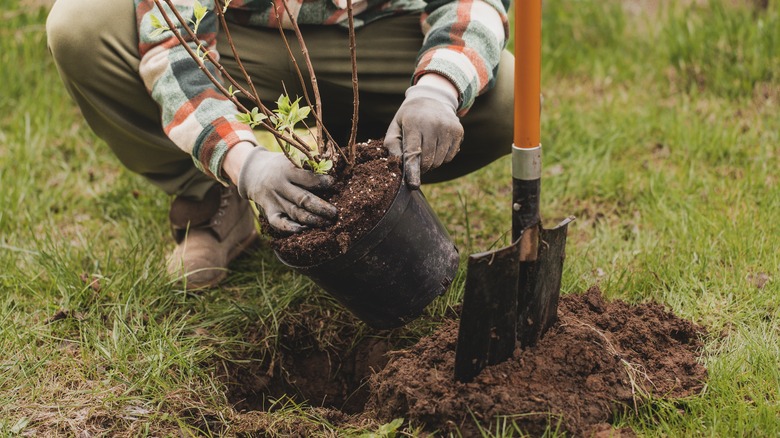
Autumn is a popular time of year, and it's easy to see why! With the gorgeous fall colors and cool weather, it's the best season to go camping or take a scenic drive through the mountains. There are also plenty of things you can do in your own garden. While you might think of fall as a time to wind down your outdoor activity, it's actually provides the perfect opportunity to transplant your trees. But while trees can be planted in either fall or spring, transplanting in spring isn't always the best idea.
Fall transplants benefit from both milder temperatures and the tree's dormant state. Plants can become stressed or damaged if they are moved when the temperature is too hot or too cold, so the mild weather in fall is ideal. And while a healthy tree can be moved in the summer, dormant plants are at a much lower risk of suffering stress-related problems like transplant shock.
Early spring also has these benefits, but with a caveat. Trees shouldn't be planted in frozen soil, both due to the difficulty of digging and the risk of root damage. When transplanting in spring, you need to wait for the soil to thaw. It's also important not to wait too long to plant, as the weather may soon become too hot for your young tree to handle. Transplanting in fall can be an easy way to avoid these potential issues.
How to transplant trees in fall
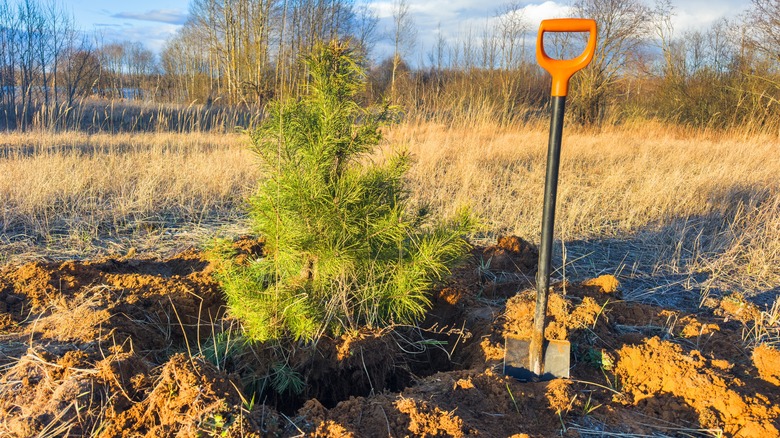
Smaller plants are generally easier to transplant, so you'll need either a young tree or a smaller species — some fruit trees are particularly easy to grow when space is tight. Be sure to choose a healthy one, and avoid trees with damaged bark or circling roots. Don't fertilize the tree for roughly two months before planting or several months after planting. This helps the tree conserve energy and focus on root growth.
Trees transplanted from elsewhere in your yard may need root pruning. This can be done in spring, with extra watering through summer, or in fall, at least one month before transplanting. Young plants can be pruned by spading, a method in which a gardener uses a spade to cut the roots to the size needed to fit in the new location. Trenching is a method that might be suitable for more established trees. First, dig a trench roughly 1 foot wide and deep around the plant, then fill the trench with rich soil. The tree should grow feeder roots into the trench, strengthening the root ball. Since these roots won't need to be cut later on, this will help the tree survive the stress of transplanting.
When planting your tree in its new location, dig a hole that is the depth of the initial planting site or container, and two or three times wider. Place the roots in the center of the hole and carefully fill the soil in around them. Hold the tree steady so it doesn't lean, and keep the soil level with the surrounding ground to prevent water from draining towards it.