

How To Catch A Glimpse Of The Autumn Star During This Harvest Moon
We may receive a commission on purchases made from links.
Fall is often considered the best season of the year to go camping, due largely to comfortable temperatures, low crowds, and the chance to experience colorful fall foliage. While leaf peeping is a popular activity at daytime, the night skies offer a different type of fall viewing experience. Whether you are overnighting outdoors or not, autumn is an excellent time for sky watching. Among the things you'll get to see if you train your eyes upwards at the right time is what is commonly known as the Autumn Star.
Fomalhaut is the formal name for the bright star that is typically referred to as either the Fall Star or Autumn Star. It is also sometimes called The Solitary One, as it occupies a relatively empty patch of sky. Fomalhaut is notable for a couple of reasons. One, it ranks among the top 20 of brightest stars. Secondly, it is considered to be relatively close to the Earth, as it is situated 25 light years away from our planet. Although this star can be seen throughout autumn, it is typically most visible close to the fall equinox. This year, the peak visibility for the Autumn Star is predicted to be October 3.
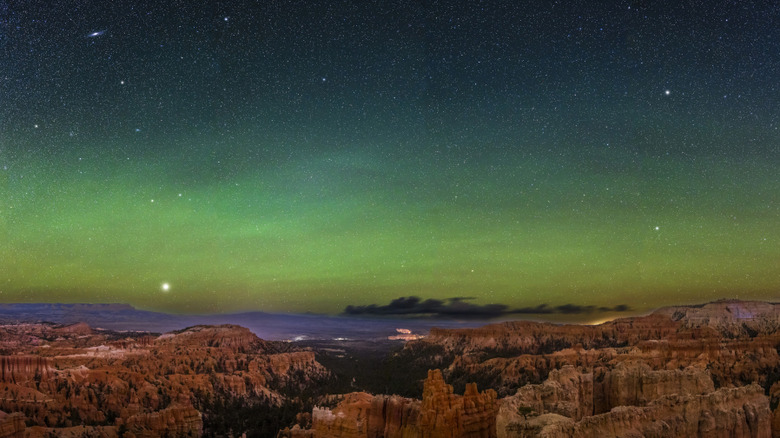
This year's autumn sky is filled with many other astronomical sights. The always-popular autumn harvest moon will completely fill out on October 6. Fall is considered the best time of year to observe the Milky Way. Viewing our own galaxy is at a peak in September and October. Additionally, star gazers in the higher latitudes may get an opportunity to get that perfect picture of the Northern Lights. The fall season usually experiences an uptick in geomagnetic activity, which can result in aurora being at least faintly visible.
Tips for viewing the Autumn Star and other astronomical sights
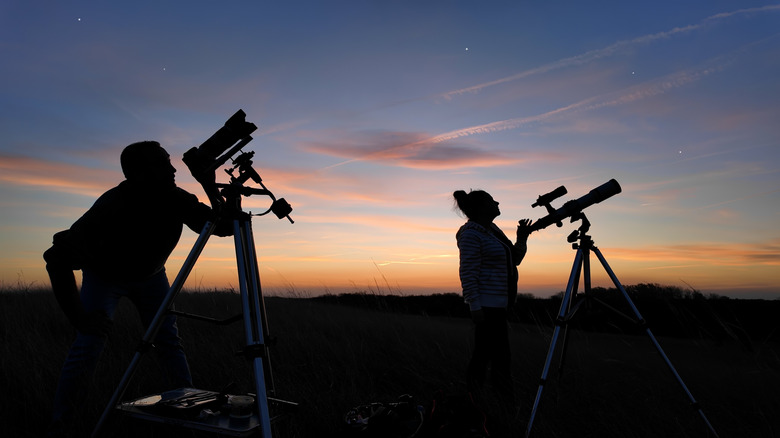
In autumn, the northern hemisphere is tilted towards an incredibly high number of stars. However, fall is considered to be a good time for stargazing, not just because of the number of visible stars, galaxies, planets, and astronomical formations, but also because of the conditions. The crisper, cooler temperatures result in a more stable atmosphere and reduction in heat glare. The bright galactic center, visible in summer, is tucked behind the Earth, so fainter objects are now visible. Additionally, autumn nights are longer, meaning there is simply more time to watch the night sky. These lower temperatures and cool nights do mean would-be astronomers should dress in layers, like they're going on a fall hike.
The additional time won't usually be necessary to see Fomalhaut, as it usually becomes visible soon after sunset. Although the Autumn Star can be seen throughout the U.S. and Canada, the best areas for viewing it lie in the mid-northern latitudes. Typically, Fomalhaut is low on the horizon, so clear conditions are necessary to see it. Additionally, areas with minimal or no light pollution on the horizon will provide the best opportunities to clearly see Fomalhaut.
To locate Fomalhaut, train your gaze to the south-southeast portion of the sky. To help find it, look for either Saturn or the Great Square of Pegasus. Fomalhaut will be located below and to the right of Saturn. Also, look to the right of the Great Square of Pegasus, about three lengths of the Square. Using a guide such as the Explore Scientific planisphere star map can also be useful when trying to locate Fomalhaut and other celestial features.