

Should You Be Watering Your Plants In The Fall?
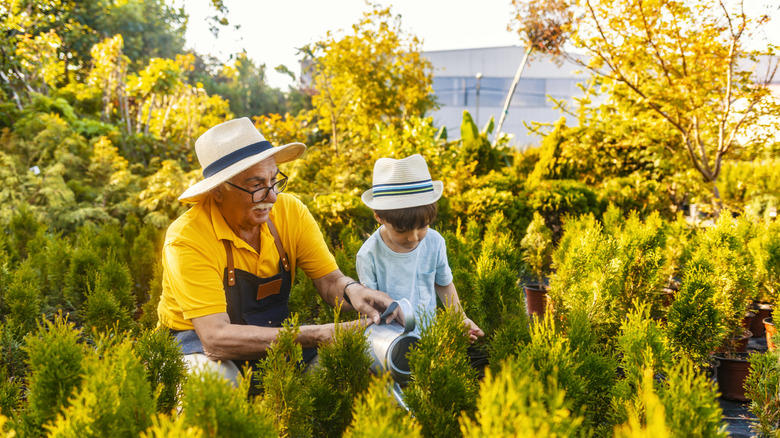
When the leaves begin to change colors and fall from the trees — and when harvest time is in full swing — you may start wondering if you should continue watering the plants left in your garden or if it's time for them to go dormant. Just because the visible part of your plant isn't producing new leaves or flowers doesn't mean things aren't happening underground. In fact, many of your plants will begin to focus energy on root growth once cooler weather arrives, so they'll still need watering to survive the oncoming winter weather forecast.
Of course, not all plants require the same amount of water at this time of year. While some won't need as much liquid, some plants continue to grow and produce during the fall, so you'll need to consider them when creating your watering schedule. If you have cold-hardy crops in your garden (e.g. kale, spinach, carrots) or fall flowers in your bed (e.g. blazing star, yarrow, chrysanthemums), they'll still need your attention. Don't assume that just because autumn is here that it's time for a break — some of your garden plants could be drying out and dying this time of year if you're not fully aware of their watering needs.
Here's how to water plants in fall (& when to actually stop)
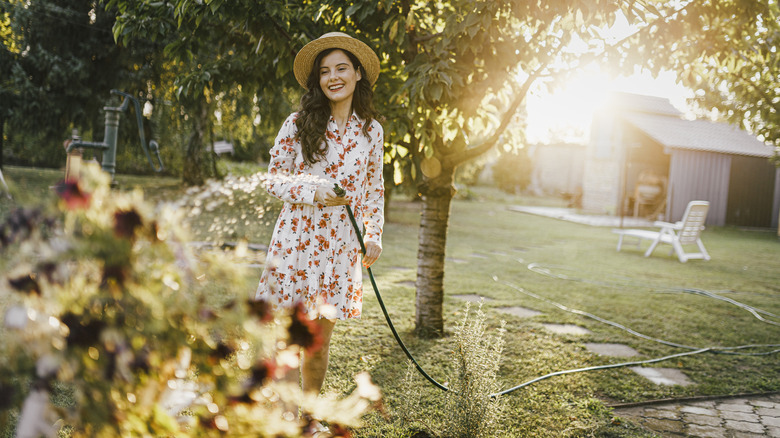
You can typically stop watering your plants once the weather stays at 40 degrees or below. At this point, your plants — unless they're evergreen — are going into dormancy. Until then, be sure to water as close to the root as possible and apply enough to reach at least a foot down into the ground, ensuring the roots receive water at their deepest points. If you live in an area where fall is typically a rainy season, you may be able to water your plants less frequently. However, having a rain gauge will still be helpful. To determine when to water, check the soil — if it's dry when you poke your finger in, the plants need water. And if they haven't gotten rain in a couple of weeks, be sure to provide them with much-needed liquid.
The best time of the day to water your plants in the fall is going to be early enough — by midday — so that the water can soak down to the roots before evening frost sets in. You don't want to cause damage to your plants by leaving standing water to freeze overnight. (Watering plants at the wrong time of day is a major mistake, regardless of what time of year it is.) Plants, including trees, that aren't well-established can be more susceptible to drought in winter, so be sure to give them extra attention as winter sets in.