

How To Successfully Grow Native Plants On Your City Balcony
We may receive a commission on purchases made from links.
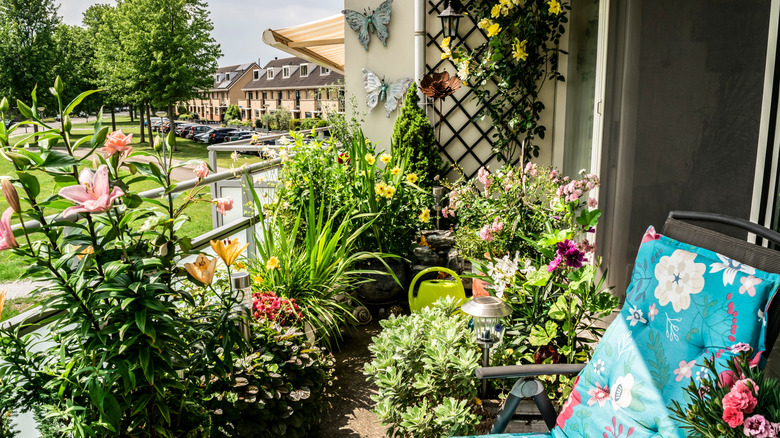
Urban balconies aren't just spaces for gas grills and patio furniture. They make beautiful gardens — that is, if you're open to using potted plants. Whether you want to grow pumpkins in containers on your balcony or use hanging baskets to create a hummingbird-friendly garden, you should consider potting native plants. In addition to promoting biodiversity, they tend to be easy to cultivate since they've adapted to the idiosyncrasies of your region. The main challenge is figuring out how to help these plants thrive in smaller-than-usual growing areas. This often involves some trial and error, but there are a few rules of thumb that can boost your chances of success. These include selecting species that are likely to thrive in your balcony's growing conditions and providing containers that meet their specific needs.
There are also a few other container gardening facts to consider when designing a plant-filled balcony. First, remember that potted plants require more water than those growing in the ground. This is especially true for plants living on steamy or sun-drenched balconies. In many cases, checking a container's uppermost layer of soil will tell you when it's time to irrigate. You can do this by pushing a finger a couple of inches into the soil or using a product such as the Censinda Soil Moisture Meter. If the soil is dry, it's time to water the plant. Second, avoid tightly packing potting mix in your containers. When you press it into the pot too firmly, you decrease air circulation around plant roots. Third, gently untangle gnarled-together roots and redirect any that are circling the bottoms of their nursery pots. This will help them get a healthy start in their new containers.
Choosing the right native plants for your balcony garden
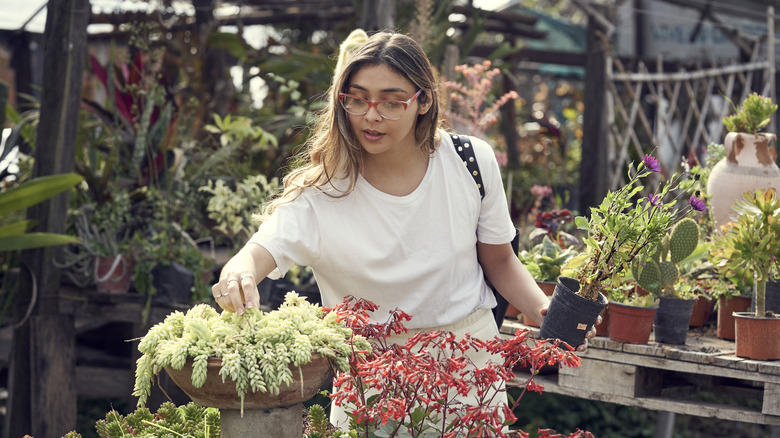
When choosing native plants for your balcony, consider the amount of sunlight it receives and the size and shape of the available gardening area. You may also want to select species that will grow no taller than 2 feet, which will help prevent toppling, and that can withstand cold weather, particularly if you don't have a garage for overwintering plants. Be sure to familiarize yourself with plants indigenous to North America, especially those native to your geographical region.
Shade-covered balconies are great homes for perennials that grow under dense tree canopies in nature. If you live in the eastern or central part of the United States, your choices include woodland wildflowers such as Solomon's seal (Polygonatum biflorum), Jack-in-the-pulpit (Arisaema triphyllum), and hummingbird-attracting cardinal flower (Lobelia cardinalis). Lush maidenhair ferns (Adiantum pedatum) thrive in pots and are native to a range of shade-drenched North American habitats. If you live on the East Coast and have a large pot to fill, try growing a short-statured bayberry (Myrica pensylvanica).
A balcony with ample light is a great spot for North American milkweeds (Asclepias spp.) and aromatic asters (Symphyotrichum oblongifolium), which burst with fall colors. Do you have a balcony that's both sunny and hot? Select natives that tolerate heat and drought. A wealth of alliums, aka ornamental onions, fit this description. There are so many varieties of these adaptable perennials that you're bound to find one with a long local history. Sun-loving nodding onions (Allium cernuum) are native to much of the U.S. and will draw crucial pollinators, such as bees and butterflies, to your balcony.
Selecting the best containers for your balcony plants
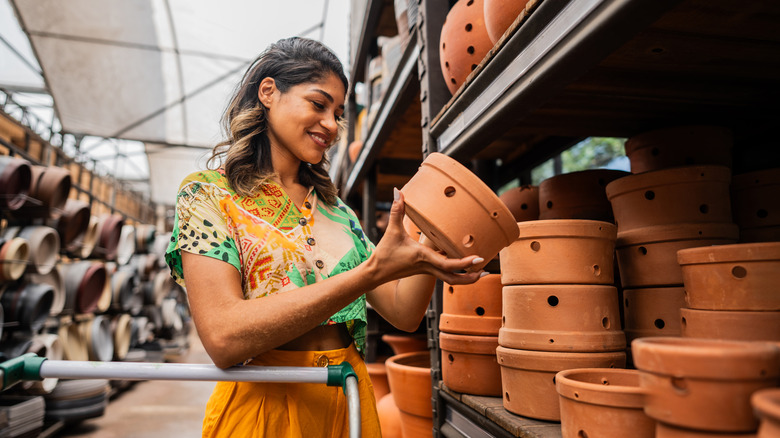
Several factors should inform your container choices for balcony plants. Durability, weight, dimensions, and aesthetics are among the key considerations. Also, check that your pots have drainage holes. If these are missing, your plants are likely to accumulate standing water, which increases their risk of root rot and decreases their oxygen intake. Depending on the material of the planter, if they don't have drainage holes, it may be possible to drill them yourself.
Containers made from reliable materials are essential for balcony gardens. At a minimum, they should be light enough to move to a new location yet strong enough to handle harsh weather. Jeremie Fant, director of conservation at Chicago Botanic Garden, uses fiberglass containers for his balcony garden in the Upper Midwest. As he explained on the botanic garden's blog, "I had to be choosy with materials, knowing terracotta and brittle plastics can crack in the cold. I landed on fiberglass, and later tried steel and concrete, which I don't recommend for balconies unless you want to test your weight limits."
Also, verify the dimensions of your containers to ensure they're roomy enough for the plants you plan to grow. Species with long taproots usually need deeper planters. For this reason, some balcony gardeners gravitate toward plants with fibrous roots that grow in a horizontal direction. Even if you're growing shallow-rooted species, don't scrimp on container depth. Generally, larger and deeper pots result in stronger plants. The planters in Fant's balcony garden have a depth of 16 inches or more. Round-mouthed pots typically have matching depths and diameters, which is good information to know. If in doubt, choose a pot with a diameter that's at least 2 inches bigger than that of the plant itself.