

Must-Know Tips For Caring For Your Hibiscus Plants During Fall
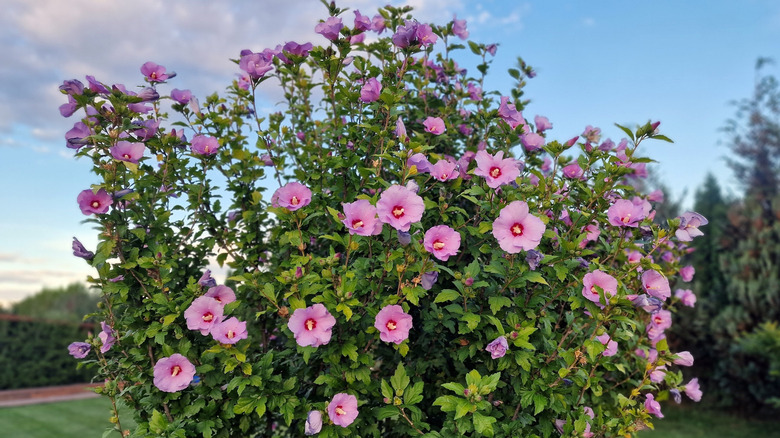
Growing gorgeous hibiscus plants is a great way to make your garden feel like a resort, but you may run into issues if you don't live in a tropical region. Hibiscus plants love warm weather, so the cooler temperatures of fall and winter can pose a problem for their growth. To start, be sure you're pruning and fertilizing your hibiscus correctly. Pruning at the wrong time can damage plants, and there are plenty of plants that hate being pruned in fall. Likewise, fertilizing at the wrong time can lead to a variety of problems.
Do not prune or fertilize your hibiscus in fall. Fertilizer should be applied during the growing season. Starting in late summer and continuing to early fall, slowly stop feeding your plant to allow it to go dormant for the winter. Resume fertilizing your hibiscus in the spring, at the start of the next growing season. Pruning should wait until the hibiscus plant is dormant. Late winter and early spring are the best times to prune your plant, before the next growing season begins. Focus on removing dead, damaged, or diseased branches first, so that your plant has room and energy for new growth. Then move on to trimming it to control its size or shaping the shrub for aesthetic purposes.
Bring potted hibiscus plants indoors
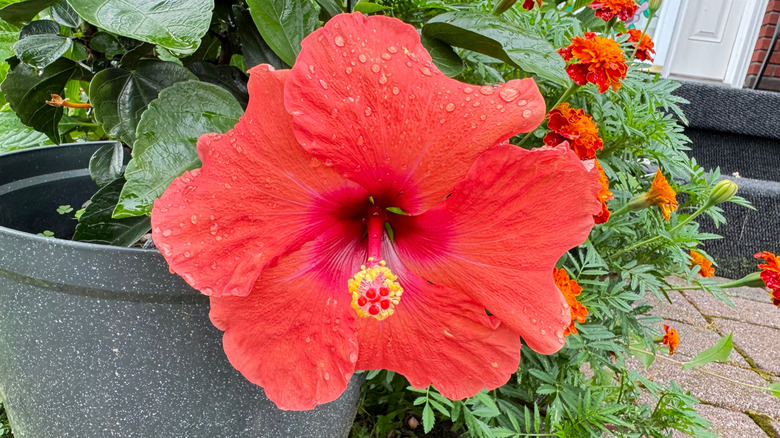
Hibiscus flowers are popular with pollinators and easy to grow in containers, making them a great choice for hummingbird-friendly container gardens, but potted plants are more vulnerable to the cold. To keep your plant safe, you'll need to move it indoors before the temperature gets too low. However, hibiscus plants are sensitive to sudden temperature changes. Help your plant transition smoothly by taking it slow.
Start in early fall by moving your potted hibiscus to a more sheltered location. Begin with it in the shade of a tree or structure, then move it to a covered porch or patio. Finally place your plant indoors. By transitioning your hibiscus in stages, you allow it to adjust to the cooler temperatures and lower lighting conditions slowly, which reduces stress. A stressed hibiscus plant is more likely to lose buds and leaves. Once indoors, choose a location that is sunny, but not near any drafty windows or vents. Remember, they're still vulnerable to changes in temperature even once they're inside! Air vents and drafts that blow hot or cold air over the plant can shock it, so think carefully about where you will put your hibiscus.