

Beautiful Climbing Plants That'll Add Shade To Your Pergola
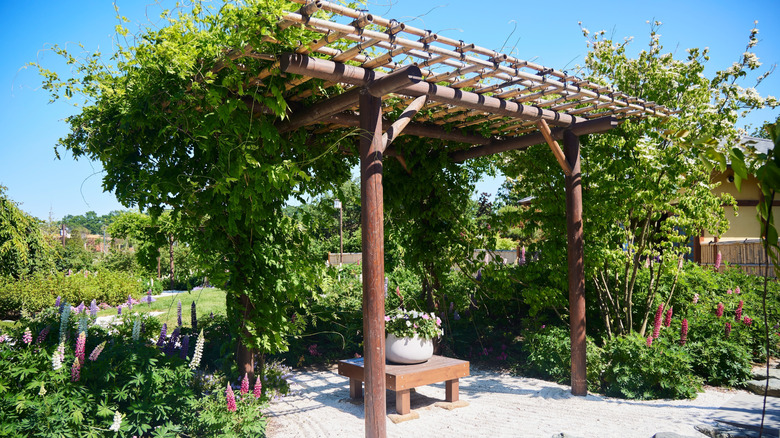
A pergola brings a number of benefits to those looking to spend more time outdoors. It can make up for a lack of a dedicated patio or deck, enhance the visual appeal of your garden with a structure that complements its natural surroundings, and most importantly, extend your living space. This is especially helpful in the warmer months, giving you a spot in which to soak up those summer rays.
However, if your pergola is in a particularly sunny spot, you may find yourself unable to cope with the summer heat for hours at a time, which makes it crucial to create some shade. Fortunately, there are plenty of solutions, but many of them are manmade; wouldn't it be nice to enjoy some shade that also adds to the visual beauty of your garden?
There are plenty of climbing plants that can be easily grown up and around your pergola to provide natural shade. Many of these grow dense, luscious foliage; others bloom with vibrant and fragrant flowers. Some even do both. And while there are likely a few plants that will be unsuited to the particular sun and soil conditions present around your pergola, there are so many different species to choose from, each preferring different combinations of sun exposure, climate, and soil type. With just a little research, it's easy to find a climbing plant that'll add shade and natural style to your pergola.
Mountain clematis (Clematis montana)
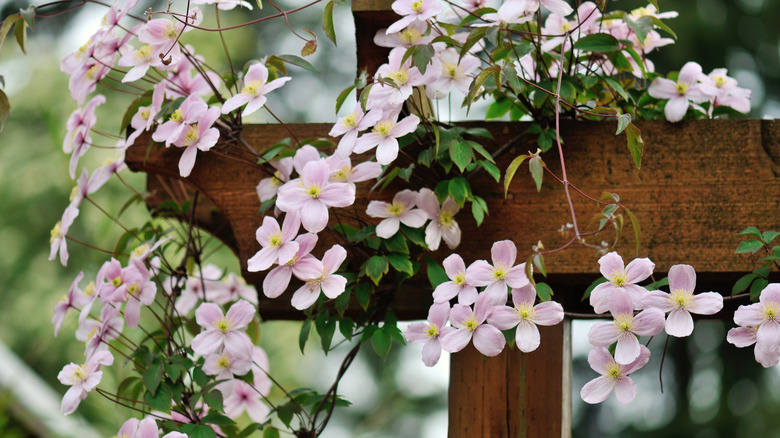
As the best climbing plant in the clematis family, mountain clematis (Clematis montana) can reach 20-40 feet in size if allowed to do its thing. This makes it an excellent choice for adding shade to your pergola, especially if you want to enjoy its abundant white or pink flowers. It blooms in May, and being perennial, returns with renewed vigor each year.
As for where it'll grow, it does best in hardiness zones 6 to 9. The vines of this plant generally prefer full or at least partial sun; however, its roots prefer the shade, making mountain clematis perhaps the ultimate diva of climbing plants. Fortunately, it's easy to satisfy these two different needs by planting some ground cover around the base. This ensures that the body of the plant continues to enjoy plenty of sunshine while allowing the roots plenty of shade. Plant mountain clematis in deep, fertile, and well-drained soil. During hot and dry spells, you'll want to keep it well watered, but don't overdo it, as this can lead to root rot.
Coral honeysuckle (Lonicera sempervirens)
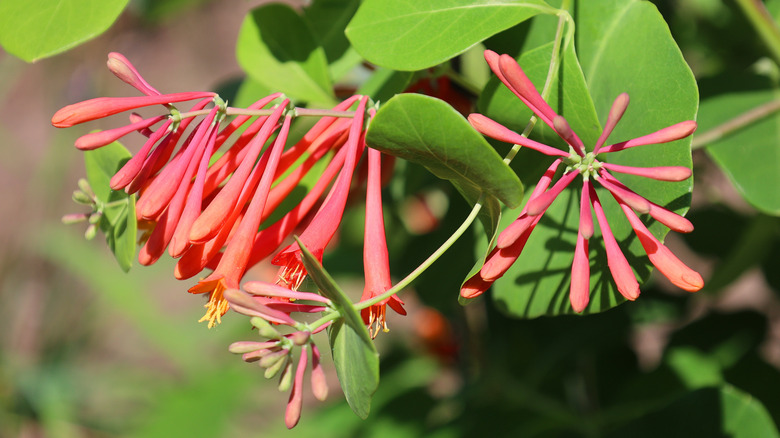
With its bushy, blue-green foliage and flowers that are usually somewhere between orange and red, this evergreen climber promises to add both shade and beauty to your pergola. And it's not just the flowers that'll add color to your pergola — this plant is immensely attractive to hummingbirds and an array of other colorful and friendly pollinators, like butterflies and bees.
Coral honeysuckle (Lonicera sempervirens) grows well in hardiness zones 4 to 9. Once it's established, and provided that it's planted in moderately fertile, well-drained soil, it will thrive with only the occasional water soak in the warmer months.
This plant can grow up to an impressive 10-20 feet in height, so achieving shade in your pergola is unlikely to be an issue. However, it can take up to 10 years to reach this potential if grown from seed. It's worth the wait, though, especially given how little maintenance it requires. It's also drought-tolerant, and if planted in full sun, promises an abundant display of those orange-red flowers — sometimes multiple displays per year — between March and June.
Climbing hydrangeas (Hydrangea petiolaris)
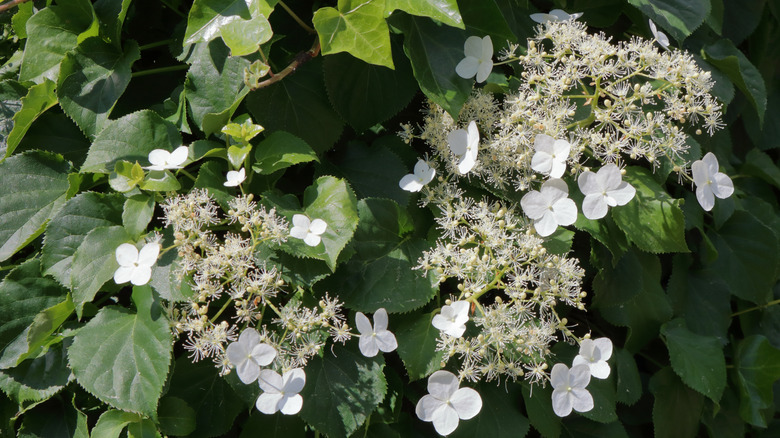
Tough and reliable, climbing hydrangeas (Hydrangea petiolaris) are one of the handy perennials that thrive in shadier spots. Now, with this being the case, you might be wondering what makes it such a good option for adding shade to your pergola. After all, you surely want a plant that can cope with the sun that it's been planted to block out, right? Well, yes, but it's worth bearing in mind that climbing hydrangeas can grow as high as 40 feet tall and have considerable spread. In other words, it's unlikely to struggle covering a large portion of your patio once it establishes itself on the shady side of your pergola.
It's worth noting that this kind of growth won't happen overnight. In fact, it can take up to 20 years for a climbing hydrangea to reach its full potential. Don't worry, though — there are plenty of other climbers in this guide alone that can be used to plant in sunnier spots and provide additional shade. What's more, climbing hydrangeas are worth waiting for, especially in hardiness zones 4 to 9, where they'll reliably bloom year after year with large, white, lacy flowers. What's more, aside from the occasional prune, you won't need to do much to maintain this particular hydrangea. Provided that it's rooted in fertile, well-draining soil, this plant is a decidedly determined and self-sufficient climber.
Mandevilla (Mandevilla spp.)
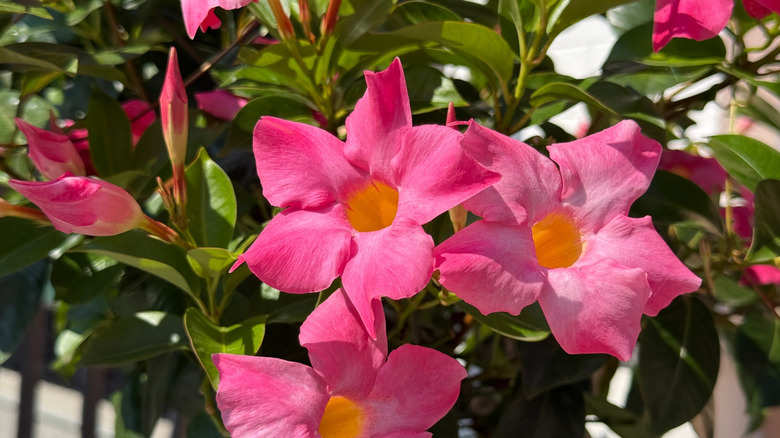
This climbing plant promises to enshroud your pergola in deep green foliage and flowers that, depending on the cultivar, could be white or pink with yellow centers. In most hardiness zones, mandevilla (Mandevilla spp.) is planted as an annual and is therefore unlikely to establish itself as a reliable source of shade. However, if you're lucky enough to be in hardiness zones 9 to 11, you can expect it to come back and continue climbing year after year.
In fact, this plant can climb heights of more than 10 feet, provided that it has full sun and well-drained soil. It also needs ample support. Your pergola will certainly help here, providing a sturdy climbing frame for your mandevilla to establish itself over time. However, if you're planting it outside of hardiness zones 9 to 11 and only have a single season's worth of growth to establish shade, then consider making a DIY garden trellis to support multiple plantings. With a trellis in place between the upright pillars of your pergola, you'll provide an ideal framework for multiple plants to climb.
Crimson glory vine (Vitis coignetiae)
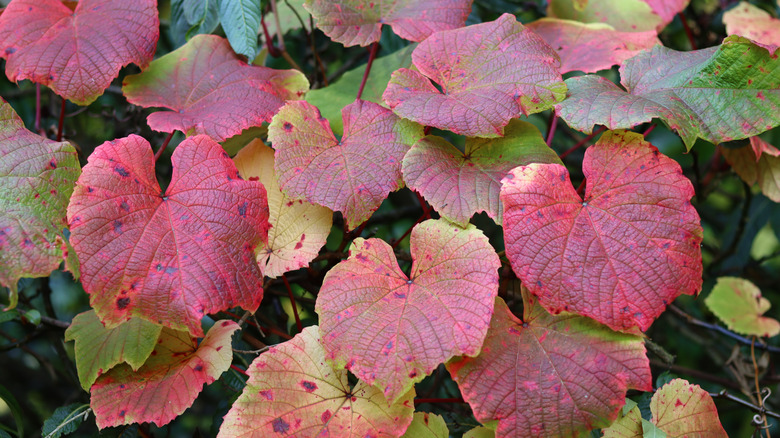
Climbing to more than 40 feet, crimson glory vines (Vitis coignetiae) produce gorgeous green and crimson flowers and dense foliage, making them a superb shading solution for your pergola. Just know that it could take a significant period of time for your plants to reach their full size potential — often up to 20 years.
Generally speaking, crimson glory vines grow best in hardiness zones 6 to 9. However, this depends on the specific cultivar, with certain varieties growing better in specific zones than others. What they have in common is that they prefer moist, fertile, well-drained soil. They also prefer areas of full sun, which makes them perfectly suited to the task of blocking it out.
To get the most out of your crimson glory vine, you'll need to provide it with plenty of support. And while there are a few clever ways to cover wooden structures with climbing plants, with this particular plant, it's best to use a trellis or wire support system. With this in place, you can easily train your vines to climb, much the same as you would a grapevine — guiding the main stem upwards and gently tying it in place.
Rambling roses (Rosa multiflora)
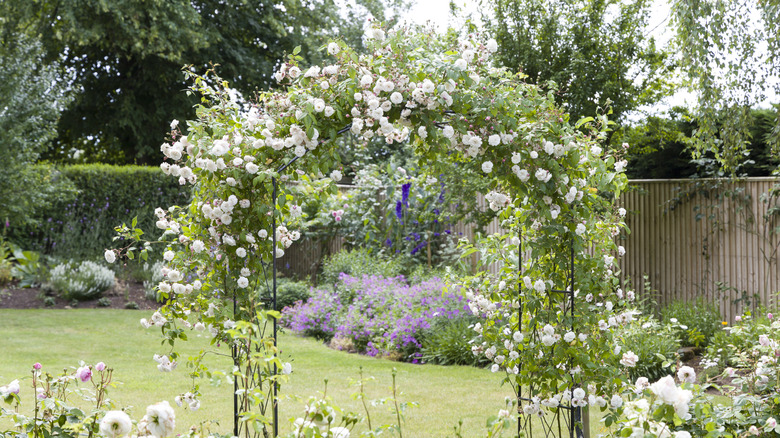
Rambling roses (Rosa multiflora) are one of those stoic, reliable perennials that won't leave your garden, returning year after year with their myriad blushes of pink, violet, and even yellow. The actual color that'll bedeck your pergola depends on which specific cultivar you choose to plant. And on that note, be sure to compare different varieties to your area's hardiness zone; the right zones for rambling roses vary depending on the cultivar, with most thriving somewhere between zones 4 and 10.
Once you've found a rose that's likely to thrive in your area, you'll usually find that it climbs exceptionally well. They're easy to train, too, and given the right support framework — like a pergola — will gladly climb over 12 feet, again depending on the cultivar. The only drawback is that most rambling roses only flower once a year. Then again, this needn't necessarily be a drawback. Rambling roses can also be used to provide additional support for other climbers, allowing you to diversify your pergolas planting scheme with plants that bloom at different times and in other complementary colors. If you plan to do this, just be sure to look for climbers that match rambling roses' needs for full sun and moist, well-draining soil.
Winter jasmine (Jasminum nudiflorum)
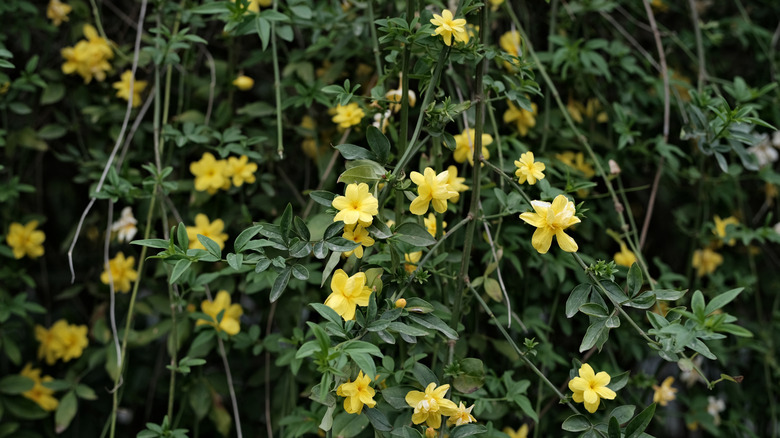
Bringing a gorgeous, fiery yellow to your pergola in the otherwise bleak months of winter, winter jasmine (Jasminum nudiflorum) thrives in hardiness zones 6 to 9, especially in sun-soaked areas of your garden that have well-drained soil. It only needs occasional watering, which is reassuring to anyone with limited time to tend to their plants, and since it'll usually climb up to 10-15 feet in height, it promises to add plenty of cover to the sun-facing side of your pergola.
However, winter jasmine's natural tendency to scramble across its environment — as opposed to up it — means you'll need to train it to climb. To do this, you can put either a trellis or a wire support framework in place. You can then gently point the branches upwards and tie them in place, encouraging the plant to twine around the support.
Spanish flag (Ipomoea lobata)
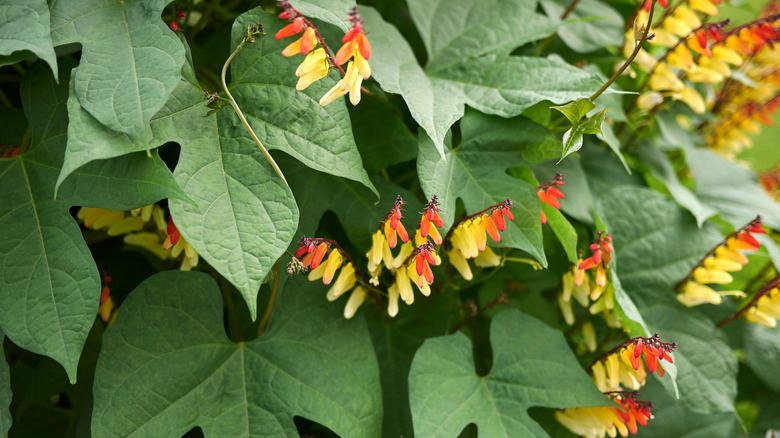
Named for the dazzling colors in which it blooms, this vibrant climber flowers continuously from early summer all the way through to the first frost. It grows best in hardiness zones 9 to 11, and will reward you with those bountiful blooms year after year provided that it's planted in moderately fertile, well-drained soil and in a spot that receives full sun.
Before you plant Spanish flag (Ipomoea lobata), it's important to ensure that there's a substantial framework in place for it to climb. Whether you buy one from the store or fashion an old bathroom shelf into a handy trellis, by providing this plant with the support it needs, you'll be dazzled by more than its beautiful flowers.
What makes this such a great climbing plant for pergolas is the speed at which it climbs — often up to 10 feet in a single month. Add to this the abundant, deep green foliage, and not only is this plant colorful, but it also grows quickly and densely enough to provide much-needed shade to your pergola.
American wisteria (Wisteria frutescens)
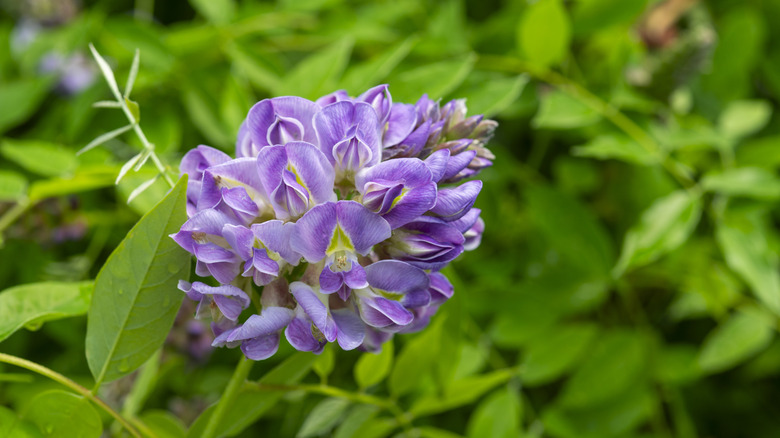
With its shiny, dark-green leaves and clusters of blue and purple flowers, American wisteria (Wisteria frutescens) can grow up to an impressive 30 feet, and will happily do so in hardiness zones 5 to 9. All it really requires is a spot with full sun and fertile, well-drained soil.
Now, it's important to know that wisteria has a happy habit of growing quite vigorously once established. In other words, while it doesn't strictly need training, it can pay to control your climbing plant by using zip ties and securing it to the upright posts of your pergola. Once it eventually grows to roof height, you can cut it back. By pruning it back to flower buds, you will encourage the plant to grow new branches, at which point you can loosely tie the fresh horizontal growth to the crossbeams.
Once your wisteria begins to take shape, your pergola should provide a strong enough structure to support the plant's inexorable growth, and over time, not only will it add shade to your pergola, but it'll do so with the most beautiful curtains of blue and purple flowers. Just be sure to regularly prune it. If you don't, you could risk it growing beyond your control. Not only that, wisteria flowers on new growth, so a hard prune in the winter once it's finished flowering will ensure a bountiful bloom the following season.
Cup and saucer vine (Cobaea scandens)
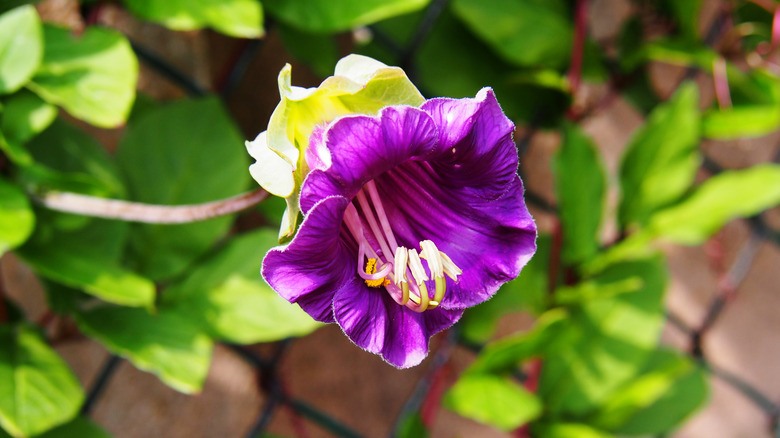
Native to tropical South America, the cup and saucer vine (Cobaea scandens) will only grow perennially in hardiness zones 10 and 11. But that's not to say that it can't be grown as an annual elsewhere. It most certainly can, and you might just be surprised at how much shade a single plant can produce in a single growing season. In fact, there's really no other way to describe the climbing tendencies of this plant than "rampant."
Cup and saucer vines are some of the easiest climbing plants you're ever likely to grow. They're capable of growing up to 40 feet, often exceeding 20 feet of vertical growth in a single year.
As for where to grow them, these vines prefer sunny, sheltered spots and fertile, well-drained soil, although they're not particularly fussy. They will actually grow just fine even in soil that's been slightly over-fertilized; however, you may find that it focuses more on vines and leaves rather than flowers. This isn't strictly a bad thing, especially given their dense (and therefore shady) foliage and purplish stems. However, it really would be a shame not to enjoy the gorgeous, luxuriously purple flowers for which they're named.
Bougainvilleas (Bougainvillea spp.)
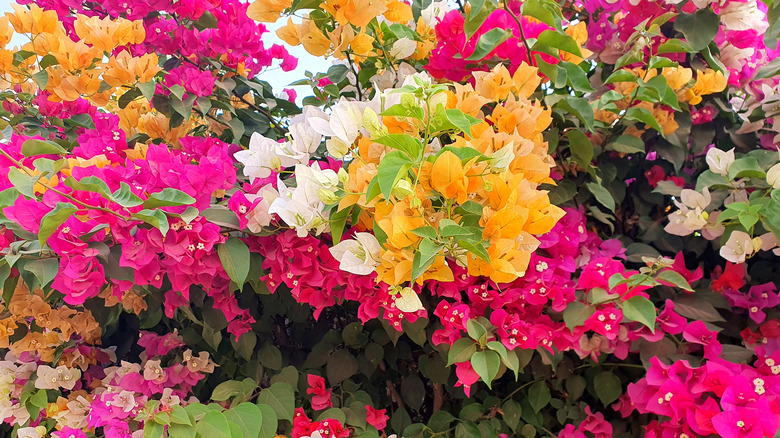
Despite what you might think, the array of astounding colors (including magenta, purple, orange, pink, yellow, and white) for which this plant is loved do not actually come from its flowers. They come from the beautiful leaves that surround the tiny and delicate white flowers within — flowers that you could easily miss if you didn't look closely.
Fortunately, you'll have plenty of time to examine them if you plant this fantastic climber around your pergola. At least, you will if you provide it with well-drained soil and a position with full sun. You'll also enjoy plenty of shade, since it grows dense foliage, and in case you're worried about coverage, don't be: Bougainvilleas (Bougainvillea spp.) can reach heights of up to 40 feet, with spreads of up to 20 feet. As for where they're best grown, they'll thrive in hardness zones 10 to 11, and will continue to grow for seasons to come. You can also grow them in zone 9; however, it's important to note that the plant does not tolerate frost.
Star jasmine (Trachelospermum jasminoides)
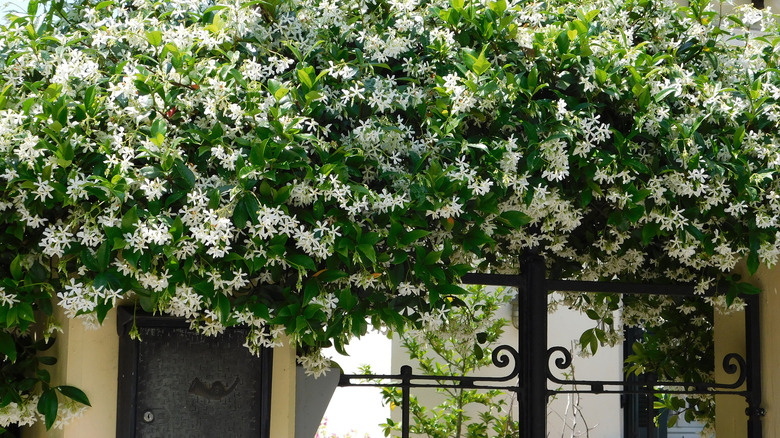
Reaching heights of up to 20 feet tall, this twining and evergreen perennial is a vigorous climber with dense foliage that promises to keep the sun off your back. It's especially well suited to hardiness zones 9 and 10, and is loved for its abundance of white, star-shaped flowers. These bloom in the summer and promise to grace your garden with a sweet and subtle floral scent that's sure to help you relax.
You'll want to plant star jasmine (Trachelospermum jasminoides) in full sun and in fertile, well-drained soil. To encourage more flowers, the most important thing to ensure is that your plant receives plenty of sunlight. Provided that's taken care of, you can also feed it during the growing season, and give it a light prune once it's finished flowering. This is well worth the effort; not only will you get to enjoy even more of those delicate, aromatic flowers, but their presence also tends to attract pollinators like bees and butterflies, adding even more color to your serene and shady pergola.