

A Tall And Beautiful Flower That'll Have Hummingbirds Flocking To Your Garden
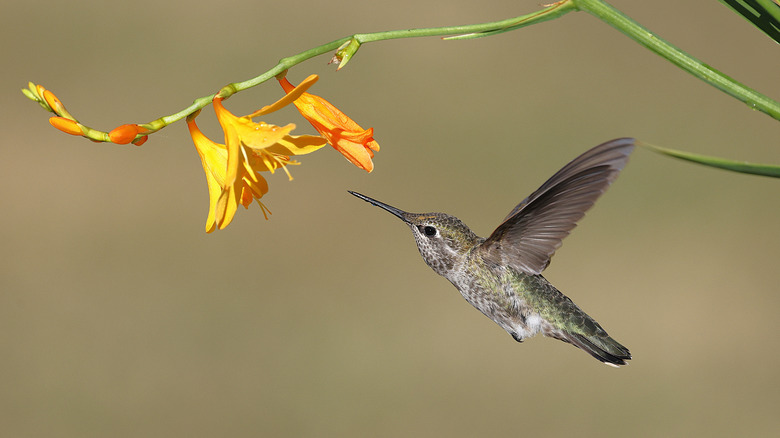
It's easy to make adorable hummingbird feeders from candy dishes, and you can even whip up homemade nectar with two common ingredients. Feeders require maintenance, however. For starters, you need to clean and refill them every few days. You may also find yourself playing referee, as these territorial little creatures sometimes duke it out at feeding stations with multiple nectar ports. Instead, consider planting flowers that these dainty birds adore — it's a hassle-free way to attract them. Several plants in the mallow family, including hollyhock (Alcea rosea), are especially alluring to hummingbirds. Hollyhock grows 5 to 8 feet tall, so they're easy to spot, and comes in several bright colors that catch hummingbirds' attention.
There are other reasons why hummingbirds love hollyhock. First and foremost, it blooms from June through August, making nectar readily accessible all summer. For this reason, it's also attractive to other pollinators such as butterflies and bees. Hollyhock thrives in USDA Hardiness Zones 5 through 9, which are home to several types of hummingbirds. Ruby-throated hummingbirds are most common in the central and eastern U.S., while rufous hummingbirds are more prevalent in the Pacific Northwest. Your hollyhock plants may also attract black-chinned, Costa's, and Anna's hummingbirds if you live in Zone 9.
How to attract hummingbirds with hollyhock
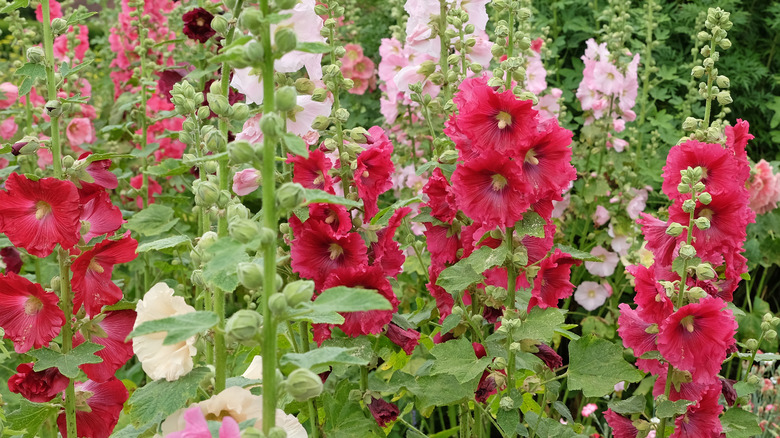
Keeping your hollyhock healthy and blooming is one of the best ways to draw hummingbirds to your yard. This involves learning the plant's needs and, when possible, catering to its preferences. In general, hollyhock craves full sun and a well-draining growing area, though it's not terribly fussy about the texture of its soil. Hollyhock produces flower spikes so sturdy that they rarely need stakes, but these flowers aren't as tough when it comes to dealing with pests and pathogens.
Hollyhock is vulnerable to numerous diseases, including anthracnose and rust, and it's known to attract Japanese beetles and spider mites. Knowing the telltale signs of these problems increases your chances of addressing them effectively before they get out of hand. Orange spots, streaks, or blister-like bumps on foliage may signal rust, while spider mites leave tiny white and yellow spots where they feed and webbing where they make their nests.
For maximum hummingbird appeal, choose hollyhock that sports the bird's favorite flower color: red. 'Henry VIII Red' and 'Chater's Double Red' are two ruby-hued Alcea rosea cultivars. Some hollyhock varieties are perennials that regrow every year, and others are biennials whose life cycle unfolds over two years. Be aware that both types tend to reseed themselves and sometimes spread beyond the borders of a garden. Though the USDA doesn't consider hollyhock overly aggressive, these flowers are labeled invasive in Death Valley National Park. If you live near the area, consider growing a hummingbird-friendly alternative. Red hibiscus (Hibiscus coccineus), a relative of hollyhock, is among many North American plants known to attract hummingbirds.