

The Must-Plant Fragrant Perennial For A More Pollinator-Friendly Garden
Creating a pollinator-friendly garden is a satisfying endeavor on so many levels. It looks gorgeous, and it is full of perennial, native flowers that help support bees and butterflies. This kind of colorful garden can also be full of plants that provide sweet smells to attract these pollinators, like one plant with particularly fragrant blooms, despite its decidedly un-sweet name: Rattlesnake master.
Rattlesnake master (Eryngium yuccifolium), also known as button snake-root, is a distinctive plant that is nothing to be afraid of, despite its seeming association with a creature you may not want to find in your garden. Its name may come from observations made by early American pioneer John Adair claiming medicinal use of the plant by North American indigenous tribes, its roots reportedly being used for snake bites. In the cool seasons, this perennial — part of the carrot family — looks like clumping green grass with its long, yucca-like leaves.
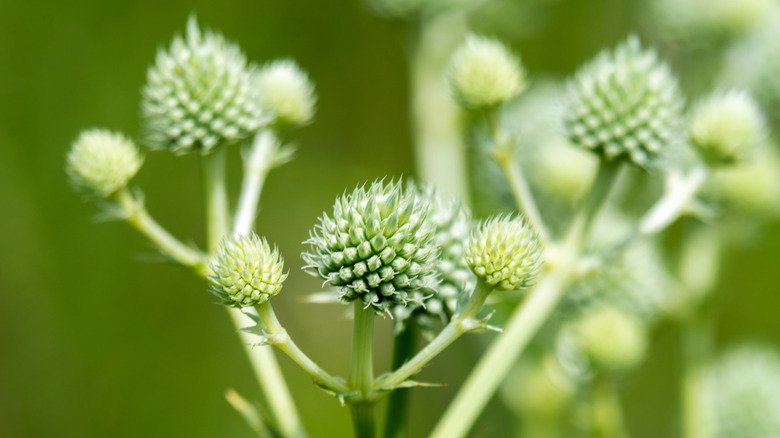
Come spring and summer, rattlesnake master sprouts forking stalks from its center that reach up to 5 feet tall, and are topped with spiky-looking flowerheads that look a bit like thistles before they bloom. These gray-green or even bluish prickly heads give way to soft white flower clusters that butterflies and other pollinators find irresistible, with their strong honey-like aroma. Gardners often report a myriad of pollinators drawn to these plants, sometimes at the same time.
Although rattlesnake master is also sometimes referred to as bear grass, it isn't to be confused with bear-grass (Xerophyllum tenax), which is native to Northwest forests and has tall, fuzzy-topped (rather than spiky) blooms and clumps of grassy leaves.
Growing the adaptable and tolerant rattlesnake master
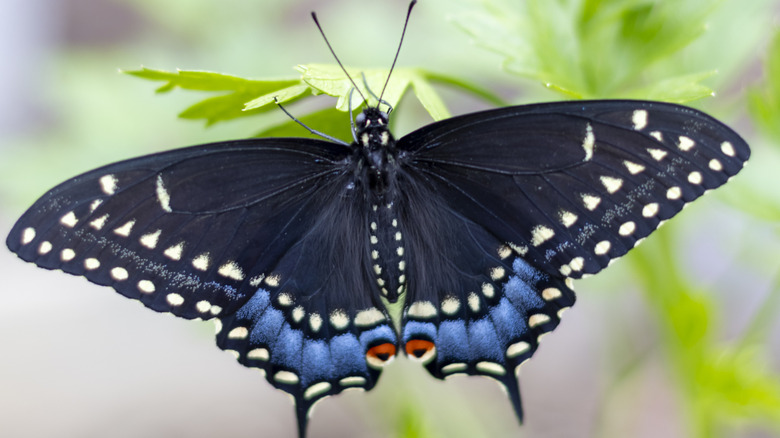
The importance of rattlesnake master to pollinators makes it a great consideration to add to your garden. PennState Extension found this plant to be one of the most-visited plants by pollinators in its test garden. The sweet nectar of rattlesnake master not only provides food for bees, moths, wasps, and a variety of other beneficial insects, but at least one species of butterfly — the Eastern black swallowtail — is known to lay eggs on its leaves.
Hardy in USDA Growing Zones 3 to 8, this low-maintenance native plant can be found across much of the eastern part of the U.S., from southern Minnesota to the south Atlantic seaboard. An integral part of the uniquely American prairie landscape, rattlesnake master is adaptable to any backyard garden in its range, preferring dry to slightly moist soils and plenty of sunshine.
This tall-growing plant is a good companion to other leggy, pollinator-friendly flowers like goldenrod and purple coneflower. Pairing it with sturdier tall plants will help steady its blooms, which can fall over if unsupported. A bonus to adding rattlesnake master to your garden is that you won't have to worry about deer, rabbits, and other munching garden pests eating it up, as they don't seem to like its taste or texture. Instead, expect to bring in even more of those beneficial pollinators to your garden with the addition of this unique, fragrant perennial.