

Why You Should Be Planting Purple Sprouting Broccoli This Fall
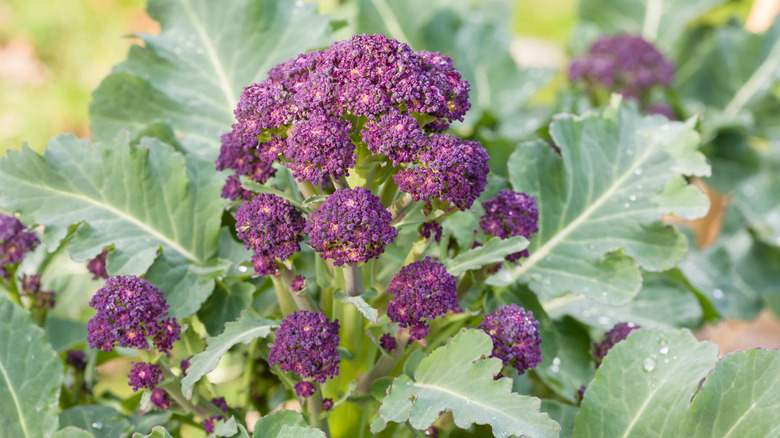
When it's time to think about fall vegetables, it's essential to look for produce that thrives in cold weather. But, with thoughts of autumn color changes in the air, why not also look for vegetables that can add to that beauty? We've found just the right vegetable to spruce up your fall garden and add a little something extra tasty to your meals — it's purple sprouting broccoli. This type of broccoli gets its name from the plum-colored florets it grows, instead of the green of regular broccoli. That's not the only way it differs from your basic green broccoli, though. Purple sprouting broccoli has a sweeter and more nutty taste, and it grows individual florets instead of one head.
You can use the purple sprouting broccoli florets the same way as you do the broccoli you're used to — eat them fresh and clean out of the garden or dip them in some hummus. You can cook them up in stir-fries or soups, and, if you haven't been using broccoli leaves in your salads and other dishes, you're missing out on an excellent replacement for kale in the kitchen.
How to grow and care for purple sprouting broccoli
You'll want to start your seeds in small containers with loamy soil and compost. Once the plants reach about two inches, it's time to transplant them into the garden. If you're starting them indoors, here are some tips for successfully moving vegetable seedlings outdoors. You'll want to ensure the soil in your garden is rich in organic matter, not too acidic, and has sufficient water retention. Give the plants about a foot and a half between them so they have room to grow to their full potential.
They like their soil to stay moist, so be sure to check on them regularly if you're not getting any rain. You can also use mulch to assist with water retention. They'll survive the frost and are often thought to become even sweeter after the first frost. If your plants are sprouting their purple heads, they may need some plant food to help boost growth. You may also want to cover your plants to protect them from pests, just be aware of possible downsides when using something like mesh netting.
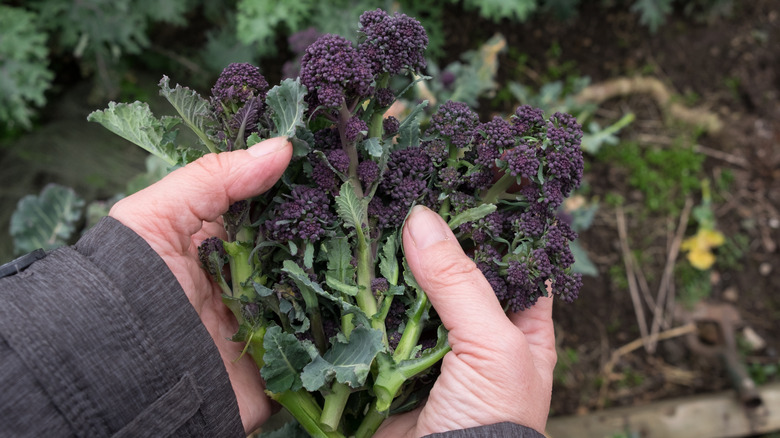
You can harvest leaves anytime you'd like. Some report that the smaller leaves taste better than the larger ones, but the older leaves can be eaten as well. Harvest florets before flowers begin to bloom, but make sure they're fully formed. If you start by harvesting the shoots sprouting up on the side of stems, rather than the main sprouts toward the center, it can extend the life of your plant and assist in new growth.