

Keep Your Trees Healthy And Thriving With These Fall Maintenance Tips
The trees in your yard are a crucial part of the ecosystem thriving outside your home. They serve as homes to several creatures and fuel your garden with clean and cool air, all while strengthening the soil underneath them. Not only are they great for your yard and garden, but they can help add serious value to your home. So, if you want to preserve the natural shade and privacy in your backyard, there are key considerations when shifting to fall maintenance, when it comes to pruning, watering, fertilizing, and more that you'll want to keep in mind.
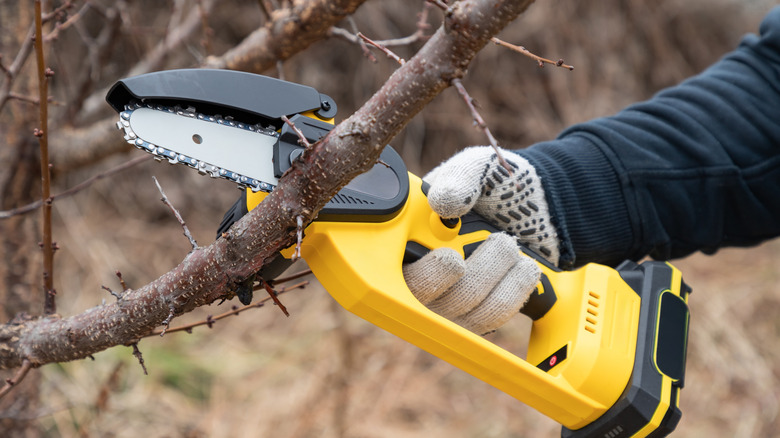
While there is technically a difference between tree trimming and tree pruning, you'll want to do both this fall to keep the tree in your yard healthy and its surroundings intact. Trimming involves curating that appearance of your tree and preventing potential damage to adjacent structures or to people passing underneath it. Pruning involves cutting back to preserve a tree's health and maintain its strength over time. In both cases, begin after all the leaves have fallen but before the temperature drops below freezing. In fact, late fall is the best time to prune for a tree's health, as it goes dormant.
When pruning, remove any dying, diseased, infected or damaged branches. Remove any branches that are rubbing against each other, as that poses a structural issue for the tree. For trimming, trim any branches that have gotten too close to structures in a way that could prove damaging or dangerous (remember insects and rodents can access your house more easily on branches that make contact). Trim any branches that inconvenience passersby or could create a safety risk.
Watering, fertilizing, and mulching trees in the fall
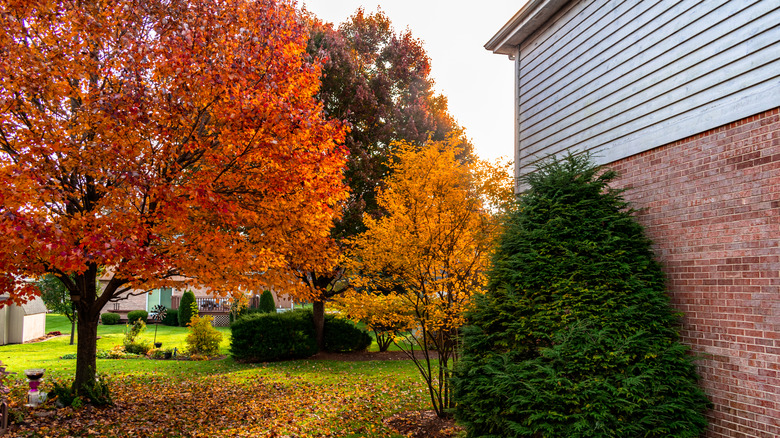
If you consciencious about watering your trees, consider decreasing the amount and frequency slightly in the fall and decreasing it through winter. As your trees go into a dormant stage, they need less water. As such, you should water your trees less often than usual, and with less water. Water early and be sure to not water your tree when the temperature is below 40 degrees Fahrenheit, to avoid freezing temps.
Give trees a nutrient boost to prepare for winter's demands and spring energy needs: Use a slow-release fertilizer towards the end of October or beginning of November. By using a slow-release fertilizer, you allow the tree to receive nutrients over a longer period of time, sustaining them even when the ground is frozen. It helps to rake away the leaves from the base of your tree to make the area less inviting for bugs and rodents seeking warmth in the winter.
After fertilizing, add a 2- to 4- inch layer of mulch around the base of the trees to help insulate them, keeping them warm all winter long. Leave space around the trunk of the tree to allow the trees to breathe (literally). Once you have mulched, give the edges around your trees a tidy-up with this must-try tool.