

Why You Should Reconsider Using Plastic Garden Edging In Your Yard
We may receive a commission on purchases made from links.
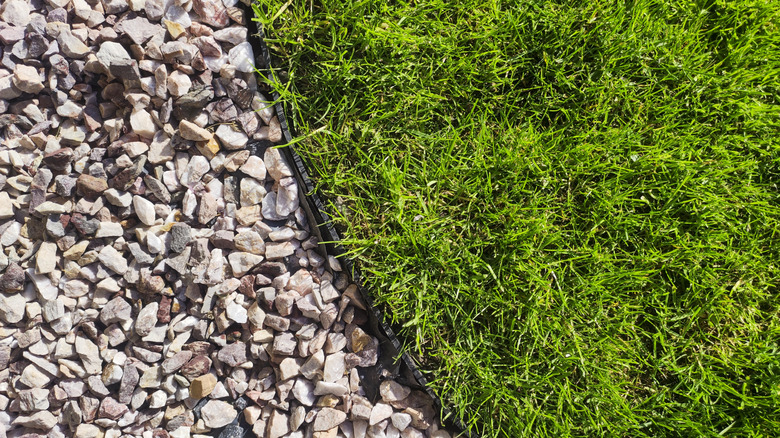
Edging your outdoor spaces can do wonders — it can instantly add extra interest to any flower bed and keep grass from creeping into your other landscaped areas. Installing a divider between your turf and other sections of your yard can create an effective weed barrier, allowing you to cut back on maintaining your landscape and spend more time simply enjoying it. This is true whether you have a lovely grouping of perennial flowers or a bountiful vegetable patch. Edging can take your backyard to the next level and bring order and structure to your landscape. You can use various materials to line your landscaped areas, including brick, stone, concrete, metal, or plastic. For a simple weekend DIY project, plastic edging is a quick and budget-friendly option. It provides a clear border without requiring a significant investment of time or money, which explains its popularity. Its lightweight, flexible design allows you to easily edge a curved lawn, creating a defined border without much fuss.
But before you load up your cart with this landscaping material, it's worth pausing to consider its drawbacks. If it turns out not to be the right fit, you may find yourself needing to pull it all up and start the job from scratch. You may also face the additional hassle of deciding whether to dispose of it, give it away, or sell it pre-owned.
Plastic edging's drawbacks
Despite its widespread use, plastic edging comes with limitations that can make it less than ideal for long-term use. Prolonged exposure to sunlight can cause it to fade, weaken, and become brittle, leaving it vulnerable to nicks and scratches from lawn mowers or trimmers. Sections may then shift or buckle, making that once-tidy border look uneven and messy. Sustainability is another concern — while some edging is made from recycled plastics, it still isn't biodegradable, and when it comes time to replace it, some municipalities won't accept it in curbside recycling.
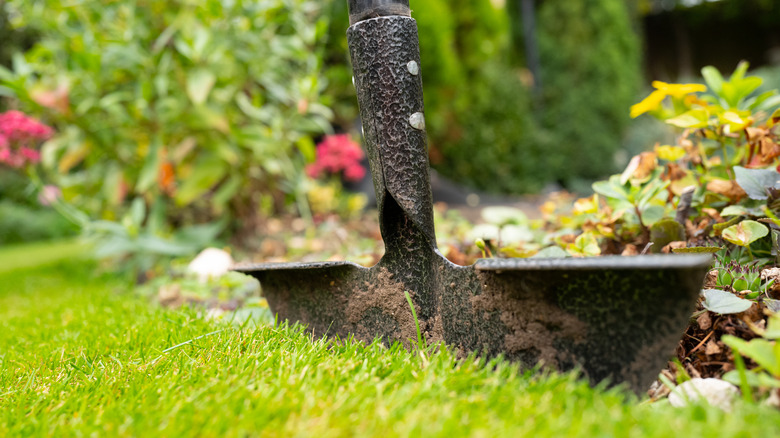
Fortunately, there are plenty of budget-friendly alternatives you can use to install attractive, effective edging without relying on plastic. For starters, you could simply create a crisp barrier between your lawns and a planting bed by using a garden spade to dig a small trench at least 2 to 4 inches wide and 3 inches deep between the grass and where your planting area begins. This gap should be enough to prevent turf runners (or rhizomes) from entering your landscaped bed. For a more structured look, scalloped concrete edging, available at most home improvement stores or nurseries, offers durability and a clean, classic look. You could also make your own low concrete border using a mold, such as this Tbvechi Concrete Garden Fence Mold, to make your own long-lasting low concrete fence around your beds.
Natural materials like gravel, bricks, or stones can also work beautifully as garden edging. With a little patience, you might even be able to locate these items secondhand or at discounted rates, making them a cost-effective choice that's both practical and visually appealing. These alternatives will not only give your garden a polished look but also offer solutions that are more durable and environmentally friendly than traditional plastic edging.