

How To DIY Your Own Pavers Using Old Plastic Pots
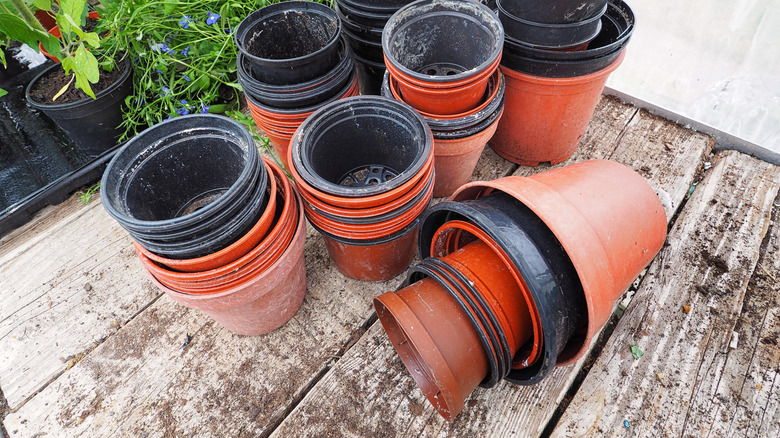
Sometimes, the simplest items that seem trash-worthy are actually more like treasures when it comes to DIY projects. Take those lowly, thin plastic containers that come with plants purchased from a garden center, for instance. They're uninteresting and tend to get thrown away or stacked in a shed, awaiting a new purpose for another project for someday. That someday can be today, especially if you have at least five or six of those plastic pots hanging around.
Nursery pots are thinner than decorative plastic plant pots since they're designed for function rather than aesthetics. They're quite functional as forms for round pavers and they're thin enough to cut with ease. The best part is that you can get at least a couple paver forms from each pot by cutting it into rings. The wider the nursery pot, the wider the paver you can make with it.
If you don't have enough nursery pots to make an assortment of paver forms, ask your neighbors or the greater community in your local Buy Nothing group. It's a good idea to have extras so you can make even more pavers of varying sizes for a completely unique look. And if you end up with far more than you need, use some as a money-saving soil hack for potted plants.
How to make concrete pavers using plastic pots as forms
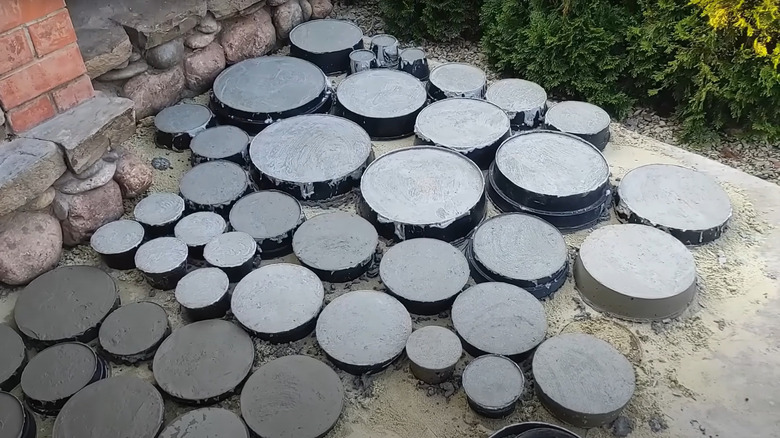
First, make forms for your pavers from the plastic pots. This idea by YouTuber DIY Landscape Design uses rings set atop a bed of sand. Cut the bottom out of each nursery pot using scissors. Then, cut rings about 3 inches tall from each pot; while a specific height isn't necessary, the rings should be taller than the depth of the concrete you'll pour into them — typically 1 to 2 inches thick. For uniformity, hold a permanent marker against the side of an upright pot at the desired height, then rotate the pot on a table while holding the marker still until the line goes all the way around the pot. Cut along the line.
Spread a thick layer of sand on a tarp outdoors. The sand serves as a base that can be leveled. Smooth the sand so it's level, then press the plastic rings down a little, narrow side up, atop it. While wearing a dust mask and gloves, mix concrete, mortar mix, or sand topping mix as directed on the package, then scoop some into each ring. A bit of hardware cloth atop this layer can add strength, too.
Continue filling the forms with sand to the desired depth, smoothing each one flat with a trowel. Allow the concrete to harden as recommended on the package. Leftover concrete can be used to make simple DIY concrete cobblestones for garden edging or a path through a flower bed. Once the concrete hardens, pop it out of each form, clean up the sand, then use your new stepping stones to take your landscaping to the next level with your DIY pavers.