

The Money-Saving Soil Hack You Should Try Out On Your Annuals
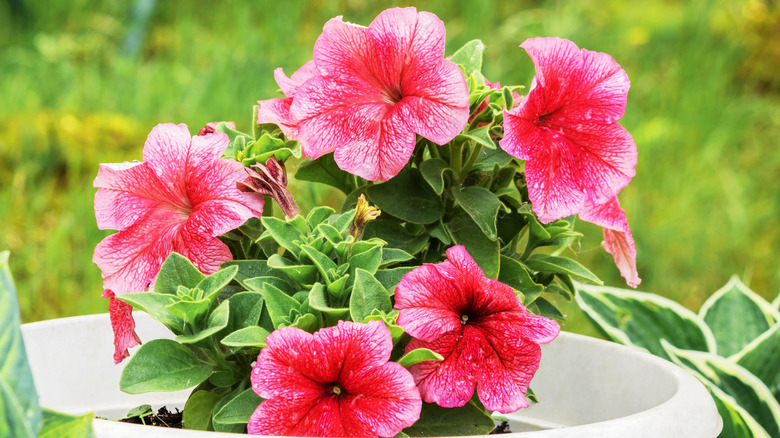
Because garden centers start to open up for the season, spring is quite an exciting time. Plants of all sizes, shapes, and colors are up for grabs, and it's tempting to fill the entire car trunk and back seat with flowers when the price is right. Taking all these plants home brings a sense of joy, but you may wonder where to plant everything once the flowerbeds are full. Fortunately, large plant pots offer a wonderful way to display your favorite groupings of annuals on the porch and patio. But then there's another conundrum: The larger the pot, the more soil it needs to plant the flowers high enough to see them above the rim.
While you could buy bag after bag of potting soil to fill those pots, there's an easier, far less expensive way to fill them ... and you likely already have the solution. Save those nursery plant pots — the thin, flimsy plastic ones that the plants are in at the nursery — and use them to fill some of the space in the bottom of your large planters. This hack works particularly well for planting annuals, since annuals tend to have shallower root systems compared to perennials. Nursery pots make a wonderful filler material since they're typically discarded or stored in stacks in a corner of the garage, perhaps forgotten for seasons on end. If you have more plant pots than you'll ever need, you could also turn some into DIY birdhouses with just a little extra effort.
How to use nursery pots to save soil
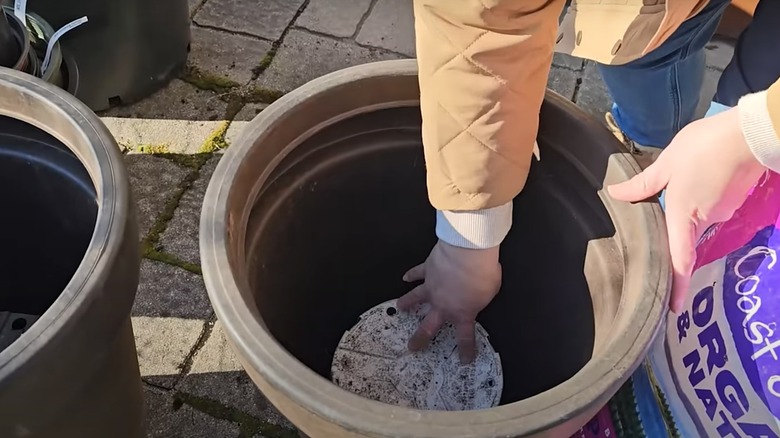
To use nursery pots as filler material for larger pots, flip them upside down in the larger vessels to take up space. If they're left upright, they'll hold dirt rather than create a void. Since nursery plant pots have their own drainage holes, water still flows freely through them. Nursery pots also help contain the soil in the larger planter. If that large pot had soil alone in it, some of that soil would come out of the drainage holes every time excess water exited the pot. With filler material such as nursery pots at the bottom, there's less chance of losing that valuable potting soil. The amount of nursery pots to use as filler depends upon their size, the size of the outer pot, and on how much potting soil you have on hand. Be sure to use enough soil to allow the annuals to grow freely. Check the tag that comes with each plant to determine its ideal growing conditions.
Lightweight pot fillers such as nursery pots work well in larger pots that are heavy, as they won't add significant weight. If you need more lightweight filler ideas, empty plastic beverage bottles work well, too. If the outer plant pot is lightweight, add a few heavier items such as bricks, large rocks, or hunks of broken concrete. The added weight helps prevent the pots from blowing over on windy days and from falling over when curious squirrels consider digging in them. If you're in the mood for a plant-pot upgrade, here's an easy way to transform a plain plant pot into a copycat stone planter.