

A Clever Pest Control Trick That'll Make Use Of Pistachio Shells
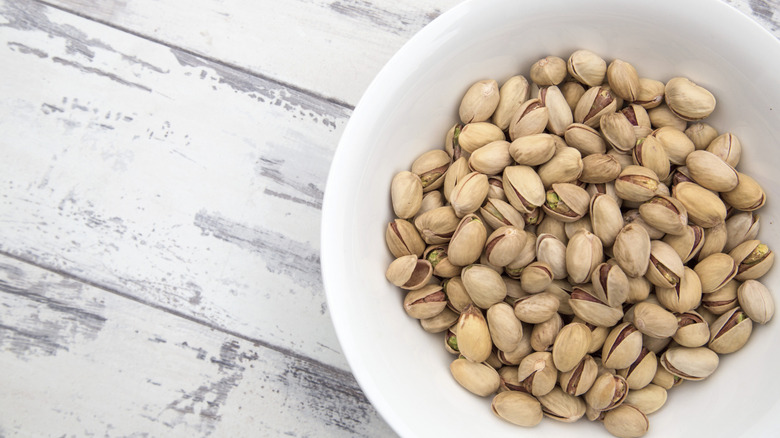
If you're a home gardener, you've likely employed your fair share of tips, tricks, and life hacks to keep pests out of your garden. While it can sometimes feel like a fruitless endeavor, keeping slugs, snails, and all manner of soft-bodied creatures away from your plants is imperative to the health and safety of your flowers and crops. Luckily, we've got a tried-and-tested method you may not have heard of yet, which requires nothing more than a few basic kitchen scraps and just a bit of your time. The kitchen scraps in question: pistachio shells. Most pistachio lovers toss the shells into the trash or compost without a second thought, but these protective outer hulls are much more than just a disposable shell. In terms of pest control, pistachio shells may be helpful for keeping slugs and snails away, since their rigid texture and sharp edges provide a harmful surface for the slimy pests.
Pistachio shells function similarly in a garden to egg shells, or other jagged surfaces. Placing a barrier of shells around the base of your plants or garden beds can help to create something of a shielded testudo formation, preventing unwanted invaders from breaking in and destroying the crops. Slugs and snails especially find the surface of these shells deeply uncomfortable, forcing them to depart for greener pastures.
You can crush any extra pistachio shells into little bits and add them to your compost, helping to regulate moisture and counteract the conditions which breed mold. The shells are rich in nutrients, meaning they give off tons of carbon, calcium, magnesium, and phosphorus as they break down into the soil. They are often referred to as a "slow-release" organic fertilizer. No matter how they're used, pistachio shells are a simple soil addition that help plants thrive.
How to deploy pistachio shells in the garden
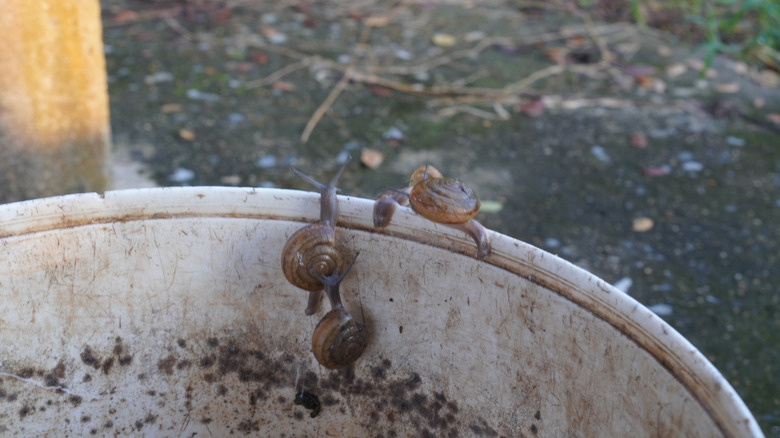
To create a slug and snail deterrent in your garden, begin by layering your pistachio shells in a border around specific plants (these pests especially like shoots and young plants), or make a perimeter around your flower beds. If you find weak spots, you can always shore up your defenses by adding more shells. Since pistachio shells take 3 years or more to fully decompose, you won't need to replace them each season, especially if you live in a climate that isn't bombarded with snow and rain. With potted and container plants, you could even glue the shells around the edges of the container, jagged side up, to prevent the creepy-crawlies from entering.
You'll also want to avoid using red-tinted shells, sometimes found in international markets. Though red pistachios are less common in the U.S. than they used to be, they're typically dyed with a chemical-based paint which can harm your soil. Likewise, give your shells a quick rinse, to ensure that they aren't coated in a thick layer of salt. While slugs and snails hate salt, the added sodium could harm plants and affect germination (ignore recommendations to salted shells in your garden).
Though some gardeners swear by this method, others see mixed or no results. At the end of the day, there is no perfect catch-all for deterring garden pests. If you don't find immediate success with the shield method, consider pairing the shells with other deterrents like diatomaceous earth, essential oils scented with peppermint, lemon or eucalyptus. You can also combine pistachio shells with the ash from your fire pit which is an unexpected pest repellent. Ash also helps your garden thrive, because it works as a fertilizer.