

If Your Lawn Is Full Of Soil Plugs From Aerating, Here's What You Can Do
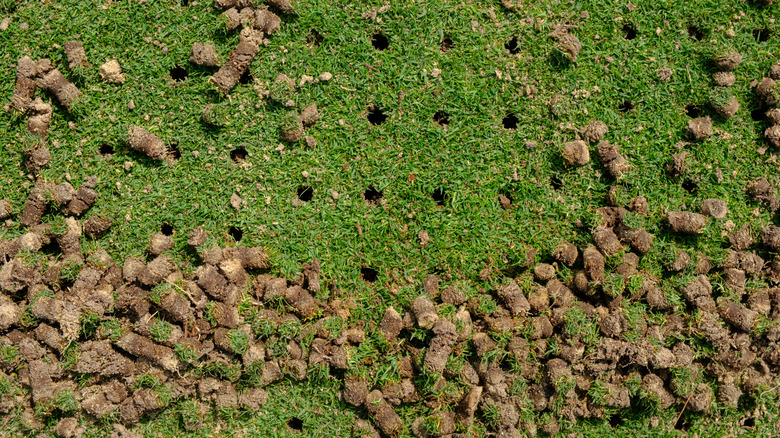
A crucial part of lawn care is core aeration with a lawn aerator. It is important to use an actual aerator instead of one of the seemingly clever lawn aeration hacks that cut corners, such as using high heels. Core aeration works by the aerator extracting several plugs of soil and thatch from your lawn, allowing more air, moisture, and nutrient flow. This is accomplished by reducing soil compaction, which several factors, including heavy machinery and foot traffic, can cause. While the benefits of core aeration are great, the process leaves too many unattractive little soil plugs on the ground to count, making your yard significantly less appealing. The desire to remove the soil plugs, which are 2 to 3-inch brown cylinders bearing an unfortunate resemblance to animal droppings, is understandable. Not only are the soil plugs ugly to look at on your lawn, but they can also present a tripping hazard if you are not careful when walking around. While it may be tempting to remove the plugs, the best thing to do is keep them in your yard and put them to good use.
Leaving the soil plugs in your yard on top of the grass, while it's the easiest solution, is undoubtedly the least visually attractive method. There's solid reasoning behind this aeration strategy, though. When you understand how this method works, you may never want to revisit the tedious process of collecting soil plugs from your yard.
How to use soil plugs to benefit your yard
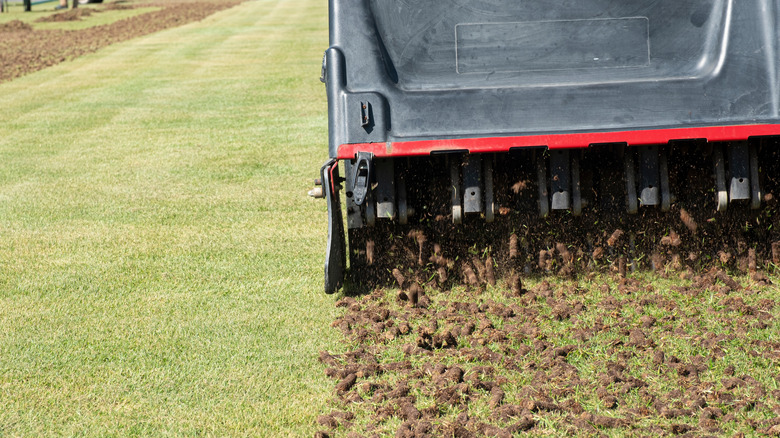
However unattractive, soil plugs are actually great for your yard as they can help the soil structure with their nutrient content. The soil from the plugs, mixed with organic material, will help spread important nutrients back to your yard and reduce thatch. By leaving them on your lawn, you allow the soil plugs to naturally decompose and spread nutrients with no additional effort on your part. The process may take a while, but you can speed up decomposition by mowing and watering your lawn a couple of days after aeration, which breaks the soil plugs up a bit faster. You can also rake the plugs around your yard to evenly distribute them and prevent any larger piles from forming.
If you don't feel like leaving your soil plugs in the yard, you should consider composting them, as long as they are devoid of any harmful chemicals or diseases. Evenly mix the soil plugs with vegetation in the compost for the best results. While composting may take a while, the outcome will definitely be of benefit to your soil. Be sure to know the best time to aerate your lawn for optimal results.