

A Free And Sustainable Way To Get Rid Of Old Potting Soil
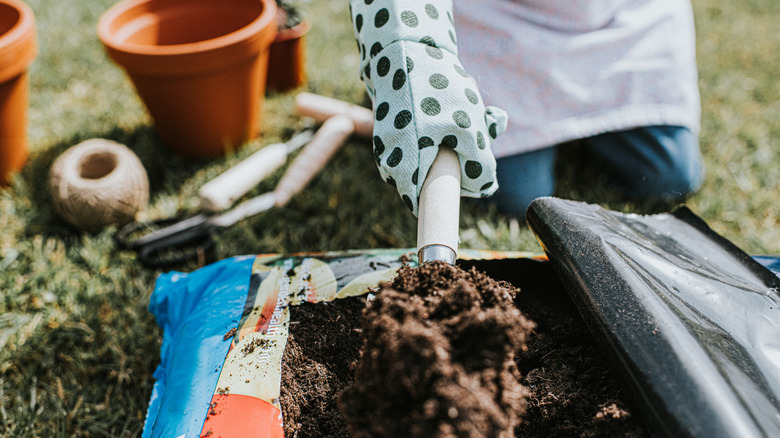
Potting soil is incredibly useful when growing container plants. However, to maximize its effectiveness, potting soil is typically used for only one year before replacement. This can be incredibly wasteful, and leave you with what feels to be a lot of useless dirt at the end of the year. Thankfully, while it may feel that way, potting soil can easily be used in other ways.
There are quite a few methods for getting rid of old potting soil in a sustainable way, depending on where you live. For example, a few larger cities offer a drop-off for garden by-products. Although these sites primarily accept leaf litter and old materials, no one is going to turn up their nose at receiving dirt. This is a great option for those who don't have a yard or who have too much soil to reasonably reuse themselves. Another alternative is to look at community gardens or gardening programs in local schools and see if they may be able to reuse it. You can also give it to a neighbor or friend.
Another option is to include it in your home compost. In addition to potting soil, scraps of fruits and vegetables, old plants, and other yard trimmings can all go together to create a nutritious compost to feed your garden next year, as long as you know about the things you should never put in your compost bin. Or you can combine the potting mix with materials already in your beds. This and other must-know soil tips can help your raised garden bed thrive, even when on a budget.
There are times you cannot sustainably reuse potting soil
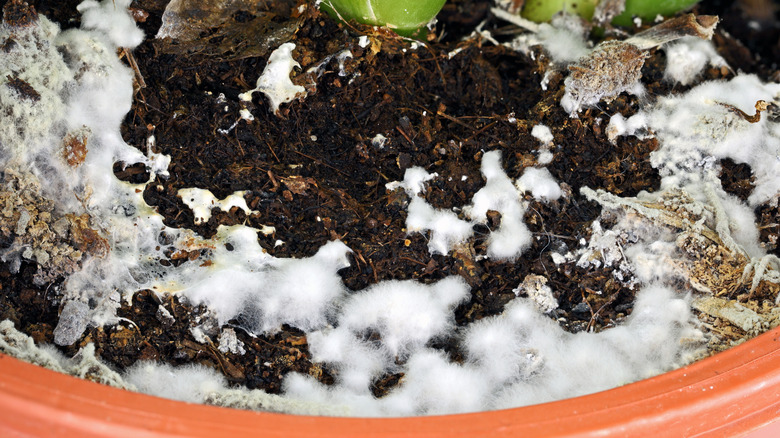
These methods only apply to healthy soil that takes care of thriving plants. If the soil had any disease or pests, it would be best to just toss the dirt into the trash. Even if you wait a whole year before reusing or trying to give away the soil, there is a good chance they are still present and can infect anything grown in it. Using contaminated soil — even in small amounts — can harm or kill plants, including easy-to-grow vegetables.
In theory, you can sterilize the soil, and that should fix the problem, but this doesn't always work. The process involves heating all of your soil for at least 30 minutes at about 160 degrees Fahrenheit, according to the University of California's Integrated Pest Management Program. If you just have a little bit of potting soil, and don't mind the smell of baking earth or having dirt in your oven. Microwaving soil is also an option. If your compost is enclosed and breaking down properly, it can sanitize the soil if you leave it in there long enough.
What most people choose to do instead is throw their soil into a black trash bag and leave it out in the sun for a while. This only works if your summers get hot enough to heat the bag thoroughly. You also need to make sure the entire bag of soil reaches a sufficiently high temperature for the process to be effective. The soil in the center will probably take longer to heat up. Since these methods may not fully eliminate pathogens, it's best not to share the soil, even after sanitizing.