

The Common Hummingbird Feeder Myth You Should Stop Believing
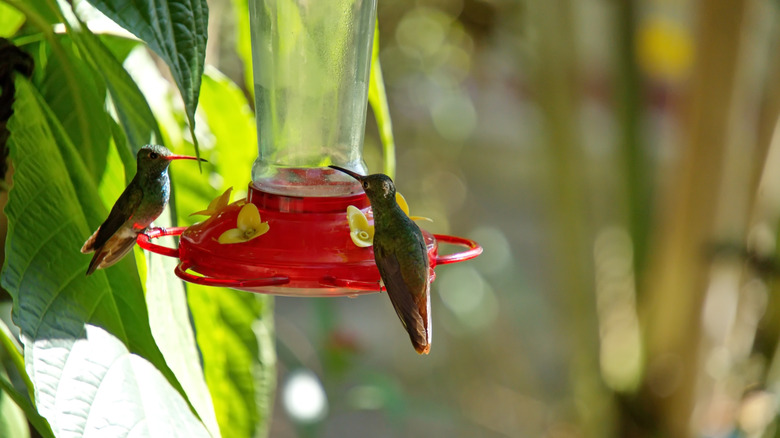
As the weather grows cooler, you may notice that the number of hummingbirds brightening up your yard begins to dwindle. This is because many of the hummingbird species that call your yard home only do so in the summer, preferring to spend their winters in the warm and sunny tropics where they can access food in abundance. As a result, your first instinct may be to bring in your hummingbird feeders to give your feathered friends the encouragement they need to begin their migration. Surprisingly, however, this common myth holds less truth than you may think.
These little birds have strong instincts that tell them when it's time to start their journey south, and they'll do so whether feeders are available or not. Along with having instincts to give them a push in the right direction, hummingbirds can also tell when summer is drawing to an end based on their surroundings. They notice factors like less sunlight and a decrease in their food sources, indicators that they need to get a move on before winter approaches.
Because of this, leaving up your feeders during the fall months won't cause your local hummingbirds to abandon their trek. In fact, you may even find that it's helpful to continue to provide a hummingbird haven and leave your feeder up as the cooler months approach.
Leaving hummingbird feeders up in the fall
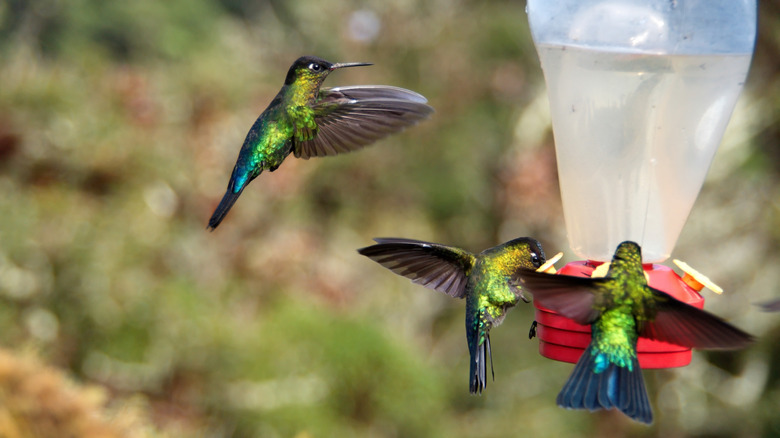
Have you ever been on a long road trip? If so, you may have found yourself stopping at gas stations or restaurants to refuel. Hummingbirds can travel up to nearly two dozen miles per day, meaning that they often need a pit stop to get their energy back up. That's where leaving up your feeders as the seasons shift can be helpful.
While your hummingbird feeders won't convince these little birds to fight their instincts and stay put, they can provide them with essential resources as they move south for the winter. If you do plan on leaving your hummingbird feeders up in the fall, or even into the winter to catch any stragglers paying a visit, it's important to ensure you're providing safe, clean nectar.
This means regularly cleaning your hummingbird feeder and providing a supply of fresh nectar, whether you opt for store-bought or a homemade recipe. When you do finally bring your hummingbird feeder down — if you're not in an area where hummingbirds are a residential or year-round species — then you'll want to give your feeder one good final cleaning and dispose of any nectar. This gives you a fresh start once spring comes back around, as you take advantage of the best time to put out your hummingbird feeders.