

The Unexpected Kitchen Staple That'll Help Your Leafy Green Vegetables Thrive
We may receive a commission on purchases made from links.
Some of the best tools and tinctures for your garden may be in your kitchen, serving other purposes. Kitchen tongs make transplanting seedlings easier, for instance, and vinegar encourages some types of plant seeds to germinate. The paper plates left over from your birthday party can even help your vegetable garden flourish. In addition to keeping leafy greens clean, these flexible discs can be used as collars that make plants stand tall and sheet mulch that regulates soil moisture. Perhaps best of all, they do it at almost no cost.
Paper plates are designed for food contact, so they're generally considered safe for use in veggie gardens. Plus, you can feed them to earthworms by burying them in the soil at the end of the growing season, along with other paperboard products that are free of glue, glitter, and glossy coatings . That said, their best uses are largely above ground. Paper plates are especially helpful when growing leafy green vegetables in containers. That's because their sizes and shapes tend to match those of many plant pot openings.
A round paper plate that's 9 or 10 inches in diameter is just right for covering the soil surrounding a plant in a round, 10-inch pot. Simply cut a hole in the center of a plate and slide a potted plant's leaves through it to create a small-scale version of sheet mulching. Like other types of mulch, sheet mulch insulates plant roots, discourages weed growth, and helps retain moisture in the soil beneath it. Even if you've growing vegetable plants in the ground, surrounding their bases with paper plates can help control weeds and provide structural support.
Using paper discs to grow and harvest leafy crops
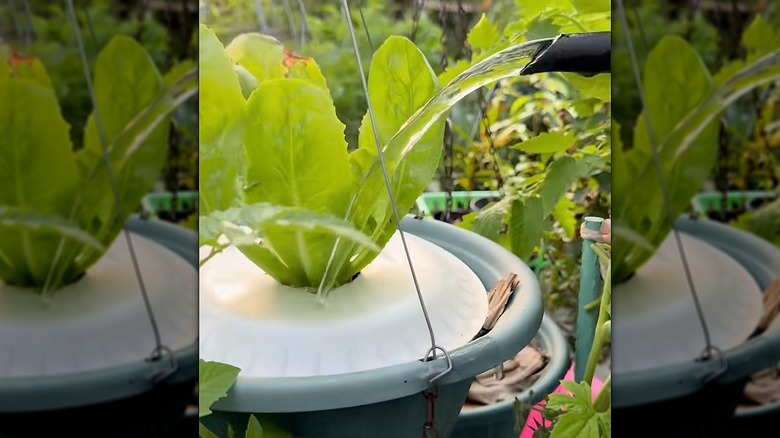
Mulching potted lettuce, spinach, and kale isn't the only way to use paper plates in a vegetable garden. Try turning the plates into collars that give your leafy greens a firm hug. Cut a circle in the middle of each plate that's big enough for a plant's leaves to wiggle through but small enough that its edges support any foliage that's tempted to fall over. if you need a taller collar, repurpose a plastic water bottle to prop up drooping plants.
Plates used as sheet mulch and plant collars can also protect leaves from splashing mud, which is common during storms or aggressive watering, and can spread soil-borne pathogens, as well as make a mess. If the plates assisting your plants accumulate lots of dirt before harvest time, replace them with clean ones so your lettuce and kale leaves stay tidy as you pick them. Eco Soul compostable 10-inch paper plates are one eco-friendly option, and you can cut them down to the size if they're too big for your pots. Want to avoid buying more disposable plates? Make stand-ins from leftover pieces of cardboard or thick kraft paper.
Though fresh paper plates are best for mulching and bracing, used ones can give your garden a boost if you put them in your compost pile. Make sure they're free of grease, meat scraps, and other substances you shouldn't add to your compost bin. As the plates break down, they'll contribute carbon that feeds the soil microbes powering the composting process. Additionally, composting paper plates keeps them out of landfills. This reduces emissions of methane, a harmful greenhouse gas.