

If A Groundhog Is Disrupting Your Yard, This Kitchen Scrap Can Help

You may not think about groundhogs (Marmota monax) apart from Groundhog Day every February, but these large rodents, also known as woodchucks, are actually at their most destructive when they're out of the winter holiday spotlight. After hibernating from October to March, groundhogs emerge from their winter slumber ready to feast on everything from grasses and flowers to fruits, tree bark, and large insects. You'll recognize this largest member of the squirrel family, which can grow up to 14 pounds and 32 inches long, by its reddish-brown or gray fur, large white incisors — and penchant for digging burrows in your yard. In fact, their burrows can be quite large and complex, extending up to 50 feet long and up to 6 feet underground, with specific chambers for different functions. Impressive, yes, but certainly not something you want taking over your garden.
The good news is that it can be pretty straightforward to humanely trap groundhogs with a simple bait that's sure to entice your furry intruder: Apples. This tasty fruit is well-loved by humans and groundhogs alike (in fact, it's one of the most popular and readily available fruits in the U.S.), so you probably already have it in your kitchen. And a great aspect of this method is that you don't need to waste an entire delicious apple on your groundhog foe. A few apple cores or apple skins that you would have otherwise discarded should do the trick — and when you're through, you can even repurpose any leftover apples as a unique bird feeder, since birds love snacking on this juicy fruit, too. Here's what to do.
How to humanely catch a groundhog with apples
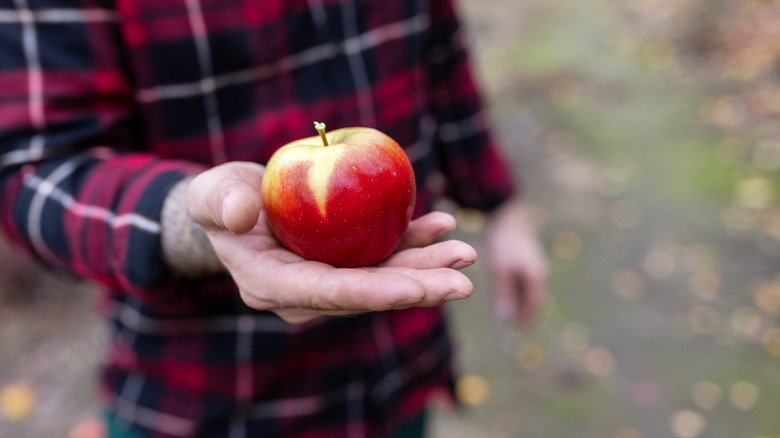
First, purchase a live trap from your local hardware store, garden store, or pet store. Wash the trap and use latex gloves to remove any human scent. Then, set it on a flat surface in your yard with the apple scraps inside, and disguise the trap with a few branches and leaves. Once you've captured a groundhog, be sure to contact your local wildlife agency, as some states and regions require the release of wild animals to be done by a professional, so that you don't run the risk of creating a problem for your neighbors or endangering the animal. The groundhog will need to be relocated to an area at least 20 miles from your home so that they can't find their way back to your yard.
For groundhog deterrence, it's also important to consider what groundhogs don't like to eat. In your landscaping, you may want to incorporate some plants that will repel pests from your garden naturally. Herbs such as fennel, chives, and thyme, and flowers such as lavender, peony, and daffodils are less appealing meals to groundhogs, and can discourage them from feasting on your garden. Bonus: Those daffodils can help eliminate any rat problems, too.
Fences are also a simple yet effective way to keep groundhogs out of your yard in the first place. Your groundhog barricade should be at least a foot underground, with another foot of wiring bent horizontally in an L-shape to discourage tunneling. The fence should also extend at least four feet above ground, with the top 12 inches angled away from your yard so groundhogs can't climb over it. If you aren't a fan of fences, try motion-detecting sprinklers to keep groundhogs out of smaller garden spaces.