

How To Have The Best Beach Camping Experience
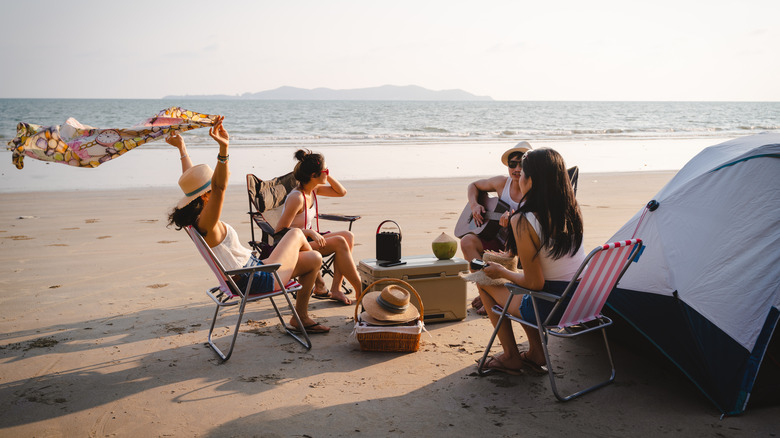
Beaches are among the most breathtaking places to camp in the US and elsewhere. Wherever the sea meets the sand, there is the possibility of an incredible camping experience. Although many aspects of beach camping are similar to camping in other types of terrain, there are some things which are some things that are unique to overnighting at the beach. The lack of trees and shade, abundance of sand, and prevalence of water level fluctuations due to tides impact everything from the gear you need to where you choose to make camp. In order to make sure you have the best beach camping experience possible, you need to check the regulations in your area, pack the proper gear, go at the right time, and choose your campsite wisely.
The first step to making sure you have an enjoyable beach camping experience is to check the legalities of pitching a tent on the beach in your area. Different beaches have different regulations. Some allow camping, some don't. Some require permits, others just charge an entry fee, and some are free altogether. Additionally, you need to check the regulations for any activities you hope to enjoy, such as building a campfire or fishing.
Next, pick when you want to go. This may be based on the activities you are planning, such as surfing, fishing, or snorkeling. If you are not limited to when a specific activity is available, fall is typically considered among the best times to pitch a tent on the shoreline due to the moderate temperatures and smaller crowds. This is somewhat dependent on the geographic region and specific stretch of sand. For instance, by mid-fall, it's too chilly for beach camping in some areas.
Essential beach camping gear
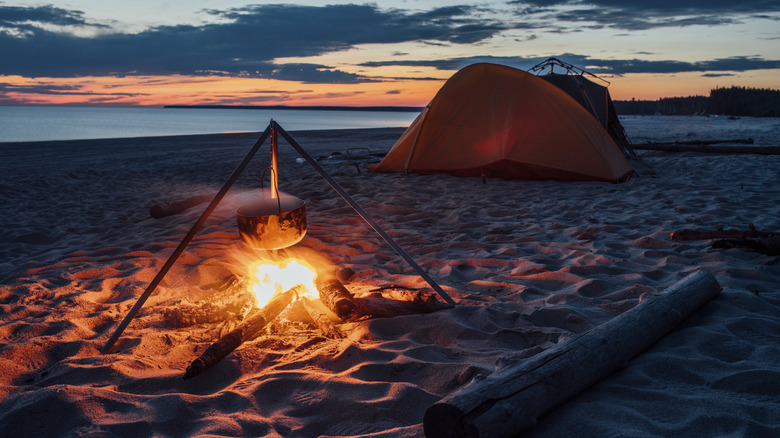
After you've picked the time and place, you need to make sure you pack all the right gear. Starting with your shelter, it is imperative to pick a tent made of lightweight, breathable fabric that requires little effort to set up. Keep in mind that the salt and sand at the beach tend to be harsh on equipment, so you may want to consider purchasing a separate tent from the one you use for inland camping trips. Typically, dome tents like the Coleman Sundome Camping Tent are ideal choices for the beach environment. The spreader poles on these tents tend to offer a bit more stability, given the often windy conditions and loose sand.
You will also need to bring plenty of water, coolers filled with ice blocks, and all your cooking gear. This includes either a propane cookstove or a charcoal grill. If building fires on the beach is allowed, you can cook over the campfire, but you may need to bring your own firewood. If campfire cooking is your plan, you will also need to bring either a grill or tripod to put over the fire, as the likelihood of finding adequate sticks to fashion one onsite is low.
You'll also need to pack all the beach and activity specific gear you need, including bug spray, sunscreen, chairs, towels, fishing rods, sand toys, etc. One household staple you should pack for your beach camping trip is baby powder, which can help keep you from being constantly covered in sticky sand. Keep in mind, if you want to camp and fish on a remote stretch of beach, you should take everything you'll need, as there may be no stores nearby. However, try to be efficient and pack just what you need.
Where and how to make camp on the beach
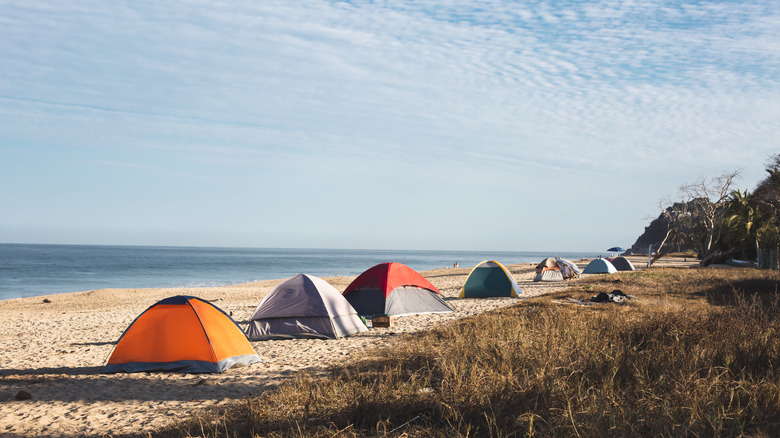
Once you and your gear have arrived at the chosen beach, you need to find the best place to set up your camp. Tidal fluctuations are the main thing to keep in mind. It is important to set up camp beyond the reach of the water at peak high tide. It is also important to stay off the dunes. In many areas, it is illegal to camp or tread on the dunes or above the vegetation line. Even in areas where this is not legally restricted, it is considered an environmental faux pas to do so. Additionally, ticks, snakes, and other potentially dangerous critters are often encountered in the dunes.
Before setting up camp, smooth and level the sand in the area you intend to pitch your tent and/or set other items, such as coolers and cook stoves. This is easily done just using your hands and feet to move the sand around. You should also move any dangerous creatures that may have washed up, such as jellyfish or Portuguese man-o-war, as well as sharp objects like shells, from the campsite. Also, consider laying a ground tarp beneath your tent before setting up.
You should also keep in mind that regular tent stakes typically will just pull out of loose sand. Instead, you can use sandbags to anchor your tent, as well as any other lightweight items that may become unstable or blow away in the wind. Be sure to keep any small or lightweight items in a camp box, tent, or vehicle. Once camp is set, it is also handy to keep an extra water container or a Surf Brush to remove sand from your body before going in your tent.