

Why You Should Reconsider Using Regular Unleaded Gas In A Lawn Mower
We may receive a commission on purchases made from links.
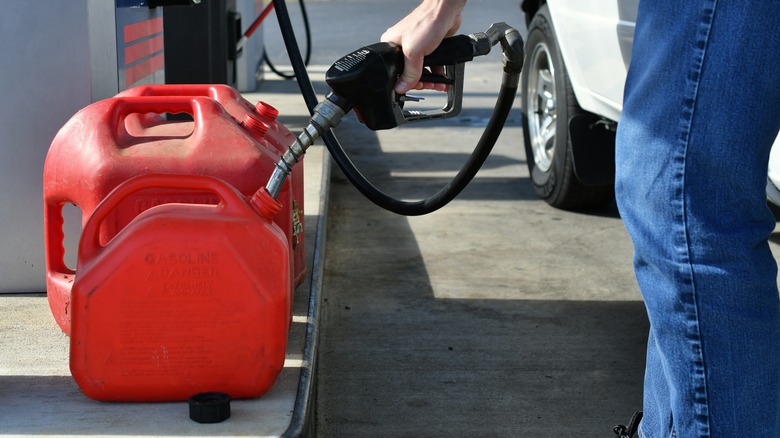
When it comes to choosing the best fuel for your mower, the deciding factor often comes down to cost. However, there's much more to consider than price per gallon. Depending on the type of gas you put in your mower, you could end up with additional costs in maintenance and additives or, even worse, severe damage to your machine. On the other hand, using the correct fuel is one of the easiest ways to extend the life of your lawn mower. This is why you should reconsider using regular unleaded gas in a lawn mower and, when possible, use ethanol-free gasoline instead.
The problem with regular unleaded gas is that it contains ethanol, an alcohol derived from grain. Ethanol was first blended with gasoline in order to make the petroleum supply stretch further, and most gasolines available at the pump in the U.S. today are 10% ethanol, designated as E10. Still, while ethanol makes more fuel available, it also has some issues. One of the biggest is that it absorbs contaminants since it's not water soluble. Over time, it can also separate from the petroleum gas molecules in a process known as phase separation.
All of this can lead to myriad problems for your lawn mower engine. Common issues include corrosion of internal parts and gum residue deposits. Plastic and rubber parts and components, such as hoses, gaskets, and filters may degrade as well. As a result, your lawn mower may be difficult to start or keep running, and it can even lead to engine failure.
What to do if you can't get ethanol-free gasoline
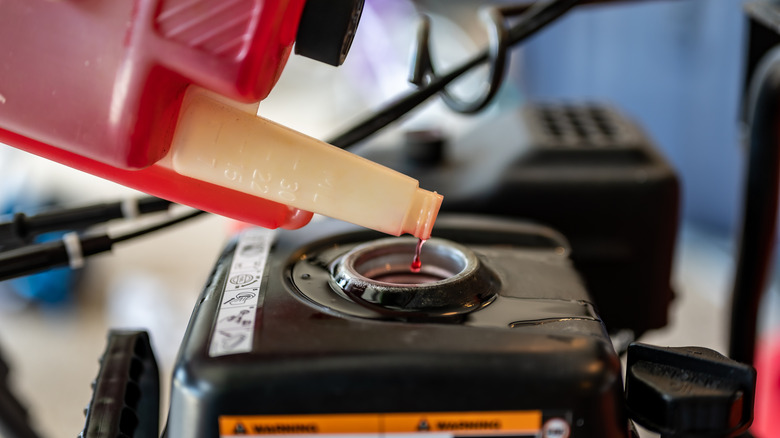
While ethanol-free gasoline is better for lawn mower engines, it does come with a couple of potential obstacles. For one, it's more expensive than ethanol-blended gasolines. The bigger hurdle, though, is availability. Even if you are willing to pay the extra cost, ethanol-free fuel may not be available at the gas station near your home, as relatively few stations sell this kind of gas. It is worth noting, however, that the shelf-life of ethanol-free fuel is double that of E10 gasoline. Since ethanol-free fuel can stay fresh up to six months, there's always the option of keeping a supply stored for use through the mowing season.
If, for whatever reason, ethanol-free is not an option, there are steps you can take to protect your mower from the damaging effects of ethanol. Sadly, buying premium unleaded isn't one of them: Small engines don't benefit from higher octane, and premium can contain just as much ethanol as regular unleaded — if not more. So, instead of paying more for premium unleaded, spend those extra dollars on a fuel stabilization additive such as Sta-Bil Small Engine Pro. While it's always best to use up your ethanol-blended fuel within 30 days, utilizing such additives is considered essential if the fuel will remain in your mower or gas storage tanks for more than a month.