

A Beautiful Ground Cover That'll Add A Vibrant Pop Of Fuchsia To Your Autumn Garden
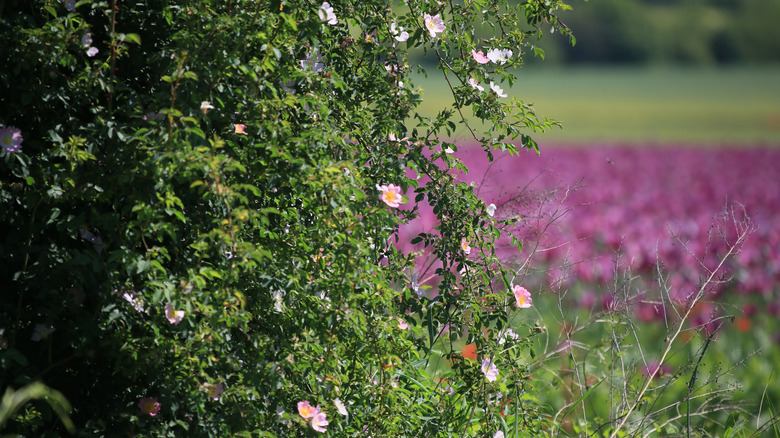
Many people associate autumn with golden chrysanthemums, orange pumpkins, and the red leaves of sugar maple trees, but bucking tradition opens up a world of possibilities for your flower beds. If you're a fan of fuchsia, why not make it the star of your fall landscape with poppy mallow (Callirhoe involucrata). Poppy mallow is a pinkish-purple wildflower that can make your yard more colorful than ever when summer's waving farewell. As a low grower that likes to form big mats of foliage, this flowering perennial makes a brilliant ground cover in its preferred climates, which fall in USDA hardiness zones 4 through 8.
Native to the central U.S. and common in the Great Plains' fields and prairies, poppy mallows can bloom well into the fall after opening their first flowers in mid-spring. These herbaceous plants rarely grow taller than 1 foot, but carpets of them often reach a width of 3 feet. The flowers have an attractive cup-like shape, but with a diameter of 2 inches or so, they're smaller than most of the drinkware in your kitchen.
Many pollinators find them just the right size for nectar sipping. When dry spells cause many other flowers to wilt, poppy mallows tend to keep thriving, providing meals for hungry bees and butterflies, unless scorching temperatures convince it to go dormant. These plants are especially important to Checkered Skipper and Gray Hairstreak butterflies, whose caterpillars depend on them for food and shelter. All in all, these fuss-free plants are a fine choice for beginning gardeners, landscaping experts, and nearly everyone in between.
Planting and maintaining a poppy mallow ground cover
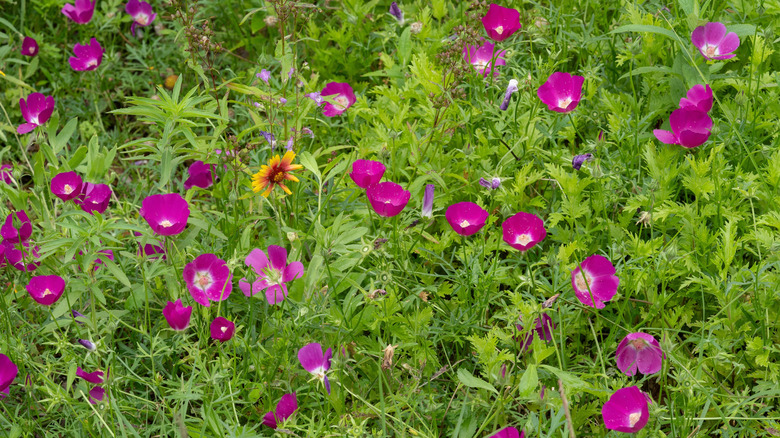
Poppy mallows are easy to plant and maintain, but their lengthy taproots don't like to be moved, so find them a home they can enjoy for a long time. Their main request is a spot with lots of direct sunshine, ideally 6 hours or more on most days. When selecting a planting site, also keep in mind that poppy mallows like to self-seed if they're feeling at home. In other words, give them some space to grow outwards. These plants are generally happy in rocky, sandy, or clay soil as long as it drains well.
Avoid planting poppy mallows in swampy areas since soggy conditions can lead to crown rot. The risk of this problem tends to be highest in the winter, so avoid locations where snow, ice, and frost tend to collect. To give your new poppy mallows a strong start, direct sow their seeds outdoors in the fall. Some garden centers recommend soaking the seeds in hot water the night before planting. Alternatively, you can chill the seeds in your fridge to stratify them and then plant them in the spring.
If you have some extra poppy mallow seeds, consider sowing them in a rock garden. The plants will trail along the ground in a charming way without sending out runners for you to manage. As an added bonus, poppy mallows make good companions for a number of other sun-loving, drought-tolerant ground covers you might grow in a rock garden.