

The Tropical Fruit Tree That'll Add Colorful Privacy To Your Backyard
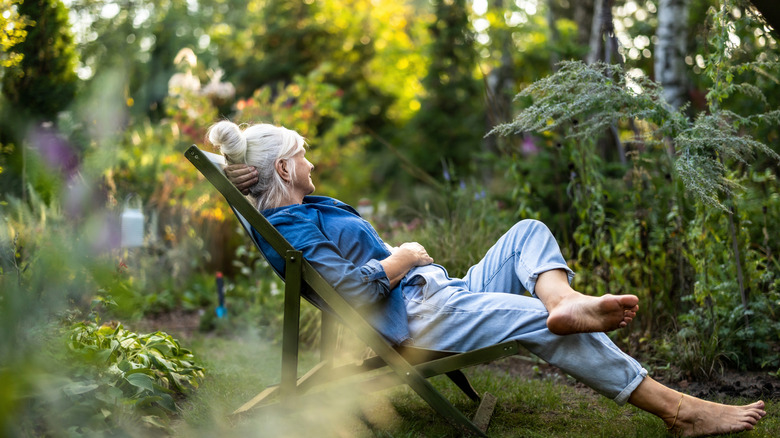
Do you want to add more privacy to your backyard without taking away from the features you love most? Building a wood or composite privacy fence is a great way to keep away wandering gazes, but it can make your yard feel closed in. If you want to keep things looking natural and wonderfully wild, have you considered using plants for privacy? To create the DIY privacy nook of your dreams, there's a solution that keeps your yard out of sight of anyone passing by while also adding a splash of color — as well as the occasional snack with its edible fruit.
Pineapple guava (Acca sellowiana), also known as feijoa or guavasteen, is a slow-growing but colorful tree native to South America. In the spring, this tree floods your yard with color thanks to its flowers, which range from pink to red to white. Once the tree is established, it can also bear fruit in the fall months, pairing privacy with a treat.
If this sounds tempting, then you may find yourself wanting to add pineapple guava to your own garden. However, before you run to your local nursery, it's important to learn exactly how to grow this tree for the best results. You should also take the time to research how well this tree can grow in your local region — this plant is considered invasive in Hawaii, and should not be planted.
How to grow feijoa tree in your yard
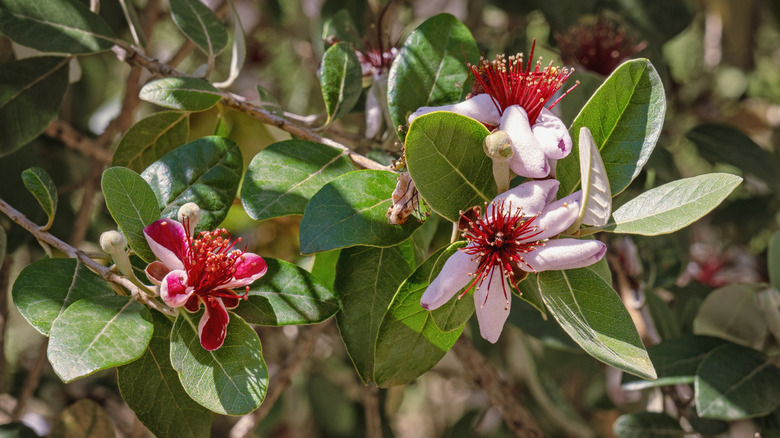
While the fate of your feijoa tree depends partly on your backyard's conditions, you can start out on the right foot by looking into the requirements for this plant's success. For example, pineapple guava can grow in USDA zones 8 through 11. It also needs well-draining soil that strays away from the alkaline side, with either a neutral or acidic pH. Another aspect of pineapple guava that's important to keep in mind is its mature size. After all, you don't want to end up with a tree that's too large for your outdoor space. Pineapple guava trees grow to around 12 to 15 feet on average, and they do well with minimal pruning.
If you have the right climate and space to accommodate this colorful tree, it can be a great way to add more privacy to your space without taking on a high-maintenance plant. For optimal planting, you want to aim for areas with full or partial sun, as well as protection from strong winds if they're common in your area. While it does require regular watering to keep the soil moist, fertilizing is an infrequent task that you can cover twice a year.
In all, pineapple guava trees offer a colorful, beginner-friendly way to create natural privacy in your yard. However, there are a few reasons you may want to think about other options, such as if your soil doesn't line up with the tree's needs. You may also want to reconsider fruit trees if you live in bear country, as they can prove tempting to those furry giants.