

Stop Hummingbird Feeder Leaks With These Easy Maintenance Tips
We may receive a commission on purchases made from links.
Each year, backyard birders across the country anxiously await the time to put out hummingbird feeders. While putting out nectar-filled feeders is a great way to get hummingbirds to swarm to your backyard, when these feeders leak and drip the sugary substance from within, they can also attract a variety of pests and deter hummers from visiting. However, by keeping your feeder clean and properly filled, along with paying attention to where you place hummingbird feeders, you can easily stop leaks.
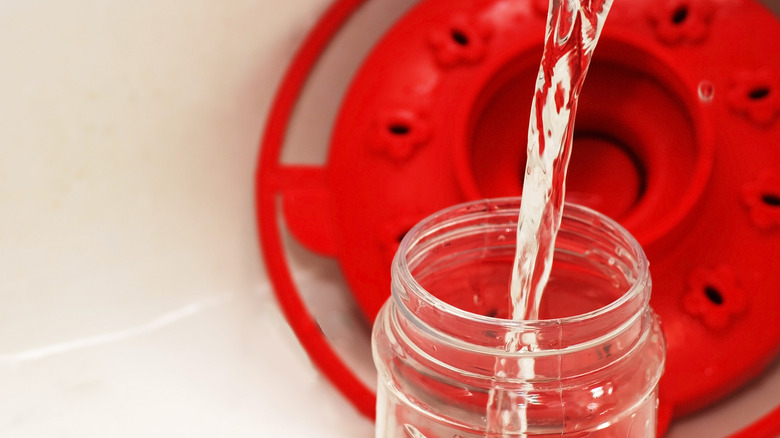
Regularly cleaning your hummingbird feeder is one of the best ways to attract more birds; it also happens to be one of the best ways to prevent the feeder from leaking. If the ports become partially blocked or clogged, or if the seal has grit and gunk on it, the feeder is likely to leak. Ideally, your feeder should be emptied and cleaned every few days. This ensures that the nectar inside is fresh and all of the components are functioning properly. To clean the feeder, it should be completely disassembled. All parts should be soaked in a vinegar and water solution that is one part vinegar and four parts water. Then, lightly scrub, thoroughly rinse, and dry each piece before reassembling the feeder.
As you reassemble your feeder, be sure to check the seal and ports, as well as the reservoir, for any damage or defects. If the seal is cracked or worn, replace it. Regular cleaning is a must for both glass and plastic hummingbird feeders, but keep in mind that any plastic parts can become warped from heat. So, make sure the pieces of the feeder fit back together as they should each time you clean. If any of the components are warped, the feeder will likely continue dripping and should be replaced.
Proper filling and placement can help prevent leaks
How you fill and where you place your feeder can also go a long way to preventing leaks. For starters, you want to make sure to keep the feeder full. The pressure created by a full feeder will actually help solidify the seal. Still, you should be careful not to overfill it, especially during the summer when temperatures can become exceedingly hot and cause the nectar to expand. If you don't leave a little room to accommodate this expansion, the nectar will naturally drip out through the ports.
While there is no way to prevent the air temperature from rising on a hot summer day, you can somewhat mitigate its effects by placing the feeder carefully in your yard. Hanging feeders in shaded areas, away from direct sunlight, will reduce the impact of the rising temperatures, minimizing the degree to which the nectar expands. It will also prevent the nectar from spoiling as rapidly. If you don't have areas that are naturally shaded, you can utilize a cover such as the Beserie Weather Guard Dome to provide shade for your feeder.x
When choosing a place to hang your feeder, you should also consider the impact of wind. Windy conditions can cause the feeder to sway back and forth, which can result in nectar sloshing out of the ports. Try to find an area that is protected from the wind to hang your feeder. Even with proper placement, on extremely windy days, it may be necessary to take the feeder down in order to prevent leakage.