

How To Choose Between A Wood And Metal Raised Garden Bed
We may receive a commission on purchases made from links.
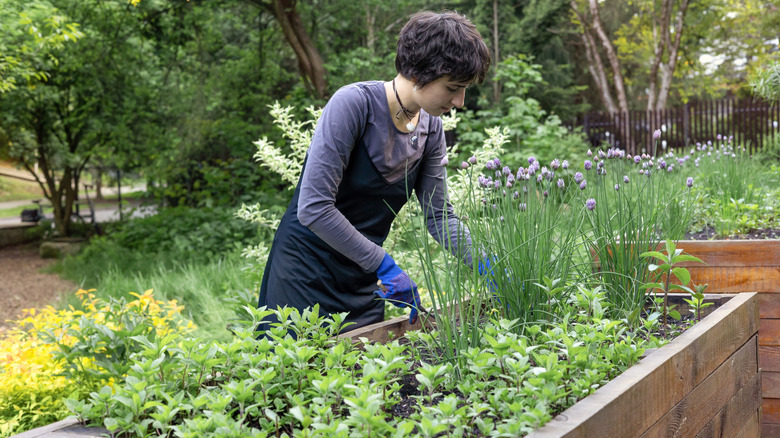
Many gardeners choose raised beds for their outdoor plants since they offer more control over soil composition and water drainage than in-ground gardens do. Raised beds are also easy to cover with covers that create warm, greenhouse-like growing conditions while keeping bugs at bay. Wood is a popular choice for raised beds because it's natural, affordable, and sturdy. It does degrade over time, however. Raised beds with metal walls offer a more durable alternative, but they also have a few drawbacks. In other words, there are several factors to keep in mind when deciding between wood and metal. These include how much maintenance you're willing to do, how long you need the bed to last, and how much money you're comfortable spending. Also consider whether you might move your raised bed in the future, as some types are easier to disassemble and rebuild.
Whether you ultimately choose wood or metal, you'll need to decide if you want to build your raised bed from scratch or use a kit. Though kits tend to cost more, they're a convenient option for gardeners with limited construction skills. On the other hand, opting to DIY your raised bed can help extend the life of repurposed materials that might otherwise end up in landfills. If you're about to haul a metal bed frame to the curb, use its headboard to create a unique raised garden for your plants. Or, repurpose wooden shutters to make stylish garden bed walls. You can even turn old fencing, doors, and dressers into attractive above-ground planter boxes.
Pros and cons of wooden raised beds
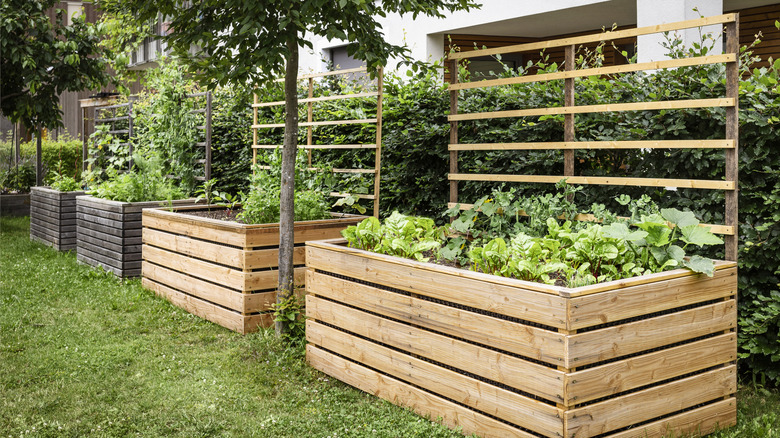
Wood's neutral colors and pretty grain patterns adds visual appeal to almost any yard. Plus, wood is easy to source whether you're buying new lumber or upcycling old pallets. If you have access to a saw, hammer, and nails, you can make a raised bed with nearly any dimensions since you can cut wood planks down to the size you need. Garden-ready metal is harder to find and cut, so many people use kits when choosing this material for raised beds.
The price of wood is another factor to consider. If you go with pallets or other repurposed wood, you might pay next to nothing to build a raised bed. Even if you purchase freshly cut planks, wood is likely to cost less than metal. That said, don't forget about the costs required to keep your bed in tip-top shape. Wood tends to need more maintenance than metal, and this requires both time and money. When constructing your raised bed, devote part of your budget to sealing the wood, which guards against rotting, and lining it with plastic to prevent rotting the wood from inside. If you're growing edible plants in your raised bed, apply a food-safe product such as Hope's waterproof tung oil to both the interior and exterior. You'll need to reapply sealant often, as well as address decay, cracks, warping, and even wood-eating pests such as termites. If you'd rather not deal with sealant (as often), select wood that offers some rot resistance. Cedar and redwood are two solid options. Avoid pressure-treated wood if you're concerned about chemicals seeping into your garden's soil.
Pros and cons of metal raised beds
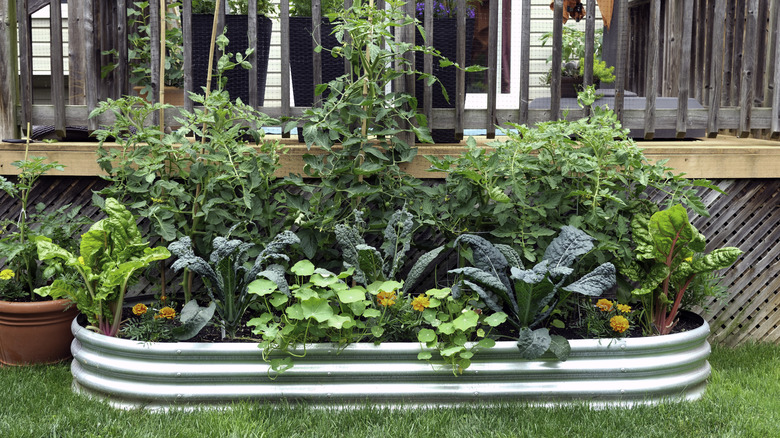
A metal raised bed is tricky to build completely from scratch, yet it should last longer than a wood one and require less maintenance. This could save you money in the long run. You can expect to get a decade or two of use out of a metal bed, possibly longer if it's treated with a rust-fighting agent. Though a meticulously maintained bed made of high-quality lumber might last 15 years, it's more likely you're looking at five or six years. The risk of rust is definitely a downside with metal beds, but you can use WD-40 to clean up your garden if this problem strikes.
Though wooden beds are made from biodegradable tree matter, metal beds are often the most sustainable choice. That's because they're usually made of recyclable metals once you're done with the bed. Plants in metal beds don't require as much water to keep the soil moist than their wooden counterparts (since the wood absorbs a lot of moisture unless its lined). As an added bonus, using less water can lower your utility bills.
Metal beds are also good at holding heat, which may keep the soil warm long into the fall, extending the growing season for your plants. This benefit may turn into a drawback during heat waves, but you can keep your plants comfortable by misting them with water and providing shade during the hottest parts of the afternoon. Light-colored mulch can also help plant roots stay cool when temperatures rise. To choose the best type of mulch for your garden, consider your plants' insulation needs, nutrient requirements, and water preferences. Straw mulch and shredded tree bark are good choices for many raised beds.