

Attract More Hummingbirds To Your Garden With A Drought-Resistant Plant
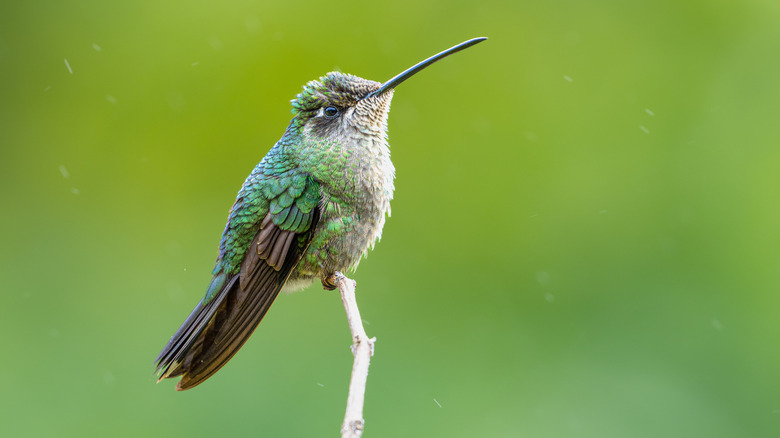
Are you looking for ways to attract more hummingbirds to your yard? At first thought, it may seem best to add a bounty of colorful blooms — after all, hummingbirds love the bright colors and the tasty nectar of flowers. However, traditional flowers aren't your only option when it comes to creating an inviting yard for your feathered friends. Instead, there's a prickly alternative that may just surprise you.
When you think of hummingbirds, you likely think of lush meadows made even more colorful by these birds' fluttering jewel-tone wings. While it is true that hummingbirds are found in woodlands and forest biomes, you can also find them in more arid regions like deserts. In these areas, you may be able to add the prickly pear cactus (Opuntia sp.) to your garden as a way to attract more hummingbirds. These fuss-free plants are great for beginners, easy to grow, and they bloom year after year with flowers hummingbirds love. Plus, because of the region they're native to, prickly pears are hardy and can hold up to warm temperatures and abundant sunlight.
If growing your own prickly pear cactus as a way to draw in hummingbirds sounds appealing, you'll want some key information to get started. This means learning more about the needs of this unique flowering plant, including its day-to-day care and the ideal growing conditions. It's also important to keep this plant's long thorns in mind when caring for it, such as wearing protective gloves if handling the spiky pads directly.
How to grow a prickly pear cactus
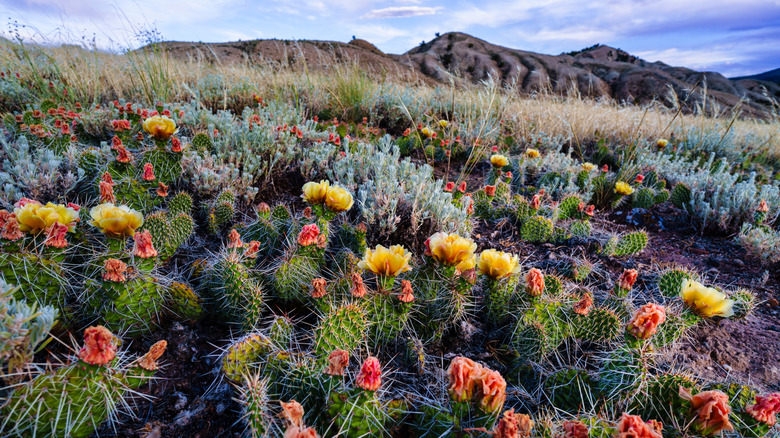
Prickly pears can grow in USDA zones 4 through 11, so long as they have ample dry spells and plenty of sunlight. However, not every species of prickly pear can survive in this range. If you do live in colder regions, you may need to choose a hardier variety apt for those conditions. Since they're native to the arid, desert regions of the Americas, you'll also want to ensure they receive full sun each day, at least six hours' worth. As far as soil goes, the prickly pear isn't picky, but it requires good drainage. You want the soil to dry completely in between watering, as any standing or pooling water can be harmful for this drought-tolerant hummingbird magnet.
After checking that your climate and soil are suitable, the next step is getting a prickly pear cactus of your own. There are two ways to go about this. First, you may be able to find it at your local nursery or plant store, depending on where you live and the store's variety. Or, if you have a friend or neighbor who already has a healthy, thriving cactus, you could ask for a pad off of their plant. Prickly pear naturally propagates in the wild through its pads, and snagging one of your own can be a good place to start.
Prickly pears are just one unique way to attract more hummingbirds to your yard. If you're not interested in the typical floral approach, you can also try DIYing the perfect hummingbird nectar for feeders to draw these birds in. Don't have a feeder handy? There's an easy way to make a hummingbird feeder from your empty soy sauce bottle.