

How To Choose The Best Type Of Umbrella For Your Patio
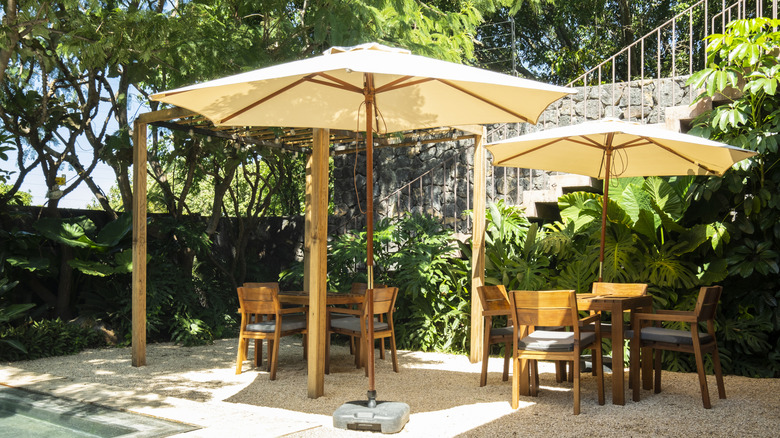
Whether it's spring, summer, or autumn, sitting out on the patio in the sunshine, enjoying the comfort of a breeze or the stillness of a summer day is a great way to relax. Your choice in patio umbrellas can make or break this experience. You want something that shields you from the harmful rays of the sun, withstands heavier breezes, and complements the aesthetic of your porch, home, and yard. Given the numerous needs, selecting the ideal umbrella for your patio can be a daunting task.
Before we look at things like size (it doesn't matter) and material, the first thing to decide is if you need an umbrella that fits your patio table or if you need something more free-standing. Does your table have a hole for an umbrella? If not, you'll need something that can stand on its own. If it does, you'll want to make sure you find an umbrella that fits properly on your table. And that's just the beginning of your trek to find the right umbrella for your outdoor patio enjoyment.
Choosing the right umbrella size and mechanics for your patio
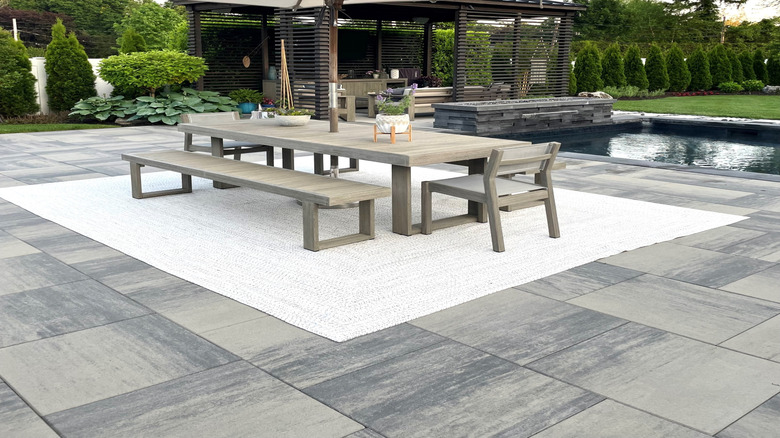
Once you know how big (or small) the pole needs to be to fit in your table, unless you're looking for a free-standing umbrella, you'll want to calculate the umbrella size. You will want an umbrella that stretches at least 2 feet out from each side of the table if you want to ensure each person has ample shade. Before heading to the store to buy an umbrella, measure your table (or the seating area, if you want to ensure sun safety while lounging on the patio). If you're using a free-standing umbrella, consider adding a couple of feet to your calculation, depending on its placement in relation to your table.
Shape matters, too. If you're covering a round or square table, a round or square umbrella will work fine. If you're using your umbrella to cover a picnic table or any other rectangular table, consider a rectangular umbrella for better coverage. If you put a round or square umbrella over a picnic table, it will leave some people sitting in the sun.
Consider, also, whether the umbrellas you're looking at have tilting features and lifting mechanisms. Do you want something that remains stationary all the time, or one that tilts to offer different coverage areas as the sun moves? Do you want something you can easily lift and then bring down when not in use, or something that you can leave up all the time? These considerations matter when it comes to storage and stormy weather as well. If your umbrella doesn't fold down, it could blow away and be difficult to store in the winter.
Picking the perfect umbrella materials for your patio
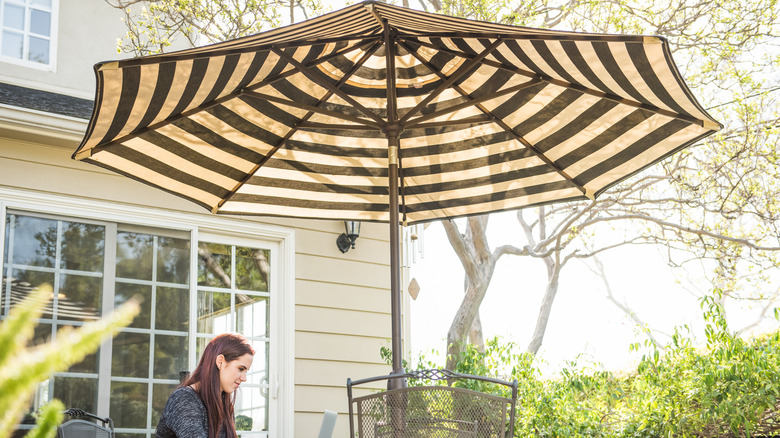
The most common fabric types you'll find for patio umbrellas include polyester, Sunbrella, and olefin. Polyester is durable and will hold its color under the harsh UV rays of the sun. Sunbrella is a popular fabric specifically made for the outdoors, and it will stand up to sun exposure and weather. Olefin is perfect if you want something that won't hold onto stains or get mildewy, and it is also resistant to fading. These three fabrics are all worth looking for when you're on the hunt for a patio umbrella.
Look at the material used for your umbrella pole as well. This could be wood, aluminum, or fiberglass. Fiberglass is the best option if you're worried about the weather blowing away your umbrella, while aluminum offers you the lightest option (so, not good in the wind). Wood may have the best aesthetic if you want something natural-looking.
Lastly, the colors and designs you want will come into play. Look at your patio — find an umbrella fabric color or design that will look cohesive with your patio furniture. You may even want to consider the color of your house when making choices. You can pick any old style or color if you'd like, but finding something that looks aesthetically pleasing will help you enjoy your time on the patio all the more. You might even want to consider the current decor trends for patios.