

The Must-Plant Perennial That'll Keep Hummingbirds Happy Well Into Fall
Part of the joy of having a beautiful garden and yard is getting to enjoy the abundance of happy hummingbirds that make your yard their regular hang out. Start by creating the perfect DIY hummingbird haven in your yard using clever tips. If you want to take things further, add a water feature that keeps hummingbirds cool and hydrated, and be sure and plant flowers they love. One stunning favorite of hummingbirds is mimbres figwort (Scrophularia macrantha). Take one look at these bright red flowers and you will know why they are also called redbirds-in-a-tree. Their uniquely shaped flowers, which last into fall, indeed look like a flock of little redbirds sitting on branches. This plant reaches a height of 2 to 3 feet with a spread of 16 to 20 inches and has a bushy character that looks great in any garden. It's also very pollinator friendly, attracting bees, butterflies, and (yup) hummingbirds.
The New Mexico native perennial is easy care for, making it a great addition for newbies to add to their list of fuss-free plants that are great for beginning gardeners. It blooms repeatedly from spring through the fall providing your hummingbird friends with continuous nectar. This brightly colored plant will even re-bloom without deadheading. Although it's a native of the mountainous regions of New Mexico, if you've determined you live in one of the plant hardiness zones 4 through 9, it grows very well. Another benefit to this striking flower is that it is non-toxic and safe for planting in areas where children and pets frolic.
How to care for this low-maintenance hummingbird favorite
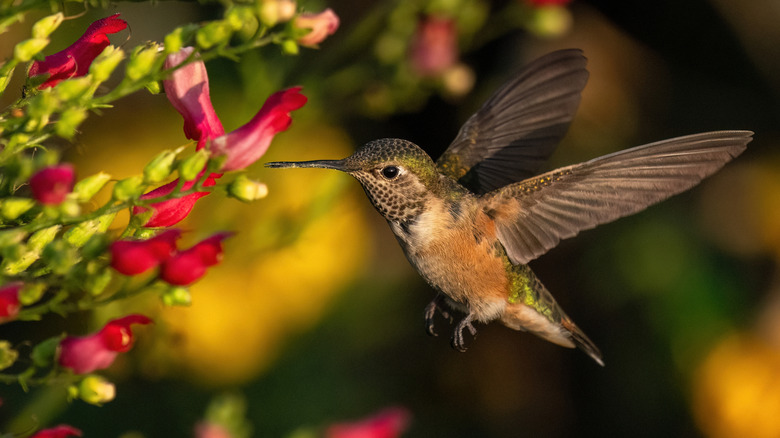
Redbirds-in-a-tree is ideal for perennial gardens, borders, and even as a standalone plant in the garden. The stunning flowers and ability to attract hummingbirds makes it a perfect anchor when creating a pollinator-friendly garden as well. Find a place in your yard that provides full sun, though if you're in hotter climes, the plant appreciates afternoon shade. It loves well-draining, fertile soil that is lightly acidic to neutral. If you're planting more than one of these eye-catchers, space them at least 2 to 3 feet apart so they have room to breathe. When establishing redbirds-in-a-tree, lightly fertilize with a couple handfuls of manure or compost, but make sure not to overdo it. Excessively fertile soil can produce a plant that grows quickly, but may not survive the first cold season.
Watering your redbirds-in-a-tree properly is very important especially while the plant is establishing strong roots. Make sure to water deeply regularly, allowing the soil to dry a little bit before you water again. During the hot summer months, occasional deep watering is especially important, the plant is drought tolerant. Fertilizing is only needed once per year in the fall using a good quality, all-purpose fertilizer. Pruning is also pretty easy. In the late winter or early spring, cut your redbird plants to about 2 to 3 inches high. Don't cut them back in the fall. You can deadhead if you want to maintain a neat appearance but the plant doesn't require deadheading to re-bloom.