

Do You Have To Worry About The Flesh Eating New World Screwworm?

We may receive a commission on purchases made from links.
The Center for Disease Control and Prevention (CDC) recently reported that it had confirmed the first, singular case of a person in the U.S. infected with the flesh-eating parasite known as the New World screwworm. By now, most Americans who head to the beach know they have to protect themselves against vibrio in coastal waters, another flesh-eating bacteria. However, given that the New World screwworm was considered eradicated in the U.S. during the 1960s (and Mexico by the 1990s), most Americans haven't given this dangerous parasite much thought. A recent rash of cases involving livestock, pets, and people in Mexico and Central America have given the parasite renewed media coverage. This, along with the first confirmed case in the U.S., has many outdoor enthusiasts wondering if they have to worry about the flesh eating New World screwworm. The answer to that question depends on where your adventures take you.
The Maryland man who became the first human in the U.S. to have the dangerous parasite had actually just returned from a trip to El Salvador, where the New World screwworm is much more prevalent and cases have been on the rise recently. However, while the threat of coming in contact with this parasite remains low in the U.S., those traveling in Mexico, Central America, or the Caribbean should be aware of the dangers. This flesh-eating parasite has remained active in those areas, affecting primarily livestock, as was the case with this year's outbreak. However, human cases have been reported in these countries each year as well, particularly in rainforest regions. Given the increased popularity of outdoor adventures in those areas, it is important to take precautions you are planning a trip to that region.
Prevention, symptoms, and treatment of New World screwworm infection
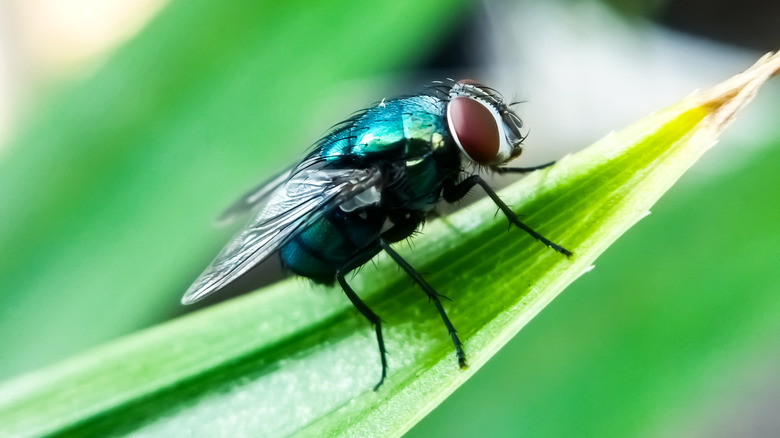
The New World screwworm is actually a maggot — the larvae of the New World screwworm (NWS) fly (Cochliomyia hominivorax). This parasitic larvae feed on live flesh: Human or cow matters little to the larvae. The infection begins when the fly lays eggs in an open wound on the skin of a warm-blooded creature, typically mammals, though birds are also sometimes infected. This is the only way the disease is spread — it is not communicable among humans or animals. However, infected humans or animals moving to a new location can result in a transference of larvae, which can risk infect others once they metamorphose into flies.
With that in mind, prevention involves two things: Repelling NWS flies and keeping open wounds covered. Whenever you are hiking or camping in an area where New World screwworm is active, you should wear protective clothing, including long-sleeve shirts and pants. If camping, utilizing netting like the Mekkapro ultra large mosquito net at night can afford additional protection. You should also use an strong insect repellent containing DEET to make sure NWS flies keep their distance. Additionally, any open wounds should be completely covered at all times and you should always have a first aid kit in your emergency supply pack to immediately address any cuts, scrapes, or wounds you may get during your adventure.
Should you become infected, the pain from the deep-burrowing larvae will likely be the first indication. You may also see eggs or larvae around an open wound. If you suspect you have been infected, you should immediately seek medical attention. The only treatment for New World screwworm is to have a doctor physically remove each of the burrowing larvae from the wound and infected flesh.