

How To Choose The Best Gravel To Use Around Your Backyard Pool
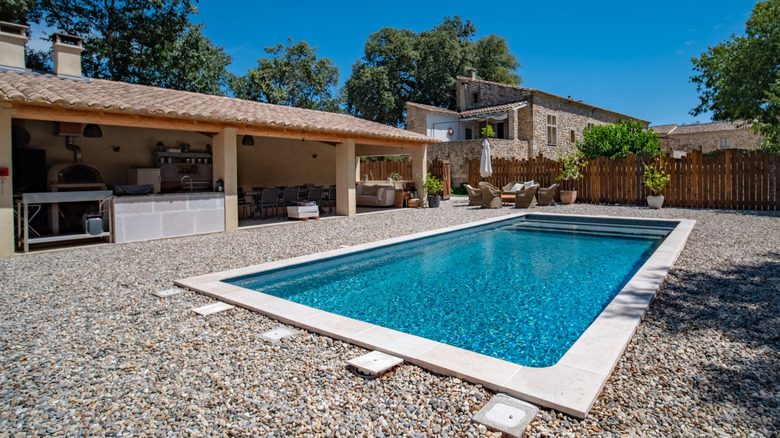
Gravel can serve as a beautiful and functional border around your pool, and picking the right gravel can be challenging as there's a lot to consider. Gravel not only helps the aesthetics of your pool, but it can also improve drainage, limit weeds growing around your private oasis, and improve safety as a non-slip surface. Different gravels will have different aesthetics that can change how your backyard pool looks, so you'll need to make sure you pick what works best for your taste. It's always a good idea to choose a smooth gravel that looks natural, which means there are two good options for your backyard pool: river rock and pea gravel.
These two choices not only look nice, they'll be comfortable and won't get too hot in the sun. But how do you know which one is right for you? Well, each option has different maintenance requirements that will affect how much you spend down the road, and you'll want to consider the visual appeal they present around your pool, as well as the levels of comfort they provide. For example, river rock can be more challenging to walk on as the larger rocks can be unstable beneath your feet. Pea gravel, on the other hand, is an excellent choice for comfort under your foot because of its rounded nature. Of course, these are far from being the only pros and cons when considering what gravel to use in your next landscaping project.
How to pick between river rock and pea gravel for your pool
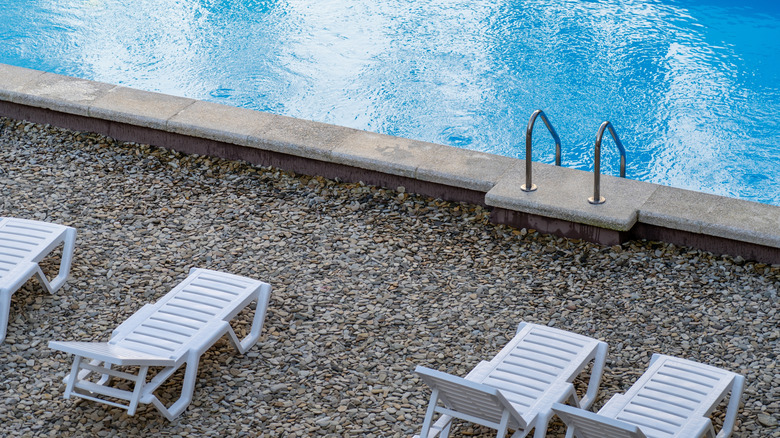
River rock is probably the most aesthetically pleasing option to use around your backyard pool, as the larger pieces of rock create a more modern feeling and establish an almost meditative space. While pleasing to look at, they retain more heat than other options, so even if your feet are wet from the pool, they might get a bit too warm for your comfort level. As mentioned previously, they can also be difficult to walk on if the stones are particularly large. Of course, river rock comes in many sizes, but it's larger, smoother, and rounder than your typical gravel, making it a slightly more consistent texture. You can find river rock in several colors, including tan, white, and blends. These rocks drain well and are pretty easy to maintain, as the pieces are larger and easier to keep in place. However, they will cost more upfront – $184 to $314 per ton when delivered.
Pea gravel is similar to river rock, but the individual rocks are just much smaller. As previously noted, it feels better under your feet, and it also cools much better than river rock. Additionally, pea gravel drains extremely well due to its size and shape, but because of its size, it can cause long-term maintenance issues, such as the gravel tracking into your pool. Fortunately, because of its size, pea gravel is much easier to lay down and shape around your backyard pool. Pea gravel can be found in several colors to balance between your home, yard, and pool, including brown, white, and gray. Pea gravel is much more affordable than river rocks, costing $160 to $260 per ton when delivered.