

How To Keep Weeds At Bay When Working With These Tricky Patio Materials
We may receive a commission on purchases made from links.
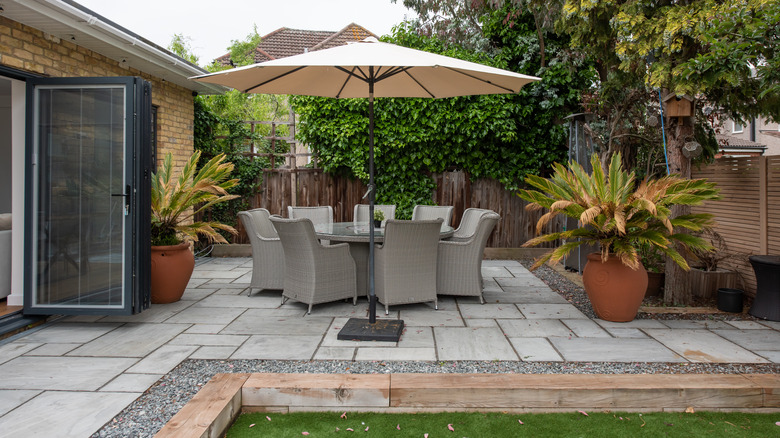
When planning an outdoor seating area, it's natural to think about style — after all, the materials you choose can set the tone for your space. Brick evokes a timeless estate, pavers offer lots pattern and color choices, and highly versatile stamped concrete can create almost any look you want. The choices don't stop there — you could use traditional wood or durable composite decking, or even affordable, DIY-friendly gravel. But style is just part of the story. Whether you opt for a patio or a deck (there is a difference), what you choose now will affect how much maintenance your outdoor space will require later, particularly when it comes to weeding. Essentially, any material that features natural gaps — such as pavers, stones, brick, and wood — are at a disadvantage when it comes to defying weeds.
If you choose the best materials for a patio or deck, you may be able to save dollars and work in the long run. One fact many homeowners don't realize is that as a patio or deck ages, fast-spreading plants like clover, dandelions, and crabgrass,can make their way into cracks or spaces and quickly spread, making it difficult to keep your outdoor retreat looking good. So while you daydream about the ideal deck or patio, take time to also think about how prone each surface is to weeds. Not only can they significantly ruin your patio or deck's beauty, but they can necessitate costly repairs. Taking the time to choose patio materials that are naturally weed resistant can go a long way in increasing enjoyment of your space.
Factors that encourage weed growth
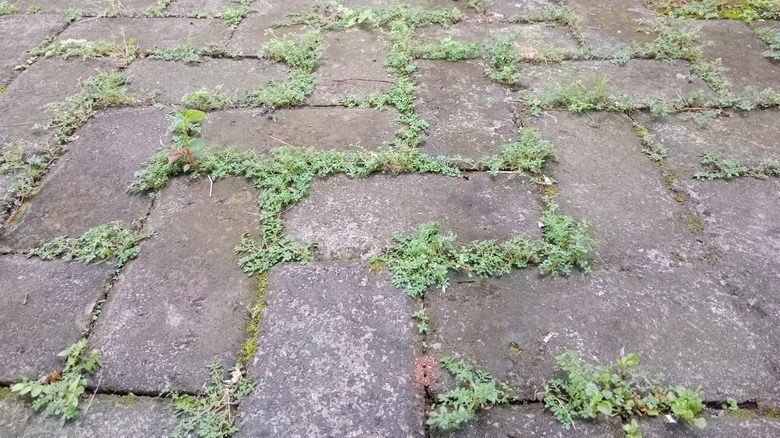
The problem with many patios and low-to-the-ground decks is that their construction inherently includes small gaps — such as between bricks, pea gravel, pavers, or wood slats — that invite weeds. The best option for weed control is to install a poured or stamped concrete-slab patio. Because of its continuous surface, concrete is harder to penetrate (but not impossible). Alternatively, you could build a raised deck a few feet off the ground; its height will make it more of a challenge for weeds to extend through. However, if you have your heart set on a surface prone to weeds, make sure yours is built on a secure base material, such as crushed stone or gravel, that's at least 4 to 6 inches deep. Even a thick layer of gravel underneath your deck will thwart weeds, and as a bonus, you'll have a sturdy, dry, and covered space for storing backyard gear.
As for your patio joints — the spaces where stones, bricks, or pavers meet — consider filling them with polymeric sand promptly after your patio is constructed. A mixture of natural sand and a substance that hardens when misted with water, it will seal the gaps between patio sections making it more difficult for seeds to sprout there. Sweep the poly sand in between pavers, lightly mist it with your garden hose, and allow it to harden in the sun for about two days. While it costs more than regular sand, it's also more effective and lasts longer. For added protection, apply a weather-resistant sealer on your brick, concrete, paver, or stone patio once it's built and reapply it every two to five years. As a bonus, the sealer will help preserve your patio's color and make permanent stains less likely.
Maintenance for a weed-free patio
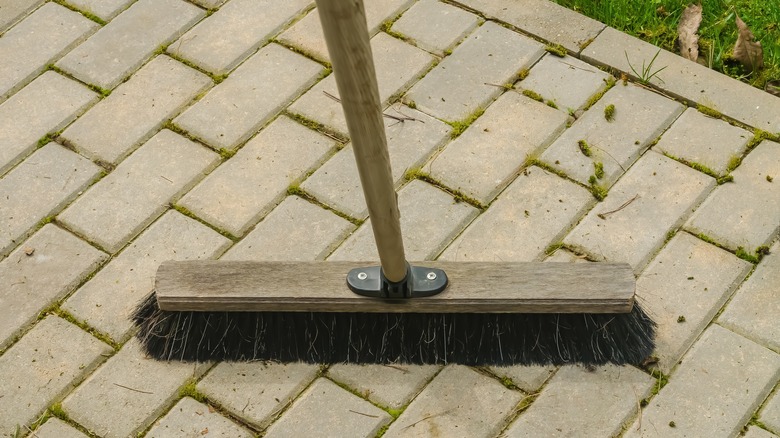
Even if you've chosen a patio or deck that's more prone to weed growth, you can keep unwanted plants at bay with regular upkeep. Inspect the surface often for signs of wear, repairing any cracks or gaps promptly. This will not only preserve the structure's strength and appearance but will also make it harder for weeds to take up residence. Sweep often or use a leaf blower like the Black+Decker electric blower to remove loose dirt or seeds. and use a weeding tool or a flathead screwdriver to scrape away small seedlings. You can also kill emergent weeds with kitchen staples like baking soda or apply a conventional herbicide. The goal is to remove plants when they are small, before they can spread and cause more significant issues like cracked concrete or shifted pavers.
To keep weeds to a minimum in a pea gravel patio, replenish its depth to at least 4 inches every few years to smother potential growth. Finally, don't forget the edges: Weeds often sneak in from the sides of patios and decks. So trim surrounding grass and plants, mulch garden beds, and install landscape edging so pesky seeds can't move in and your outdoor retreat will remain a beautiful and restful retreat.